
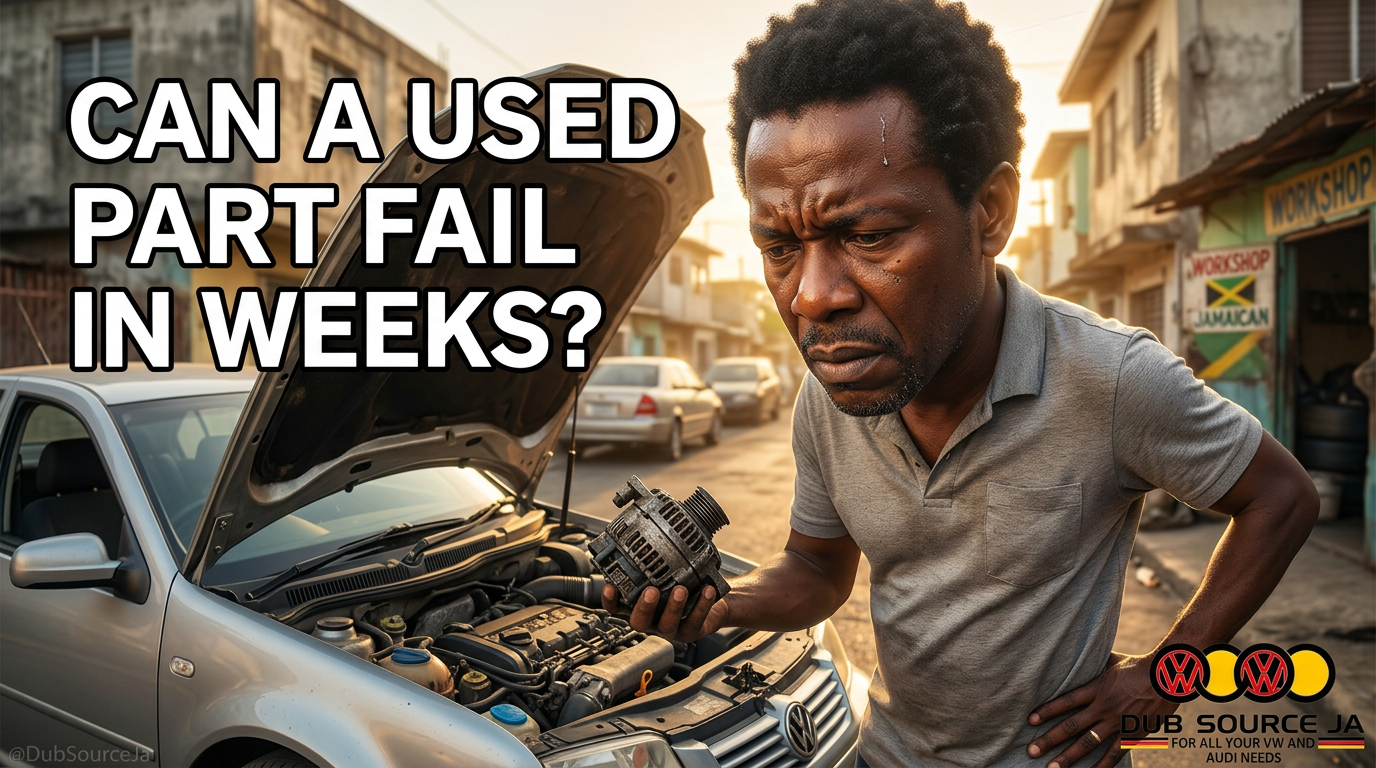
If you’ve ever stood there, part in hand, thinking,
“How do I know a used part won’t fail in a few weeks?” you’re not overthinking it.
You’re remembering something.
Maybe it’s that moment when the car felt fixed…
only to betray you again a few days later.
The sound came back.
The light returned.
And suddenly, what felt like a smart saving turned into a quiet regret.
That’s the real tension behind this question.
It’s not just about money.
It’s about trust.
In the part. In the seller. And honestly, in your own decision.
Why this question hits harder than it should

Let’s slow this down for a second.
Most people don’t feel stressed when buying a used part. Not at the start.
It’s later.
You’re driving through Kingston traffic. Heat rising off the road. The engine humming… but something feels slightly off. Not broken. Just… different.
And now your mind starts asking:
- Did I choose the wrong part?
- Was it already worn out?
- Did I just delay a bigger problem?
That feeling? It’s familiar to a lot of drivers.
Used parts aren’t the problem by themselves.
In fact, many good suppliers like Dub Source Limited offer both new and used options for Volkswagen and Audi drivers.
The real issue is this:
A used part only works when it’s chosen with clarity, not urgency.
The honest answer (no sugarcoating)
You cannot guarantee a used part will last.
No one can. Not even the best supplier.
But here’s what can change everything:
You can reduce the risk. A lot.
And it usually comes down to a few grounded checks:
- Does it truly fit your exact car?
- What condition is it in, beyond surface appearance?
- Where did it come from?
- Who is selling it?
- Is there any safety net if it fails?
- And quietly… is this a part you should even risk buying used?
Some parts forgive mistakes.
Others don’t.
Start with the right question, not the cheapest option
Most people walk in and ask:
“How much is it?”
But the better question the one that saves you later is:
“What’s the story behind this part?”
Because every used part has a past.
And that past matters.
Ask where it came from (and listen carefully)
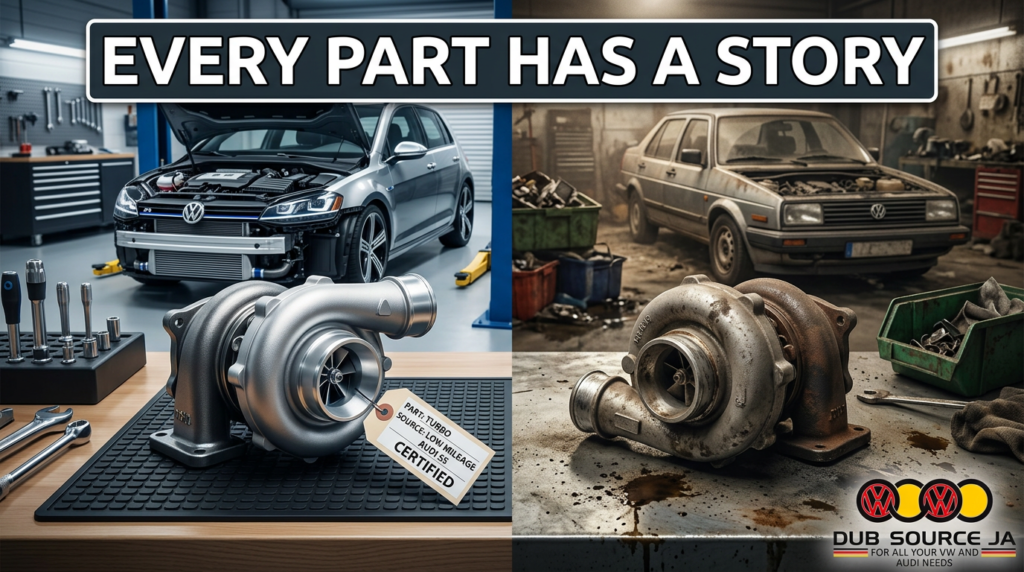
Imagine two parts:
- One came from a low-mileage vehicle, carefully removed
- The other… nobody really knows
They may look identical.
But they are not the same.
Ask:
- What vehicle did it come from?
- Was the car still running?
- Was there accident damage?
- Was the part tested before removal?
If the answers feel vague, rushed, or uncertain… pause.
Sometimes hesitation is wisdom.
Part numbers: the quiet detail that saves you later
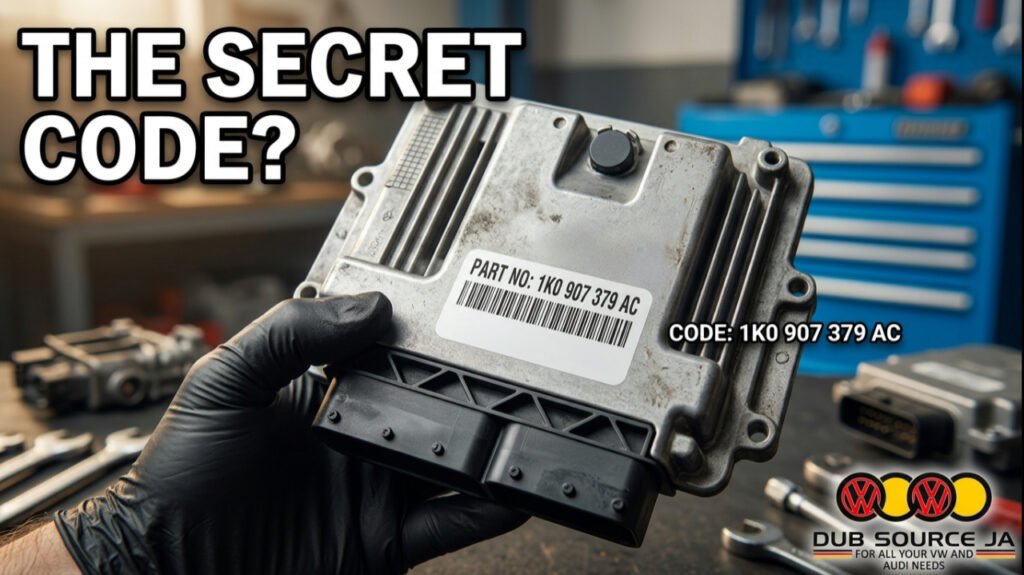
Here’s where many people slip.
The part “looks right.”
The shape matches. The connectors seem similar.
But weeks later, something doesn’t behave as expected.
Why?
Because with VW and Audi, small differences matter.
Engine type. Model year. Region spec. Software compatibility.
A part number is like a fingerprint.
If it doesn’t match, you’re guessing.
And cars don’t respond well to guesswork.
You can cross-check part compatibility using tools like the NHTSA VIN decoder.
Used vs refurbished vs remanufactured
Let’s clear this up simply:
- Used → removed and resold
- Refurbished → cleaned, maybe lightly repaired
- Remanufactured → rebuilt with replaced internals
Think of it like this:
A used part is like buying a second-hand phone.
A remanufactured one is closer to a phone that’s been properly rebuilt.
Both can work.
But the expectations should be different.
Which used parts feel “safe”… and which don’t?
Not all parts carry the same emotional weight.
Some, if they fail, annoy you.
Others, if they fail, can put you at risk.
Lower-risk parts
- Interior trims
- Mirrors
- Lights
- Switches
- Window regulators
If something goes wrong, it’s inconvenient… not dangerous.
Medium-risk parts
- Alternators
- Starters
- Compressors
- Suspension parts
These sit in that grey area.
High-risk parts
- Brakes
- Steering
- Airbags
- Seatbelts
These are different.
They’re not just parts.
They’re your safety system.
Authorities like the National Highway Traffic Safety Administration (NHTSA) highlight how critical these systems are for safe driving.
So ask yourself:
Am I comfortable trusting this part without certainty?
7 signs a used part is worth your trust
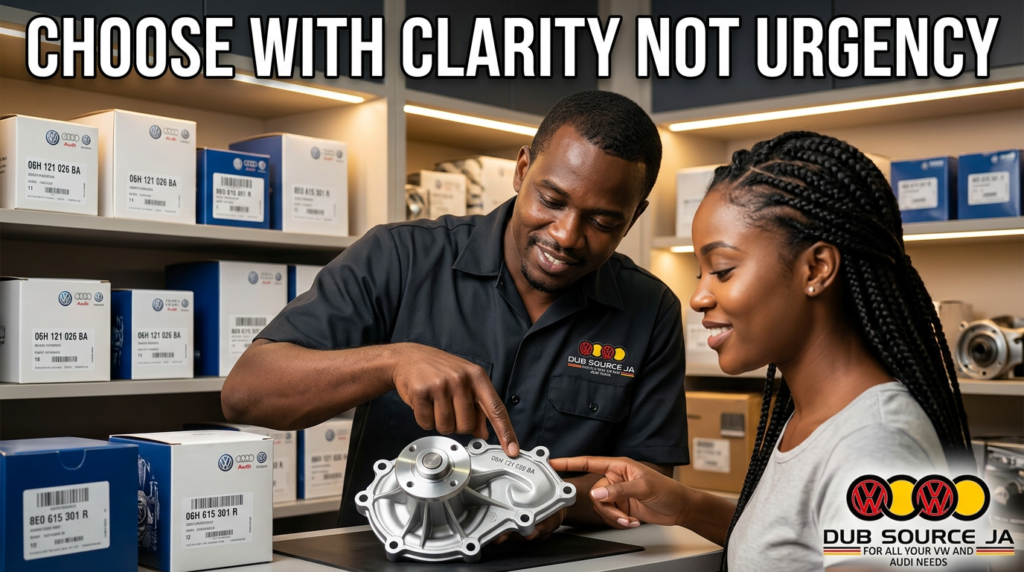
1. The seller slows you down
They ask questions. VIN, engine, part number. That’s protection, not delay.
2. Clear photos
You can actually see wear, connectors, and condition.
3. Matching part number
This is your anchor. No match means risk.
4. Some warranty
Even a short one shows confidence.
5. Lower mileage source
Less wear often means longer life.
6. Real testing
Not just visual checks. Ask what “tested” means.
7. Specialist seller
A focused supplier like Dub Source Limited Sign and Symptoms page to understands VW and Audi fitment better than general sellers.
Red flags that lead to regret
- No part number
- No return option
- No testing info
- Visible damage
- Seller avoids details
And the classic:
“It was working when removed.”
That doesn’t tell you how close it was to failing.
How to reduce your risk even more
Double-check from different angles
- Your old part
- VIN lookup
- Mechanic advice
- Seller confirmation
The more confirmation, the better.
Check for known issues
You can search recalls using NHTSA recall tools.
It takes minutes. It can save you weeks.
Think beyond price
Ask yourself:
- What happens if it fails?
- Will I pay labour twice?
- Will this disrupt my routine?
Cheap upfront doesn’t always mean cheap overall.
Kingston context: real-world conditions
Driving in Kingston isn’t easy on cars.
Heat. Traffic. Stop-start movement. Road stress.
A used part here doesn’t just need to work.
It needs to hold up.
That’s why many drivers choose specialists like Dub Source Limited Shop , who understand local conditions and VAG vehicles.
When a new part makes more sense
- High labour cost
- Safety-related part
- High failure risk
- Sensitive electronics
Sometimes saving today creates a bigger cost tomorrow.
People Also Ask
Is a warranty enough?
No. It helps, but fitment and condition matter more.
Are used parts okay for VW and Audi?
Yes, but only with correct matching.
Should I avoid used electrical parts?
Not always. Just be more careful.
What’s the biggest mistake?
Choosing based on price alone.
Can I be fully sure?
No. But you can reduce risk significantly.
So, how do you know a used part won’t fail in a few weeks?
You don’t.But you can move from guessing… to understanding.
Take your time.
Ask better questions.
Choose with clarity.
If you’re unsure, it’s worth speaking to a specialist first.
Because one careful decision now can save you weeks of frustration later.