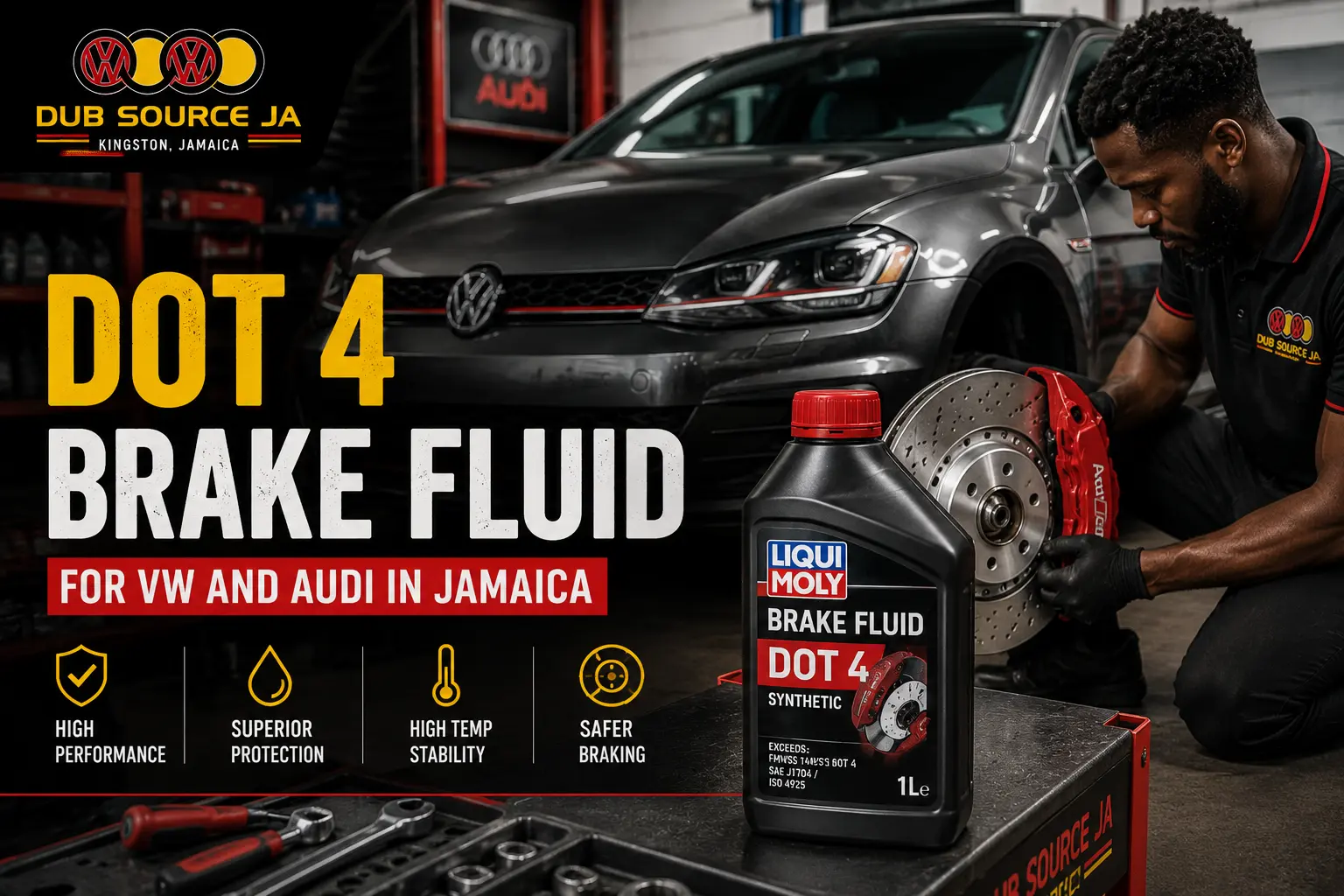
DOT 4 Brake Fluid for VW and Audi in Jamaica
Brake fluid is one of the most important fluids in your VW or Audi, but it is also one of the easiest maintenance items to forget. Most drivers know when their engine oil needs changing. They notice mileage, service stickers, or dashboard reminders. Brake fluid is different. It quietly works in the background every time you press the brake pedal, but many owners only think about it when the brakes start feeling different. That is where the problem begins. Brake fluid does not usually fail suddenly. Over time, it absorbs moisture from the air and gradually loses some of its performance. The change can happen so slowly that you may not notice anything during normal driving. But braking is not only about normal driving. Think about a busy afternoon in Kingston. You are moving through traffic, stopping at lights, slowing down for pedestrians, and dealing with sudden changes around you. Your braking system is working constantly. When you need strong and consistent braking, the condition of your brake fluid matters. Volkswagen and Audi vehicles are designed to use specific brake fluid standards. For many models, that means DOT 4 brake fluid. Using the wrong brake fluid may not create an immediate warning, but it can reduce the safety margin of your braking system over time. The fluid needs to handle heat, pressure, and daily driving conditions without losing its ability to transfer braking force properly. In Jamaica, this topic becomes even more important because heat, humidity, and stop-and-go traffic can affect brake fluid condition faster than many drivers expect. This guide explains why DOT 4 brake fluid matters for VW and Audi vehicles, why Jamaica’s climate affects brake fluid life, and what you should check before buying or replacing it. Why Brake Fluid Degrades Faster in Jamaica Many people think brake fluid lasts forever because it sits inside a closed system. However, brake fluid is not completely protected from the environment. Brake fluid is hygroscopic, which means it naturally absorbs moisture from the surrounding air. You can think of brake fluid like a sponge. Over time, it slowly collects moisture even though the braking system appears sealed. As moisture increases, the characteristics of the fluid begin to change. One important change is the reduction of its boiling point. Why Does Boiling Point Matter? When you press your brake pedal, the braking system creates friction. That friction creates heat. During normal driving, the system handles this heat without any issue. But imagine driving through Kingston traffic during a hot afternoon: The brakes are constantly working. If brake fluid contains too much moisture, the fluid becomes less resistant to high temperatures. Under heavy braking conditions, excessive heat can affect how effectively the fluid transfers pressure through the braking system. This may result in changes such as: For most drivers, the warning signs are not dramatic. That is exactly why brake fluid maintenance is important. The problem often develops quietly. Why Jamaica’s Climate Matters Jamaica’s warm and humid environment creates conditions where moisture absorption can become a bigger concern. A vehicle driven regularly around Kingston experiences: A VW Golf used every day for commuting has a very different workload compared with a vehicle that spends most of its time on open highways. The brake fluid sees those conditions every time the vehicle is driven. If you cannot remember the last time your brake fluid was changed, it is worth checking instead of assuming it is still fine. DOT 3 vs DOT 4 — Why the Grade Matters for VW and Audi One of the most common mistakes when buying brake fluid is assuming all brake fluids are interchangeable. They are not. Brake fluid specifications exist because different vehicles require different performance levels. For Volkswagen and Audi vehicles, DOT 4 is commonly the required specification. What Does DOT 4 Mean? DOT 4 refers to a brake fluid performance classification. It describes requirements such as: The specification exists because modern braking systems operate under demanding conditions. Your VW or Audi was engineered with certain fluid characteristics in mind. Why Not Just Use DOT 3? DOT 3 is another brake fluid classification, but it generally has lower performance requirements compared with DOT 4. If your vehicle is designed for DOT 4, using a lower specification fluid may reduce the operating margin of the braking system. The difference may not be obvious when driving slowly around town. But braking systems are designed for moments when conditions become more demanding. For example: You are driving downhill. Traffic suddenly slows. You need to brake repeatedly. This is when the braking system has to perform at its best. Using the correct specification helps ensure the system is operating with the fluid it was designed for. What About DOT 4 Plus or Super DOT 4? Some vehicles or applications may require higher-performance versions of DOT 4 brake fluid. The correct choice depends on the exact vehicle requirements. This is why guessing based only on the vehicle badge is not enough. A VW Golf, Audi A4, and Audi Q5 may all belong to the same brand family, but their requirements can differ depending on the model year and braking system. Before ordering, confirm: You can also browse brake parts for your VW or Audi through Dub Source Limited. The goal is simple: use the fluid your vehicle requires, not just the one that is easiest to find. How Often Should You Change Brake Fluid on a VW or Audi in Jamaica? Brake fluid replacement is often forgotten because it does not have the same visibility as other maintenance tasks. You cannot usually look at the dashboard and see a brake fluid reminder. You have to remember it. Many Volkswagen and Audi maintenance recommendations suggest changing brake fluid approximately every two years. For Jamaican conditions, regular checks are especially important because climate and driving patterns can affect fluid condition. The two-year point should not be viewed as something to delay. It should be a reminder to inspect the system. Signs Your Brake
DOT 4 Brake Fluid for VW and Audi in Jamaica Read More »
Blog