Buying a car part can feel like walking through a minefield. Everyone claims their parts are OEM, but how can you be sure? The truth is, counterfeit or fake OEM parts are everywhere, and they often look convincing.
Here’s the thing: if you buy a fake part, you might think you’re saving money, but you could end up paying much more in repairs or safety risks.
This guide will show you how to verify OEM parts, spot fakes, and protect yourself. All tips are based on manufacturer guidelines, automotive industry standards, and official sources like the NHTSA and AAA.
What OEM Really Means

OEM stands for Original Equipment Manufacturer. It means the part was made by the same company that supplied the part to your car’s assembly line.
Important points:
- OEM parts match the exact specifications of your car
- They carry manufacturer warranties
- Fit, performance, and longevity are guaranteed
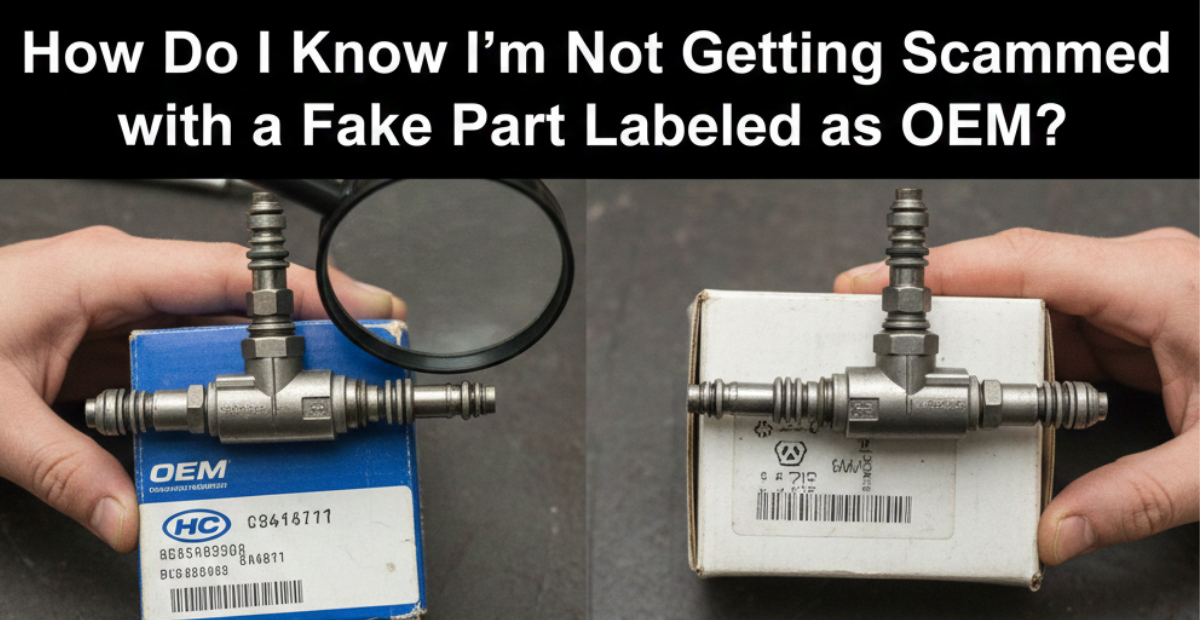
Fake OEM parts often mimic logos, labels, or packaging. They may look identical at first glance, but subtle details reveal the truth.
References:
Step 1: Verify the Packaging and Labels
Genuine OEM parts always have consistent packaging, logos, and serial numbers. Look for:
| Checkpoint | What to Look For | Common Fake Signs |
|---|---|---|
| Logo | Crisp, correctly spaced | Blurry, wrong font |
| Part Number | Matches manufacturer database | Missing or inconsistent |
| Seal | Tamper-proof, intact | Opened, broken, or missing |
| Barcode/QR | Scans to manufacturer website | Doesn’t scan or leads to unrelated site |
Step 2: Inspect the Part Quality
Counterfeit parts often use cheaper materials. Signs a part may be fake:
- Lighter or heavier than expected
- Rough edges or inconsistent finish
- Color slightly off from official specifications
- Missing serial numbers or stamping
Here’s a quick inspection checklist:
| Part Element | OEM Expectation | Red Flag |
|---|---|---|
| Material | Same as factory | Different metal/plastic quality |
| Fit | Matches perfectly | Too loose or tight |
| Finish | Smooth, uniform | Rough, uneven |
| Markings | Clear, correct | Smudged, incomplete |
Step 3: Research the Seller
Even a perfect-looking part can be fake if sold by an unreliable source. Trusted sellers follow:
- Official dealerships or verified online platforms
- Detailed contact information and return policies
- Positive reviews and buyer feedback
- Authentication guides provided by the manufacturer
Red flags for sellers:
- Price too good to be true
- No warranty or unclear return policy
- Only email contact, no physical address
- Negative reviews mentioning counterfeit items
Box Tip: Always cross-check seller information with the manufacturer’s authorized distributor list.
Step 4: Verify Part Numbers and Manufacturer Database
Most OEM parts have unique part numbers or serial numbers. Manufacturers maintain online databases where you can verify authenticity.
Steps to check:
- Find the part number on your item or packaging
- Go to the manufacturer’s official verification tool
- Enter the number and confirm it matches your car make and model
- Scan QR codes or barcodes when available
This method removes guesswork and ensures you are not being scammed.
Reference: Bosch Official Part Verification
Step 5: Watch Out for Common Scams
Lorem ipsum dolor sit amet, consectetur adipiscing elit. Ut elit tellus, luctus nec ullamcorper mattis, pulvinar dapibus leo.
Fraudulent sellers often exploit common patterns:
| Scam Type | How it Works | How to Avoid |
|---|---|---|
| Overpriced fakes | Sell fake OEM at a premium | Compare prices with official dealer |
| Aftermarket masquerade | Label aftermarket as OEM | Check manufacturer part number |
| Used parts relabeled | Old/damaged parts sold as new | Inspect packaging, serial numbers |
| Online-only sellers | No traceable contact | Stick to verified dealers |
Step 6: Know When to Get Professional Help
Some parts are hard to authenticate visually, especially electronics or high-tech components. If unsure:
- Ask a certified mechanic to inspect the part
- Contact your dealership with the part number
- Use authentication services offered by manufacturers
Doing this may save thousands in repairs or prevent safety hazards.
Quick Reference Box: OEM Verification Checklist
- Confirm logo and labeling match manufacturer
- Check part number in official database
- Inspect material, weight, and finish
- Research seller reputation and reviews
- Watch for prices that are too low
- Seek professional inspection if uncertain
Step 7: Educate Yourself About OEM vs Aftermarket
Aftermarket parts are not automatically bad. They can be high quality and sometimes cheaper. But when safety-critical components are concerned (like brakes, airbags, engine parts), OEM is the safest choice.
| Component | Recommended | Why |
|---|---|---|
| Brakes | OEM | Critical safety, exact fit |
| Engine Sensors | OEM | Prevent malfunctions |
| Oil Filters | OEM or high-quality aftermarket | Ensure proper flow |
| Body panels | OEM optional | Cosmetic, less critical |
Step 8: Keep Documentation
Keep receipts, part numbers, and any verification scans. They help in warranty claims and future resale. Proper documentation is proof that your part is authentic.
Summary Box
- OEM parts are made by the original manufacturer and guarantee fit and safety
- Fake OEM parts are common and can be dangerous
- Always check packaging, labels, part numbers, material, and seller reputation
- Use manufacturer databases to verify authenticity
- When in doubt, consult a professional
Following this method reduces the chance of buying a fake part and saves money and safety risks in the long run.