OEM stands for Original Equipment Manufacturer. In the car trade, OEM can mean the car brand. At a parts shop, it often means a firm that makes parts for new cars. So why do Kingston drivers sometimes get it wrong? Sellers may use it for genuine parts, supplier parts, or goods that just claim to meet factory rules. The OEM label does not prove a part is real. It may not match the factory part or fit your VW or Audi. Here is how to tell what you are buying.
Why OEM Causes Confusion at Kingston Parts Shops
In the wider automotive industry, Volkswagen or Audi may be called the OEM, while companies supplying components are often called Original Equipment Suppliers (OES). At a parts shop, the word OEM may also be used for supplier-branded replacement parts. That is why it is worth asking which meaning the seller intends.
Picture a busy parts counter on a hot Kingston afternoon. Your VW Golf needs a new sensor. One seller says, “Original.” Another says, “OEM, same thing.” A third says, “OEM quality, better price.”
Which one is right? You may have work the next morning and little time to shop again. The words sound reassuring, but they do not all make the same promise.
The mix-up starts with how cars are built. Volkswagen and Audi sell the finished vehicles. Other firms can make some of the parts used to build them. In the car trade, the brand itself may be called an OEM. At the parts shop, it may mean one of those parts makers.
That difference matters far more than the letters on the box.
One Car Brand Does Not Mean One Parts Factory
Think of a restaurant that sells cake with its own name on the menu. The chef may bake it on-site, or a trusted bakery may supply it. The name on the menu does not tell you which kitchen made it.
A vehicle is more complex, but the idea helps. Car makers set design and quality needs. They may buy sensors, filters, and brake parts from outside firms.
For example, Bosch describes itself as an original equipment and aftermarket supplier. That shows how a maker can work in both markets. It does not mean every Bosch item was fitted to every VW or Audi at the factory.
The exact part, model, and year still matter. A maker’s good name helps, but it is not a fit check.
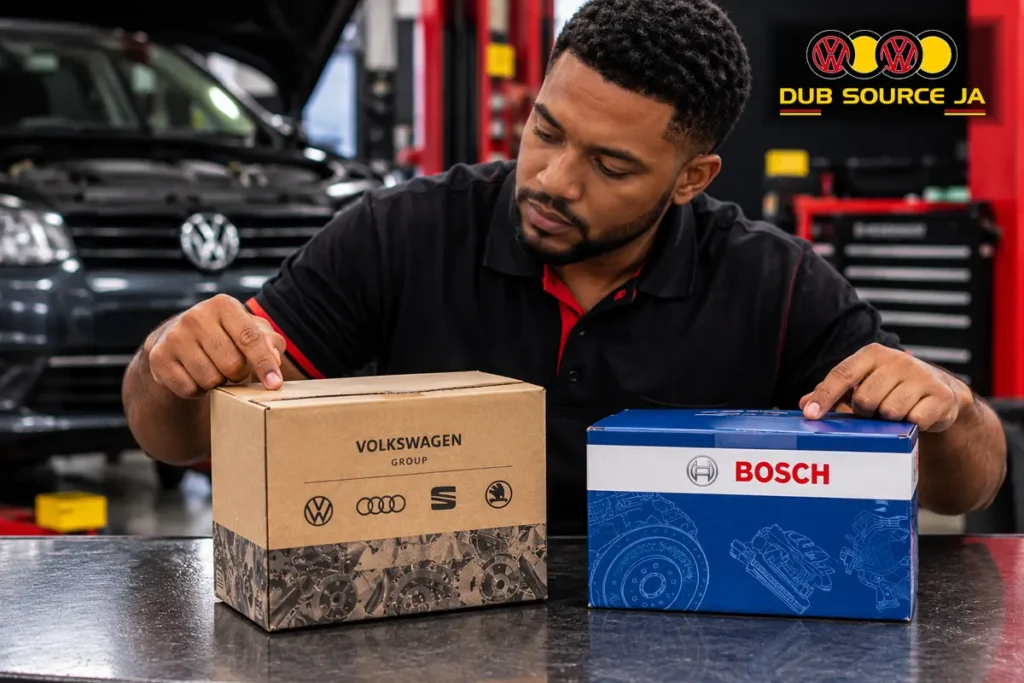
Why Do Kingston Drivers Mix Up Genuine, OEM, and Aftermarket?
Drivers need not know each term by heart. But sellers may use the labels as if they mean the same thing.
Genuine Sounds Like “The Best Fit”
A genuine VW or Audi part comes through the brand’s parts network. Volkswagen explains its Genuine Parts as the parts used in new vehicles and approved by its product experts.
Genuine branding identifies the type of part being offered, but the seller and source still matter. A familiar logo alone cannot confirm authenticity or correct fitment.
OEM Sounds Like “Made by VW or Audi”
Sometimes the vehicle maker is called the OEM. But in parts sales, “OEM” often means the firm that supplied an original component.
A parts maker may sell spares under its own name. Check the design and spec of the exact part. Does it suit your car?
“OEM Quality” Sounds Like Proof
This is where buyers need care. “OEM quality” or “OE-equivalent” may mean the seller claims the part meets factory needs. That does not prove the maker supplied the car plant.
The European Automobile Manufacturers’ Association explains how aftermarket labels can blur these differences. That guide looks at Europe. But its warning about vague labels can help here too.
Genuine, OEM, and Aftermarket: What Does Each Label Tell You?
| Label | What it usually means | What it does not prove |
|---|---|---|
| Genuine VW or Audi | Sold through the vehicle brand’s parts system | Correct fit for every model or year |
| OEM supplier-brand | From a firm involved in original equipment supply | This exact item was fitted to your car at the factory |
| OE or original equipment | A part or design used when a new car was built | Every later version is identical |
| OE-equivalent or OEM quality | A claim about meeting relevant original requirements | Factory origin or formal car-brand approval |
| Aftermarket | A replacement sold outside the car brand’s parts range | That the part is fake or poor quality |
These labels are not always separate categories. An original equipment supplier may also sell replacement parts through the independent aftermarket. Always compare the exact product, its specifications, and its intended vehicle application.
A good aftermarket part may be a sound choice. A genuine part may still be the wrong fit. Choose based on the job, the source, and the car
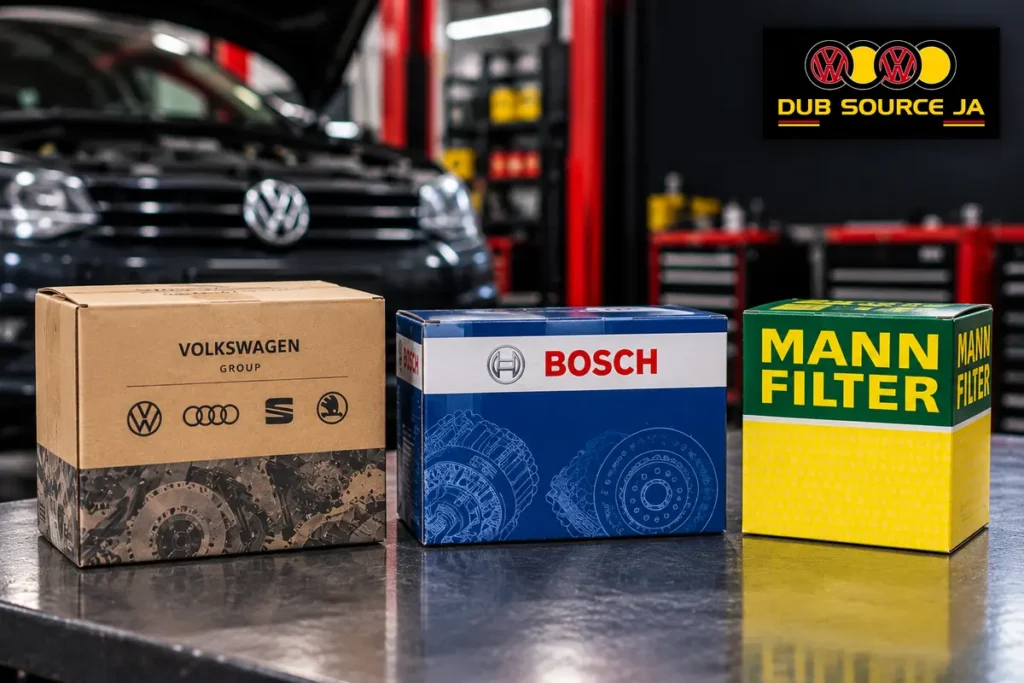
Why the Wrong Meaning Can Become a Costly Repair
Imagine your Audi A4 makes a rough sound over a broken patch of road. A seller offers a suspension part marked “OEM quality.” The price seems fair, and you want the noise gone.
You pay. At the workshop, the technician finds that the part is made for a different setup. Now you must arrange a return or buy again. The car may stay off the road while you sort it out.
This is one possible outcome, not a claim about every repair. Yet a wrong part can cost more than the price on the receipt. You may lose time and pay for more work. You may have no car when you need it.
Kingston traffic can test your nerves. A second repair adds to the strain. That is why clear part details matter more than a convincing sales phrase.
A Real Part Can Still Be the Wrong Part
Two VW Polos may look almost the same. Yet engine codes, build dates, and equipment can change the part they need. That applies to many Audi models too.
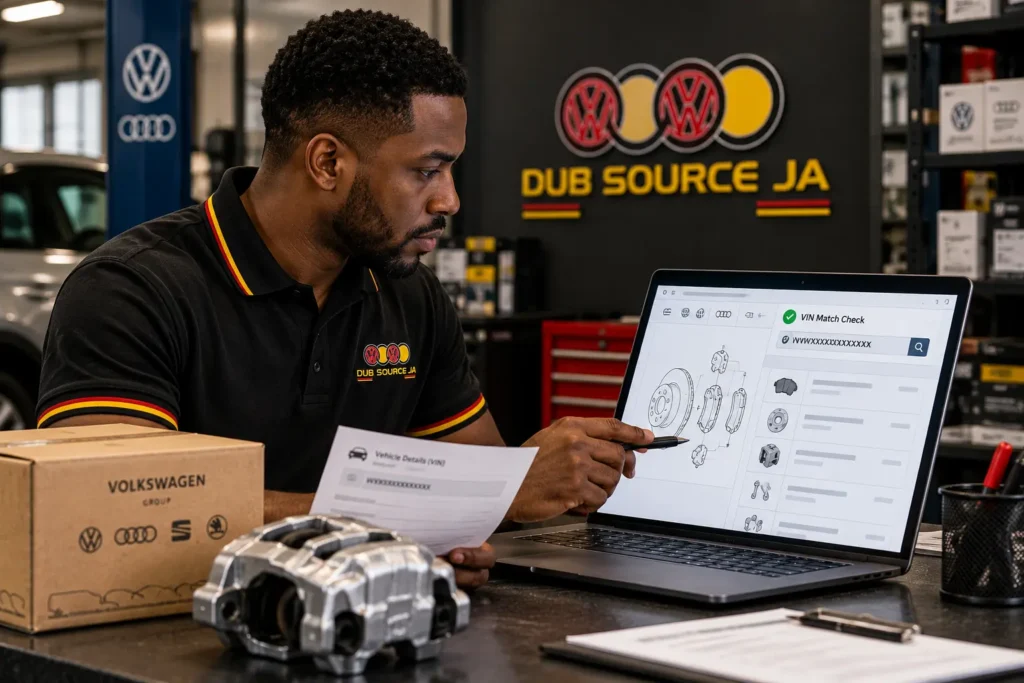
Your VIN is like an ID card for your car. It helps the parts team find the right part. They may also need an engine code or a photo of the old part.
Dub Source Limited explains this in its VIN matching guide for VW and Audi parts. Check the fit before you pay, not after the workshop finds a mismatch.
And remember, a warning light is not a full diagnosis. A scan code may point to a fault area. It may not name the failed part.
What Should You Ask When a Seller Says “It’s OEM”?
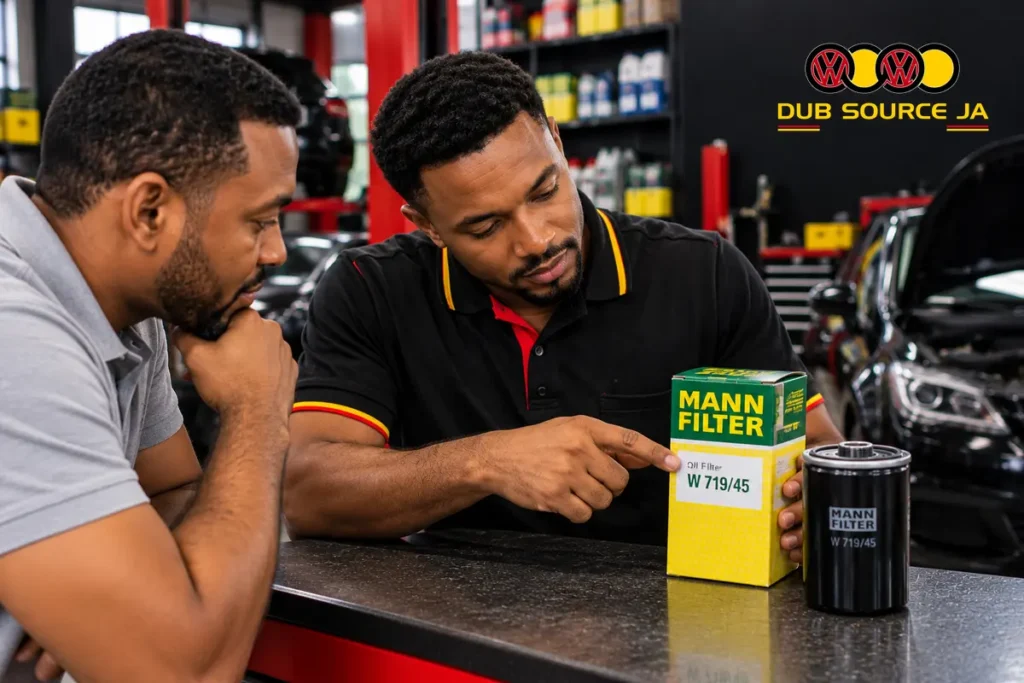
You do not need to be a mechanic. Just ask three plain questions: “Who made it?” “What is the full part number?” “Has the fit been checked for my car?”
If the answer is “same as factory,” ask whether that applies to this exact product. If it is “factory approved,” ask which approval the maker can show.
A parts maker may offer a sound choice. An aftermarket option may also work well. You can compare both, but you need to know what each one is.
For more on the labels, read Dub Source’s OEM versus original parts guide. It covers the separate question of genuine and suspect goods.
Seven Checks Before You Buy VW or Audi Parts in Kingston
Keep this short list on your phone. It can help at a shop counter or during a WhatsApp parts enquiry.
- Check the fault first. A knock, leak, or dash light has more than one possible cause. Ask for proper checks when the cause is not clear.
- Get your car details. Note the make, model, year, VIN, and engine code if known.
- Ask what OEM means here. Is the offer genuine vehicle-brand, OEM supplier-brand, or aftermarket with an OE-quality claim?
- Get the full part reference. Compare the precise code, not just the model name printed on a listing.
- Check the required specification. For fluids, sensors, and safety parts, ask what standard or vehicle application is confirmed.
- Ask where it came from. Keep the invoice and check the seller’s identity. A logo alone cannot prove source.
- Confirm fit before fitting. Ask a parts specialist to check your VIN and any other key details. Use a trained technician for safety work.
If a seller cannot explain a key detail, do not rush. One more check is often easier than another trip to the workshop.
You can see how Dub Source handles parts enquiries before you send your vehicle details.
Common Mistakes That Are Easy to Avoid
Buying by model name alone. “Fits Audi A4” can still leave out the year, engine, or build details. Ask for the exact match.
Thinking a high price means genuine. Price may reflect a brand, supplier, or sales route. It is not proof of origin.
Thinking aftermarket means fake. Aftermarket is a normal parts category. Counterfeit means a product is falsely presented as something it is not.
Choosing a part before checking the fault. If a VW has a warning light, do not buy a sensor from a guess. A proper check can save a needless purchase.
Assuming the same supplier means the same design. A parts firm can sell more than one product line. Compare the exact items.
Frequently Asked Questions
What Does OEM Stand for in Car Parts?
OEM means Original Equipment Manufacturer. It may mean the car brand or a firm that makes parts for new cars. Ask which meaning a seller is using.
Does OEM Mean Volkswagen or Audi Made the Part?
Not always. Specialist suppliers can make original equipment for vehicle makers. A part sold under the supplier’s name is not automatically identical to the factory-fitted item.
Is OEM the Same as Genuine?
Not necessarily. Genuine parts come through the car brand’s network. Supplier-brand parts may come through other sellers. Check the exact code.
Does “OEM Quality” Mean Factory Approved?
No. It is usually a quality or specification claim. Ask which standard it meets and whether any formal approval applies to that product.
Are Aftermarket Parts Bad for VW and Audi Cars?
No. Good aftermarket parts may suit the car when the brand, required specification, and fit are right. The label does not mean fake.
Can an Original Part Still Be Wrong for My Car?
Yes. A genuine part for one model year or engine may not fit another. Confirm the VIN and exact part code before buying.
What Details Should I Send to a Kingston Parts Shop?
Share the make, model, year, VIN, and engine details if known. Add a photo of the old part when useful. Ask for a fitment check before payment.
Know What OEM Means, Then Buy With Confidence
OEM is not a magic word. It tells you something about a maker’s role, but it does not answer every buying question.
You should know what you pay for. Check who made the part, what it is meant to do, and whether it suits your exact VW or Audi. Those facts matter more than a bold label or a quick promise.
If you need help, contact Dub Source Limited with your vehicle details. Ask the team to confirm the right part before you buy. A clear answer today can save an expensive guess tomorrow.