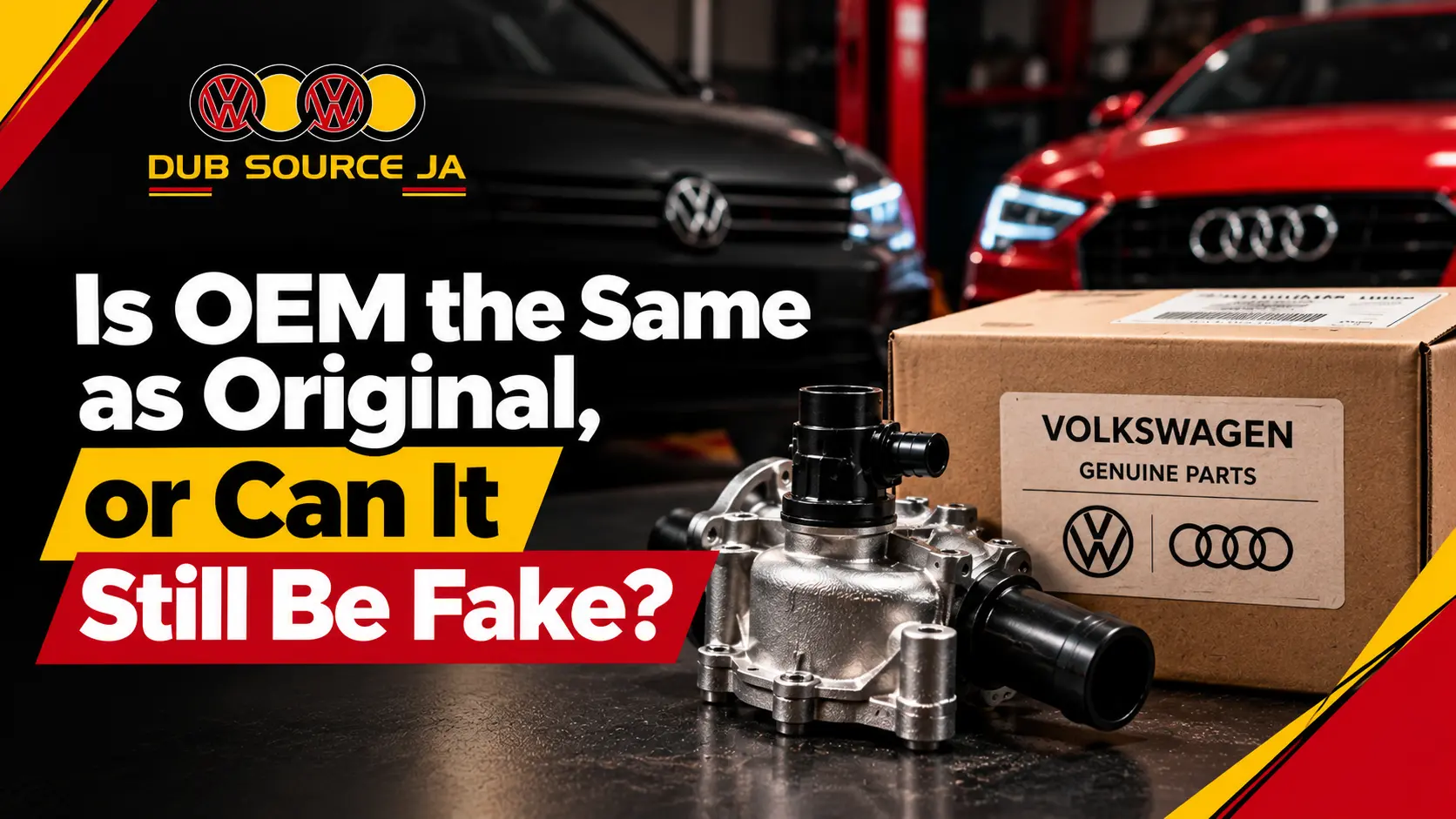
No, OEM is not always the same as original or genuine. And yes, a part sold as OEM can still be fake. OEM means Original Equipment Manufacturer. It points to a firm that makes parts used in new cars. A genuine part is sold under the car maker’s own parts brand. A fake may copy either label.
So how do you know what is safe to buy for your VW or Audi in Jamaica? You need to check three things: who made the part, where it came from, and whether it fits your car. This guide shows you how.
What Do Original, OEM, and Aftermarket Parts Mean?
These words sound alike at a parts shop. But each means a different thing.
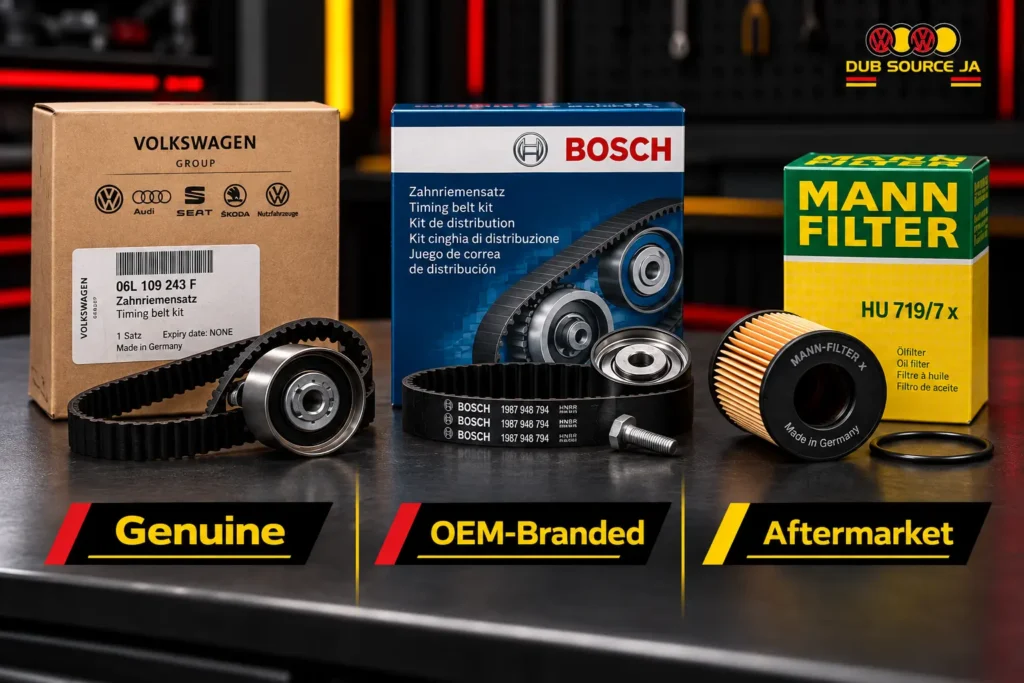
Genuine or Original Parts
A genuine VW or Audi part is sold under the car brand’s name. It comes through that brand’s parts supply system. Volkswagen says its Genuine Parts are the same parts it fits in new cars.
“Original” may mean the factory-fitted part or a genuine new one. Ask which.
Even genuine parts need a fit check for your exact car.
OEM Parts
OEM stands for Original Equipment Manufacturer. It is the name for a firm that makes parts used by car makers as original equipment.
Think of a bakery that makes bread for a hotel. It also sells bread under its own name. Same baker, but not always the same recipe.
A parts firm may sell its own boxed goods too. The specs may differ. Check the item, not just the maker.
Aftermarket Parts
An aftermarket part is a replacement sold outside the car maker’s own parts brand. Some come from trusted firms and work well. Others may be poor quality.
You may also see “OE quality” on a listing. That is a claim about quality. It is not proof that the part came from the firm that made the factory part.
Is OEM the Same as Original, or Can It Still Be Fake? What to Check
Here is the key point: OEM tells you about a maker, not a promise that every item with that label is real. A seller can print OEM on a box. A fake part can also copy a real logo, seal, or part number.
That is why a nice box should not be your only test. A real part may come in a plain box. A fake may look polished.
Real does not always mean right for your car. An Audi A4 part may be genuine but wrong for your A4.
Ask two questions before you pay: Is this part authentic? Is it the correct fit? You need a sound answer to both.
Genuine vs OEM vs Aftermarket vs Fake Parts
| Type of part | What it means | What you should check |
|---|---|---|
| Genuine VW or Audi | Sold under the car maker’s parts brand | Source, part code, VIN match |
| OEM-branded | Sold under the name of an original equipment maker | Exact item, maker, source, fit |
| Aftermarket | Made as a replacement under another brand | Quality, specs, source, fit |
| Fake or counterfeit | Made or sold to pass as a brand it is not | Do not fit it; seek proof and advice |
A high price does not prove a part is real. A low price does not prove it is fake. Traceable supply and the right fit are far better signs.
Why Fake Car Parts Matter on Jamaican Roads
Picture this. You have a trip from Kingston to Ocho Rios. The car is packed. The air is warm. As you head out, you want to think about the day ahead, not the brake pads fitted last week.
Brakes, steering parts, and filters all have a job to do. A poor copy may look fine, but looks do not show how it was tested.
The UK government’s guide to fake car parts warns that fake brakes, filters, and plugs can be hard to spot and may fail. Its advice on checking sellers can help Jamaican drivers too.
You may pay for labour twice, miss work, or spend days chasing the fault. That is a lot when you need your car each day.
How Can You Spot a Fake OEM or Genuine Part?
No quick look can prove a part is real. These clues tell you when to check more.
1. Look Closely at the Box
Check the print, labels, and seal. Is a label stuck over another? Does the box look opened?
Audi’s brand protection advice lists poor packs and odd print as warning signs. Yet box styles vary. A plain pack is not proof of a fake.
2. Check the Part Number
Ask for the brand and part number. These help with a fit check.
But fakes may copy real codes. A number alone proves little.
3. Ask About the Source
Who supplied it? What brand and part type is it? Will you get a clear bill?
Be wary of vague claims such as “same as dealer” with no proof.
4. Use the Brand’s Own Check Tool
Some brands put security seals on select packs. For example, Bosch KeySecure lets you check a code on packs that use its seal.
Not all Bosch items have seals. Use the real Bosch site. Ask the brand if the check seems wrong.
5. Think About the Price, but Do Not Guess
A low price may mean a sale or a different part line. Ask why it costs less. Do not guess.
Why the VIN Check Matters as Much as the Brand
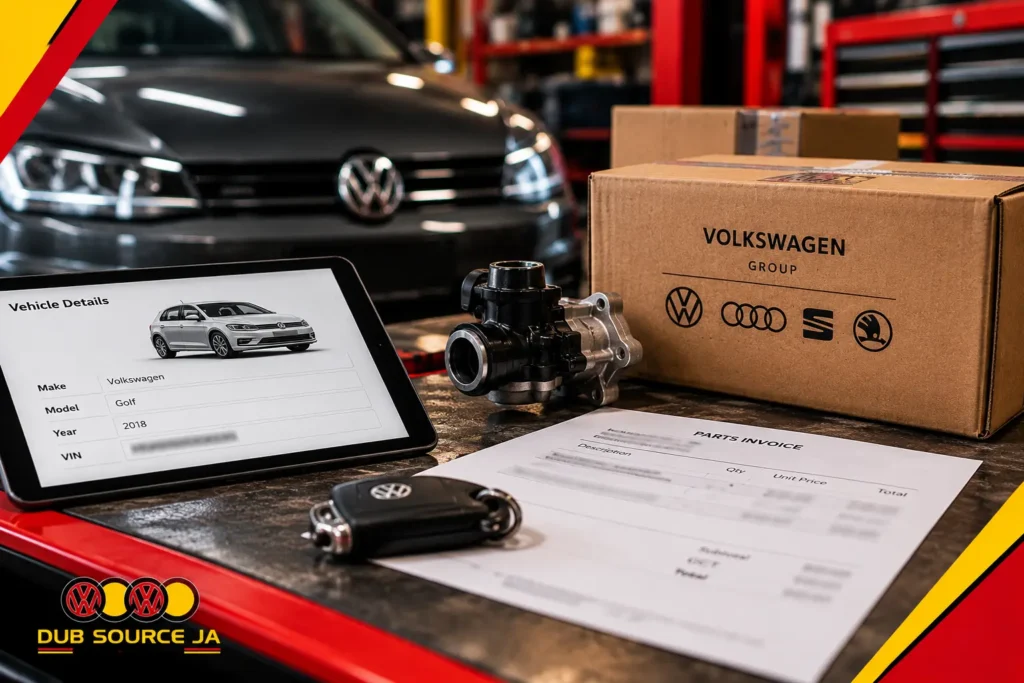
Imagine two VW Golfs parked side by side in Kingston. Same shape. Same badge. But one has a different engine or build date. They may need different filters, sensors, or brake parts.
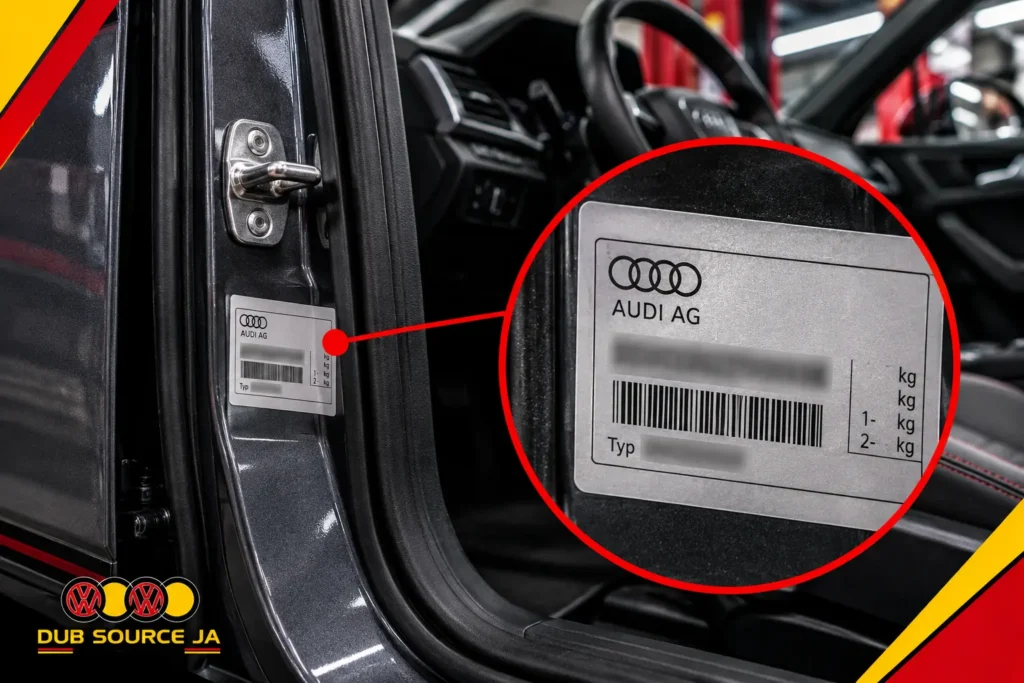
A model name alone is not enough. Your VIN, or chassis number, acts like the car’s ID card. It helps a parts team check the right spec.
Dub Source Limited explains this in its VIN matching guide for VW and Audi parts. The team asks for car details so it can check fit before a part is supplied.
Have the year, engine details, and VIN ready. Look on your car or its papers. Do not post your full VIN in public.
A scan code is a clue, not a full fault check. Do not buy a part from a code alone.
A Simple Seven-Step Checklist Before You Buy
Save this list for the next urgent parts search.
- Find out what is wrong. Do not swap parts based on one sound or a dash light. Have the fault checked if the cause is not clear.
- Get the car details. Note the make, model, year, VIN, and engine code if known.
- Ask what type of part it is. Genuine, OEM-branded, or aftermarket? Ask for a clear brand name.
- Check the exact fit. Have the part code and specs matched to your car.
- Check the source. Ask where it came from and keep a bill or receipt.
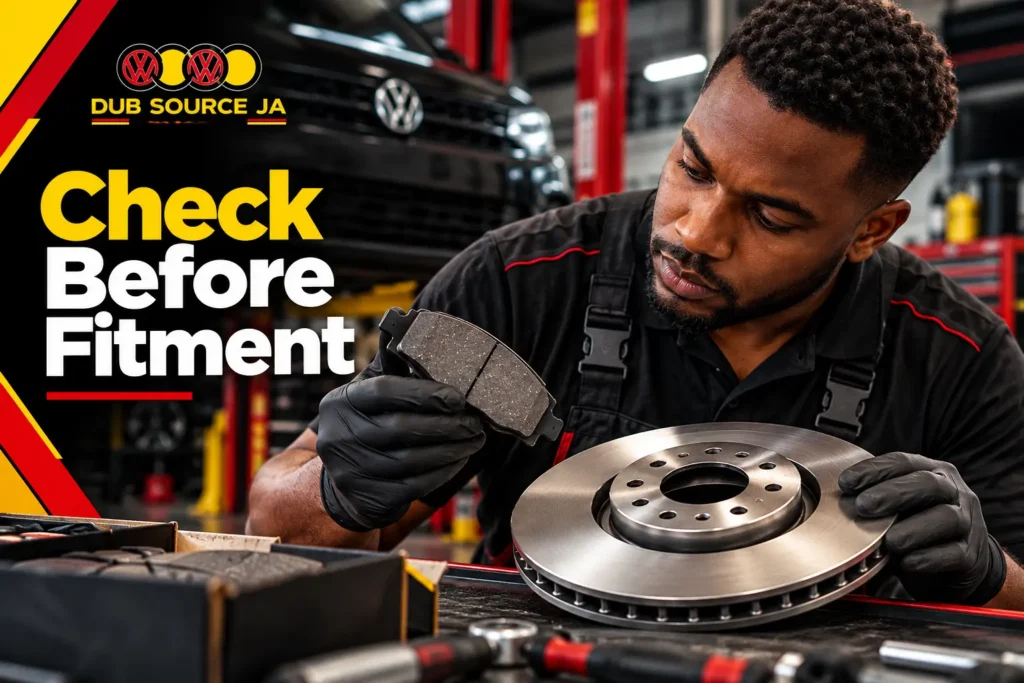
- Look before it is fitted. Check for damage, odd marks, or a part that does not match the order.
- Keep your proof. Save the box, labels, and receipt until the job is done and checked.
For brakes, steering, or other key safety parts, use a skilled technician. If a part seems wrong, do not fit it just to see what will happen.
You can read how Dub Source checks parts before supply to see why the team asks for vehicle details first.
Four Common Mistakes That Can Cost You Twice
Buying a Part Just Because the Model Name Matches
“Fits VW Polo” sounds clear. But what year, engine, and version? Two Polos may need different parts. Get the exact match first.
Thinking Every OEM Box Holds a Factory-Identical Part
A known maker may sell more than one part line. That does not make each part the same as the factory item. Check the specs.
Trusting a Photo More Than the Seller
A product photo may look clean and real. But is it a photo of the item you will get? Ask for the right details and a source you can trace.
Fitting a Part When Something Feels Wrong
In a rush? “Let us try it” is still a poor plan for a suspect part. Check first.
What Should You Do If You Already Bought a Suspect Part?
Do not fit it yet. Keep the box, bill, labels, and photos. Ask the seller for proof of origin and return terms.
If it is on the car, get a workshop check. A noise or warning light does not prove it is fake.
If brakes or steering may be at risk, do not keep driving until a skilled person has checked the car. You can also ask the brand’s official support team how to report a suspect product.
A calm check beats a rushed fix.
Frequently Asked Questions
Is OEM the Same as Genuine VW or Audi Parts?
Not always. Genuine parts are sold under the car maker’s brand. OEM points to a firm that makes original equipment. Some goods may share a maker, but the box and specs can differ.
Can a Part Labelled OEM Be Fake?
Yes. A fake seller can copy the term OEM, a logo, or a part code. Ask about the seller, source, and brand checks before you buy.
Does a Real OEM Part Need a VW or Audi Logo?
No. A real supplier-brand part may come in its own box. But a VW or Audi logo is not proof that a part is real. Check the source.
Are Aftermarket Parts Always Lower Quality?
No. Good aftermarket parts can be a sound choice when they meet the right spec. Quality varies, so check the maker and fit rather than the label alone.
Can a Genuine Part Still Be Wrong for My Car?
Yes. A genuine part for one year or engine may not fit another. The VIN and exact part number help cut the risk of a wrong order.
Can a QR Code Prove a Part Is Real?
Not on its own. Use a brand’s official tool if it offers one. A code does not take the place of checking the seller and the exact part.
What Details Should I Send for a VW or Audi Parts Check?
Send the make, model, year, and VIN if you have it. Add the engine code or a clear part photo when useful. The team can then help check the right fit.
Buy with More Care, Drive with Less Doubt
The best part is not just one with a nice box or a well-known name. It is one you can trace, trust, and match to your car.
You want your VW or Audi back on Jamaican roads, not back in the shop.
If you are not sure which part you need, contact Dub Source Limited with your vehicle details. Ask the team to check the right part before you buy. A few good questions now can save a costly guess later.