loader image

Dub Source JA

AUTO PARTS STORE

Featured image for How do I know if a part fits my car without removing the old one first? in Kingston Jamaica

How do I know if a part fits my car without removing the old one first?

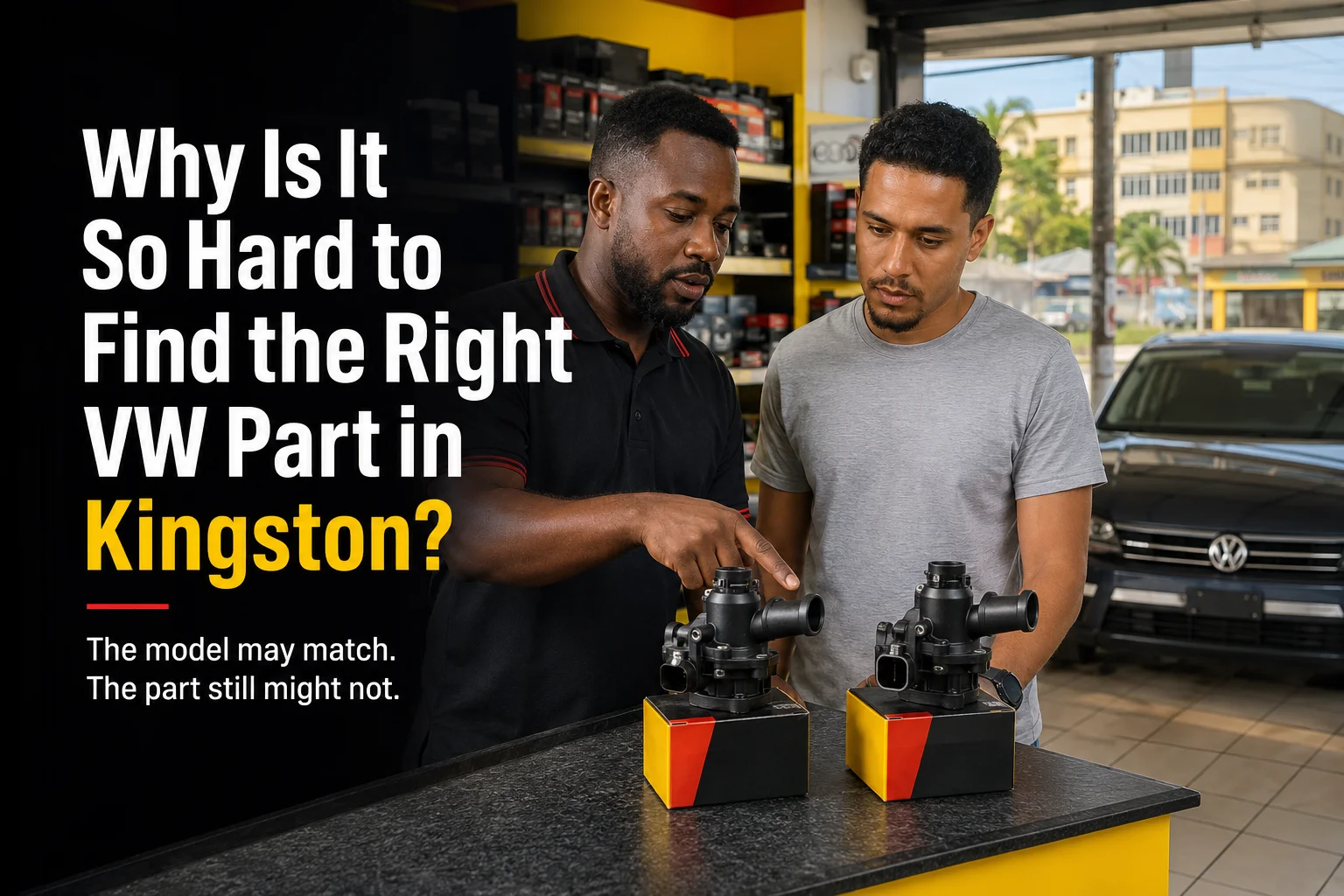
Have you ever found yourself scrolling through parts online, wondering if you’re picking the right one?You look at the photos, read the descriptions, and still, there’s that nagging voice in your head asking: It’s not just about buying a part; it’s about making sure you’re avoiding mistakes that could cost you time, money, and frustration. In Kingston, where most people depend on their vehicles every day, even one wrong part can throw off your entire week.Getting stuck in traffic or missing appointments can turn a simple day into chaos.That’s why it’s so important to make sure you get the right part, first time. Here’s the good news: You don’t need to disassemble your car or get your hands dirty to figure out if you have the right part.There’s a smarter, simpler way that people who’ve been doing this for years follow. If you know your car well before buying anything, you’ll save yourself from big headaches.Once you get the hang of it, buying the right parts becomes a much easier task. Why Do People Get the Wrong Part, Even When They “Check”? Most people don’t guess blindly. They do their best to make sure the part fits by checking photos, reading descriptions, and even comparing sizes. But then the part arrives, and it doesn’t fit.It’s frustrating! Why does this happen? The truth is, even though a part might look right, it’s not always going to be a perfect match.Think of it like buying shoes online. You might find two pairs that look exactly the same—same size, same color, same style.But when you wear them, one fits just right, and the other makes your feet hurt after only a few minutes. Car parts can be like that, too.Two parts might look almost identical, but tiny differences can make a big difference in how well they fit and function. What Makes Car Parts Different? Here are a few reasons why you might find that a part doesn’t fit, even when you check: How to Make Sure You Get the Right Part Now that you understand why the wrong part might get ordered, let’s talk about how to make sure you get the right one. It’s all about knowing your car and being prepared before making the purchase. Start with Your VIN Your VIN (Vehicle Identification Number) is your car’s unique identity.Every car has one, and no two cars share the same VIN.You can find this number on the dashboard, inside the door frame, or on your car’s registration or insurance documents.It’s like your car’s fingerprint. The VIN gives you more information about your car than you may realize.It can tell you about the engine type, trim level, and even the year it was made.Using this number is the best way to avoid confusion and make sure you’re getting the exact part that fits your car. For more detailed information, use the VIN decoder to get specific data about your car’s specs. Know What’s Under the Hood Two cars of the same model may seem identical, but once you lift the hood, you’ll see they might have different engines, fuel types, or transmission systems.A small difference in the engine or fuel type can make a huge difference in what parts fit. Before buying a part, it’s a good idea to know the following details: You don’t need to be a mechanic—just knowing the basics will make the process easier and more accurate. If You Have the Part Number, You’re Already Ahead If you’ve serviced your car before, you might have kept the part number from a previous replacement.This number is like a key that unlocks the exact match for your car.Look at any old invoices, receipts, or service records.If you find a part number, you’re already ahead in the game.No need to guess! What You Can Check Without Removing Anything You don’t always need to remove parts from your car to confirm fitment.In fact, there are several things you can check just by looking at your documents or taking a quick peek under the hood. Don’t Be Afraid to Ask for Help Sometimes the easiest way to get the right part is to simply ask for help.A good supplier will: If you’re unsure, don’t hesitate to reach out to them before placing your order. A Real Kingston Scenario: What Would You Do? Imagine you’re driving down Constant Spring Road, and you know it’s time for a car service.You need a new oil filter. Option 1: You choose the cheapest one, thinking it looks fine. A few days later, the part arrives, but it doesn’t fit. Now your car’s stuck. Option 2: You check your VIN, confirm your engine size, and double-check with the supplier. A few extra minutes of work, but when the part arrives, it fits perfectly, and your car is back on track. Which option would you prefer? How to Know If a Supplier Knows What They’re Doing Working with a reliable supplier makes all the difference.Look for these signs that show the supplier knows what they’re doing: If they don’t do these things, it might be worth looking for someone more trustworthy. Mistakes That Cost Time and Money These mistakes might seem small, but they add up: Tools to Make It Easier You don’t need many tools—just the right ones: These tools will help you ensure you’re getting the right part every time. The Bottom Line If you’ve ever felt unsure about a car part, that’s totally normal.It’s not just about getting the part—it’s about getting it right the first time. Instead of asking, “Will this fit?” ask yourself, “Have I confirmed this properly?” Once you do that, the entire process becomes easier and less stressful. For a smoother experience, check out Dub Source Shop and follow their process to make sure you get the perfect part every time.

How do I know if a part fits my car without removing the old one first? Read More »

AUTO PARTS STORE
Featured image for Are Bosch, Meyle, and Febi Parts Really Worth the Extra Money? in Kingston Jamaica

Are Bosch, Meyle, and Febi Parts Really Worth the Extra Money?

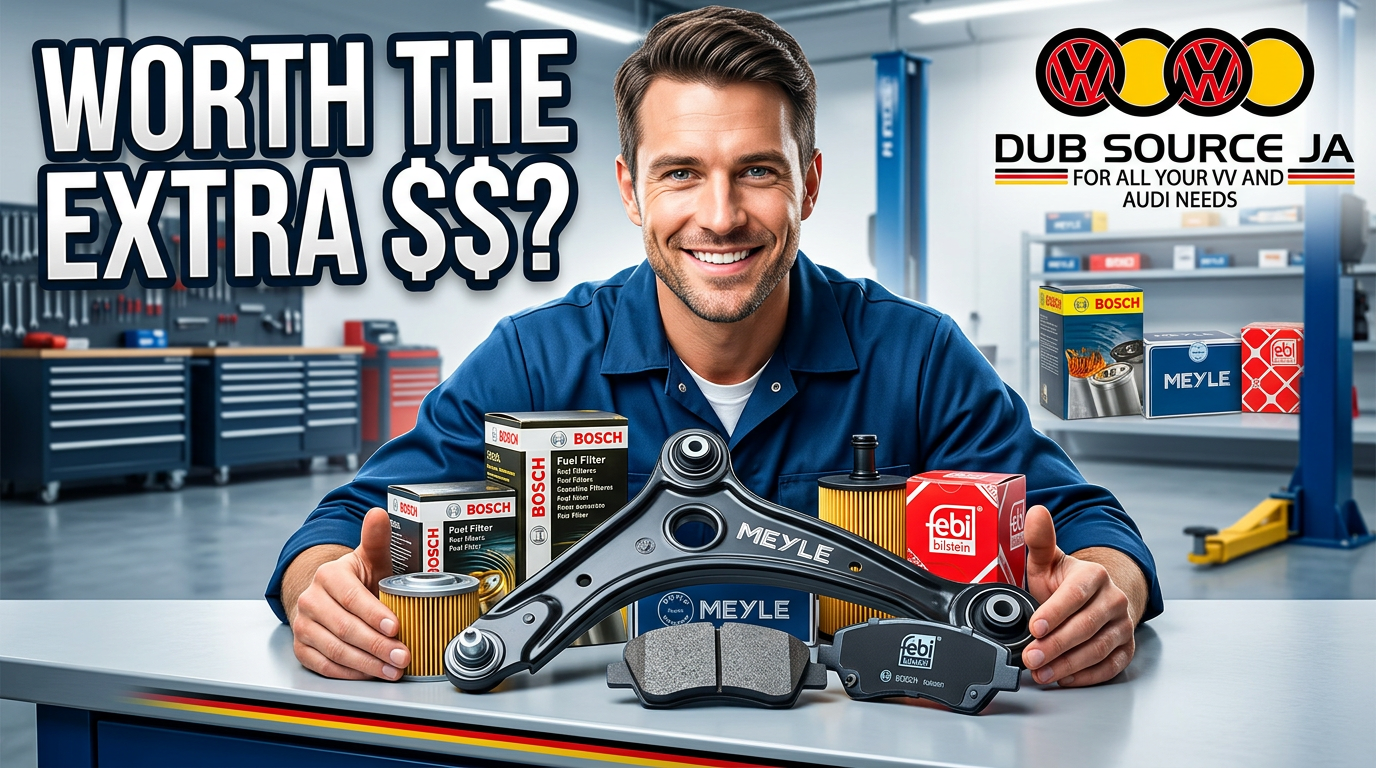
Have you ever stood in front of a shelf full of car parts and thought,“Are Bosch, Meyle, and Febi parts really worth the extra money?” You’re not alone.It’s a question that pops into many car owners’ minds. It’s normal to wonder.After all, cars are a big investment. You want parts that last and perform well.But, here’s the thing: Are the more expensive parts from Bosch, Meyle, and Febi really better?Or is it just the brand name you’re paying for? Let’s dive into this, and I’ll show you exactly what you’re getting when you pay for these premium brands.And spoiler alert: it’s more than just longevity.It’s about value, performance, safety, and peace of mind. Bosch and other top brands offer products like service parts designed for durability and reliability. Why Do Bosch, Meyle, and Febi Parts Cost More? Let’s face it.When you buy parts from these brands, you’re not just paying for the name.You’re paying for quality.You’re paying for durability. But what makes these parts stand out from cheaper alternatives? Imagine this:You’re choosing between two knives.One’s cheap, one’s expensive.They both cut.But the expensive one will last longer, stay sharper, and perform better. That’s what you’re getting with Bosch, Meyle, and Febi parts.Top-tier materials.Parts that undergo rigorous testing to ensure they perform in tough conditions.For example, Bosch brake pads.They’re designed to last longer and offer better stopping power than their cheaper counterparts.That means fewer replacements, saving you money over time. Bosch’s approach to engine oil is another example of how premium materials ensure better engine performance. Perfect Fit with OEM Specifications Have you ever bought a part, only to realize it doesn’t fit quite right?Maybe it was a little off.Maybe you had to force it into place.It happens.But not with Bosch, Meyle, and Febi. These brands offer OEM (Original Equipment Manufacturer) parts that fit your car perfectly.You’re not just getting a replacement.You’re getting the exact part that your car was built with. This ensures better performance.Less wear.Greater longevity.When you buy from these brands, you don’t have to worry about a poor fit.You’re getting the real deal. For example, specific car parts are designed to match your vehicle exactly, offering a reliable and long-lasting fit. Are These Parts Built to Last? Let’s talk about longevity.Imagine this:You’ve had your car for years.You’ve replaced a few parts here and there.But now it’s time for brake pads. You choose Bosch.Why?Because they’re built to last. And that’s where Bosch, Meyle, and Febi shine.They’re not just designed to work.They’re crafted to endure.These parts are made from high-quality materials.And they’re tested under extreme conditions to ensure they stand the test of time. Sure, you could opt for a cheaper part.But think about it.How long will it last?Will it wear out sooner?What happens if it fails unexpectedly?The difference is clear. Service maintenance parts like those from Febi provide superior durability compared to budget alternatives. What Sets These Parts Apart: Advanced Testing and Engineering Bosch, Meyle, and Febi don’t just make parts.They engineer them.They test them extensively. These parts are put through rigorous simulations, designed to mimic years of wear and tear.And they’re tested under real-world driving conditions.Whether you’re navigating potholes, driving in heavy rain, or sitting in stop-and-go traffic,these parts are designed to perform.They’re engineered for tough driving conditions. Imagine Bosch brake pads.They’re tested in simulations that replicate long-term usage.This ensures they continue to perform well over time. So, when you’re buying these parts,you’re getting the peace of mind that comes with knowing they can handle whatever the road throws at them. Find more details about high-performance parts in our engine service parts section. Is the Extra Money Worth It? Okay, now to the big question:Is it worth the extra cost? For many car owners, the answer is yes.But there are also times when paying more isn’t necessary. Durability: Fewer Replacements, Less Hassle Let’s break it down.When you buy premium parts, you’re investing in the long-term.You might pay a little more now,but over time, you’ll save money. Here’s why:Premium parts last longer.That means fewer replacements.Fewer visits to the mechanic.And less time worrying about your car. Take Bosch brake pads.Yes, they cost more than generic brands.But they’ll last longer, meaning fewer brake changes in the future.That’s fewer repairs, less hassle, and more savings. For longer-lasting solutions, look into service parts. Performance and Safety: Don’t Cut Corners When it comes to safety,you can’t afford to cut corners.Brakes. Suspension. Steering.These are the critical parts that keep your car running smoothly. That’s where Bosch, Meyle, and Febi shine.These parts are designed for top-tier performance, especially in the critical areas of braking and handling. Imagine this:You’re driving through heavy traffic, and you need to stop quickly.You need your brakes to work perfectly.Bosch brake pads are designed for that exact moment.With superior stopping power, you can trust them when it counts. And Meyle suspension parts?If your suspension is strong,your ride is smoother.Your handling improves.And your car lasts longer. Explore specific car parts for options that match your car’s performance needs. When Are Cheaper Parts a Good Option? Now, here’s the truth:There are times when cheaper parts can be just as good. 1. Non-Critical Parts If you’re replacing parts like light bulbs, mirrors, or interior trims,you don’t need to spend extra on premium brands.These parts don’t undergo the same stress as critical components like brakes or suspension.So, a more affordable part will work just fine. 2. Older Cars If you’re driving an older car that’s not worth much,it may not make sense to splurge on premium parts.For example, replacing an air filter in an older car that doesn’t get much use?A generic part will do the job. But if you’re keeping your car for the long haul,investing in quality parts might be worth it.It could save you more in the long run. 3. Low-Mileage Driving If you’re not driving much,you might not need parts that are designed to handle extreme driving conditions.For example, if you’re only using your car for short trips and it’s well-maintained,you can get by with more affordable options for many parts. For

Are Bosch, Meyle, and Febi Parts Really Worth the Extra Money? Read More »

AUTO PARTS STORE

How long should a decent German aftermarket part last in Kingston traffic?

If you sell or fit German car parts long enough, customers always ask the same thing. “How long should this actually last?” And in Kingston traffic, that’s a fair question. Because what works fine on open roads doesn’t always survive stop-start driving, heat, rough surfaces, and short journeys. That’s where expectations usually go wrong. Let’s break this down properly, without sales talk, and without pretending there’s one magic answer. Kingston traffic changes part lifespan. Full stop. Most service intervals are written assuming mixed driving. Kingston driving isn’t mixed. It’s heavy city use. That means: long idle times constant braking higher engine bay temperatures more dust and contamination All of that shortens the life of consumables first, even when the brand is good. So when someone asks how long a decent German aftermarket part should last, the real answer is: it depends on the part and how the car is used. What “decent German aftermarket” actually means In practical terms, a decent German aftermarket part usually falls into one of three categories. It’s either a genuine OEM part, an OEM-equivalent made by an established manufacturer, or a correctly specified service item such as fluids or filters that meet the original factory standards. What it does not mean is a box with a German-sounding name and no real technical backing behind it. That distinction matters. Fake or poorly specified parts are one of the main reasons people see parts fail far earlier than expected. If you want to understand how fake “OEM” parts end up in the market and how to spot them, this guide explains it clearly:how to avoid getting scammed with fake OEM parts Start with the parts that suffer first in city driving Oil and oil filters take the first hit in city driving Heat and long idle time break oil down faster than most drivers realise. In stop-start traffic, the engine spends more time running without proper airflow, which raises oil temperature and accelerates degradation. Once oil starts to thin out or lose its protective properties, it stops doing its job properly. When that happens, everything downstream begins to suffer. Internal components are exposed to more friction. Fine debris circulates longer than it should. Over time, this adds up to increased wear that could have been avoided with proper filtration and maintenance. That’s why oil filters matter more than people think. A well-made filter traps microscopic particles that would otherwise move through the engine again and again, especially when oil is under constant heat and load in city driving. Cheaper or poorly made filters often struggle here, even if they look fine from the outside. At this point, it makes sense to look at the actual part responsible for that protection:   If you want to understand the technical reasoning behind this, Bosch explains how filtration efficiency helps protect engines operating under stress and extended service conditions, particularly in demanding driving environments:how premium oil filters protect engines Brake fluid and brakes don’t like stop-start traffic In city driving, braking systems work almost constantly. Every stop, crawl, and restart creates heat, and over time that heat, combined with moisture absorption, shortens brake fluid life far quicker than most drivers expect. That’s why most manufacturers recommend replacing brake fluid every two years, regardless of mileage. Audi confirms this clearly in its official guidance onrecommended service schedules. When brake fluid is overdue, it’s rarely just the fluid that suffers. Pads can wear unevenly. Seals inside the braking system can degrade earlier than they should. Internal components are exposed to higher temperatures and moisture than they were designed for. The brakes may still feel “okay” during normal driving, but the long-term wear is already underway. This is where using the correct-spec brake fluid really matters. The right formulation helps maintain consistent braking performance and protects the system under repeated heat cycles typical of stop-start traffic:   If you’re unsure whether the symptoms you’re noticing point to worn pads, old brake fluid, or another issue entirely, this guide helps break down common warning signs before you spend money on parts:signs and symptoms to watch for Coolant spec matters more than brand names Coolant isn’t just coolant. German engines are designed around very specific chemical standards, and those standards exist to protect internal components over the long term, not just to control temperature. Using the wrong coolant, or mixing incompatible types, can start a chain reaction inside the engine. Corrosion can develop in passages you can’t see. Seals can degrade earlier than expected. Heat transfer efficiency drops over time. The car may feel fine at first, but the damage usually builds quietly in the background. This is one of the most common issues we see when vehicles change hands or when previous maintenance history is unclear. The problem doesn’t show up immediately. It shows up later, when cooling issues, leaks, or internal wear suddenly appear with no obvious cause. That’s why spec-matched coolant matters more than colour, branding, or price. What matters is whether the formulation meets the exact requirements the engine was designed for. This is where using the correct coolant formulation makes a real difference in long-term reliability:   If you want to understand the technical side behind these specifications, Pentosin’s own product data sheet clearly outlines compatibility, chemical properties, and manufacturer approvals for Pentofrost E:Pentosin Pentofrost E coolant data sheet Air filters quietly affect engine life in dusty conditions Dust and heat force air filters to work harder in urban driving. In traffic-heavy areas, especially where vehicles spend long periods idling, filters load up faster than most people expect. A clogged air filter doesn’t just reduce performance. Restricted airflow forces the engine to work harder, which affects fuel economy and increases long-term wear on internal components. Over time, even small airflow issues can add unnecessary strain, particularly in engines designed to operate within tight tolerances. Because of that, air filters are one of the simplest and most cost-effective maintenance items to keep on schedule. Replacing them at the right time

How long should a decent German aftermarket part last in Kingston traffic? Read More »

AUTO PARTS STORE
Explainer image for What’s the safest way to replace parts without dealership-level prices in kingston Jamaica?

What’s the safest way to replace parts without dealership-level prices in kingston Jamaica?

Replacing car parts in Kingston can feel like a constant negotiation between cost, quality, and risk. Dealership prices often look extreme, but the lowest-priced alternative can be a trap that ends up costing more in the long run. The hardest part is that the failure usually doesn’t happen at the counter. It happens two weeks later in traffic on Half-Way Tree Road, on a hot afternoon climb, or in a sudden braking moment where you realise the “deal” you got was never a deal. Here’s the thing: you can replace parts safely in Kingston without paying dealership-level prices. But you need a process. Most people lose money in this market for one of three reasons: They buy a part before they confirm the real problem. They rely on vague vehicle details instead of exact matching. They purchase from sellers who can’t stand behind the part. This guide gives you a professional, repeatable framework you can use every time you need to replace a component. It’s not written for mechanics only. It’s written for everyday drivers who want fewer breakdowns, fewer repeat repairs, and more control over what they’re spending. The True Cost of “Cheap” Parts in Kingston “Cheap parts” in Kingston usually means one of these: Low-grade new aftermarket parts with poor tolerances and weaker materials Foreign-used parts with unknown wear history (sometimes excellent, sometimes near end-of-life) Counterfeit parts packaged to look like trusted brands The problem is not that affordable parts exist. The problem is that inconsistent parts exist, and the market doesn’t always make it obvious which category you’re buying. A cheap part can cost you more in four hidden ways: 1) You pay labour twice Even if the part is inexpensive, the labour to install it is not. When a part fails early, you don’t just buy a replacement. You pay removal and installation again. 2) It damages adjacent components Poor brake pads can score rotors. Weak suspension joints can create uneven tyre wear. Low-quality sensors can cause drivability issues that stress other systems. 3) It creates safety risk Certain systems don’t give you time to “wait and see.” Brakes, steering, suspension joints, wheel bearings, tyres, and critical engine timing components are not areas to gamble. 4) It creates downtime A vehicle that is repeatedly in the shop costs you in time, missed work, ride-share expenses, and the stress of unreliable transport. A professional approach isn’t about buying the most expensive part. It’s about buying the right part once. How the Kingston Parts Market Actually Works Most buyers interact with three tiers: Tier A: Dealership / authorised channels You usually get correct fitment, documented part numbers, and warranty clarity. But pricing can be high, and availability can still be an issue depending on model. Tier B: Reputable new aftermarket retailers This is often the best value lane if you know what to buy. Many parts sold here range from OEM-equivalent quality to low-end “will fit” options. Your job is to distinguish which is which. Tier C: Foreign-used market Kingston’s foreign-used market can be excellent for specific categories, especially body and trim. But it requires inspection discipline and a warranty conversation, not blind trust. Your goal is not to pick a tier and stay there. Your goal is to match the sourcing tier to the part category. The Professional Framework: Replace Parts Without Guesswork The biggest upgrade you can make as a vehicle owner is to stop treating repairs as reaction and start treating them as process. Step 1: Confirm the real problem before you shop Never buy a part because of a “feeling.” Symptoms are not diagnoses. A vibration could be tyres, alignment, wheel bearings, worn bushings, a damaged rim, or a drivetrain issue. A warning light could be a sensor, a wiring issue, a vacuum leak, or a mechanical problem upstream. If your check engine light is on, start with a scan. It’s a baseline, not a final answer. The California Air Resources Board notes OBD-II is required on 1996+ gasoline vehicles and 1997+ diesels in that regulatory context, which is why scan diagnostics are so common on modern cars. California Air Resources Board A good rule: Use scan + inspection, not scan alone. Ask for the code, ask for the probable causes, and then verify. If it’s brakes, demand a visual inspection.If it’s suspension, demand that the worn movement or leak is shown.If it’s overheating, inspect coolant condition, leaks, radiator fan function, thermostat behaviour, and hoses before ordering anything. Step 2: Collect accurate vehicle details (not just the model name) In Kingston, “Toyota Corolla” is not enough. “Honda Fit” is not enough. Even the same model year can have variations. Write these down before you call any parts shop: VIN or chassis number Exact year of manufacture (and sometimes month) Engine size and engine code (if available) Transmission type (automatic, CVT, manual) Model code (especially for JDM imports) This is the difference between “it should work” and “it matches.” Step 3: Match the part number whenever possible Part numbers cut through confusion. They reduce the risk of buying the wrong component and discovering it only after your mechanic has already removed the original. If the old part is available, bring it for side-by-side comparison: Mounting points Connector shape and pin layout Physical dimensions Hose or line connections Sensor body style and bracket design If the seller cannot provide a part number or refuses to discuss it, that’s not a normal inconvenience. That’s a quality signal. New vs Used vs Aftermarket: Make the Decision Like a Pro This is where most drivers either save money intelligently or lose money repeatedly. Parts that are often safe to buy foreign-used Foreign-used can be a strong choice for parts where: wear is minimal, failure is not safety-catastrophic, and condition can be visually assessed. Examples: Body panels: doors, fenders, bumpers (check for rust and repairs) Mirrors and trim pieces Interior switches, window regulators, handles Some lighting assemblies (check moisture damage and cracks) Some mechanical items can be foreign-used if

What’s the safest way to replace parts without dealership-level prices in kingston Jamaica? Read More »

AUTO PARTS STORE
Shopping Cart