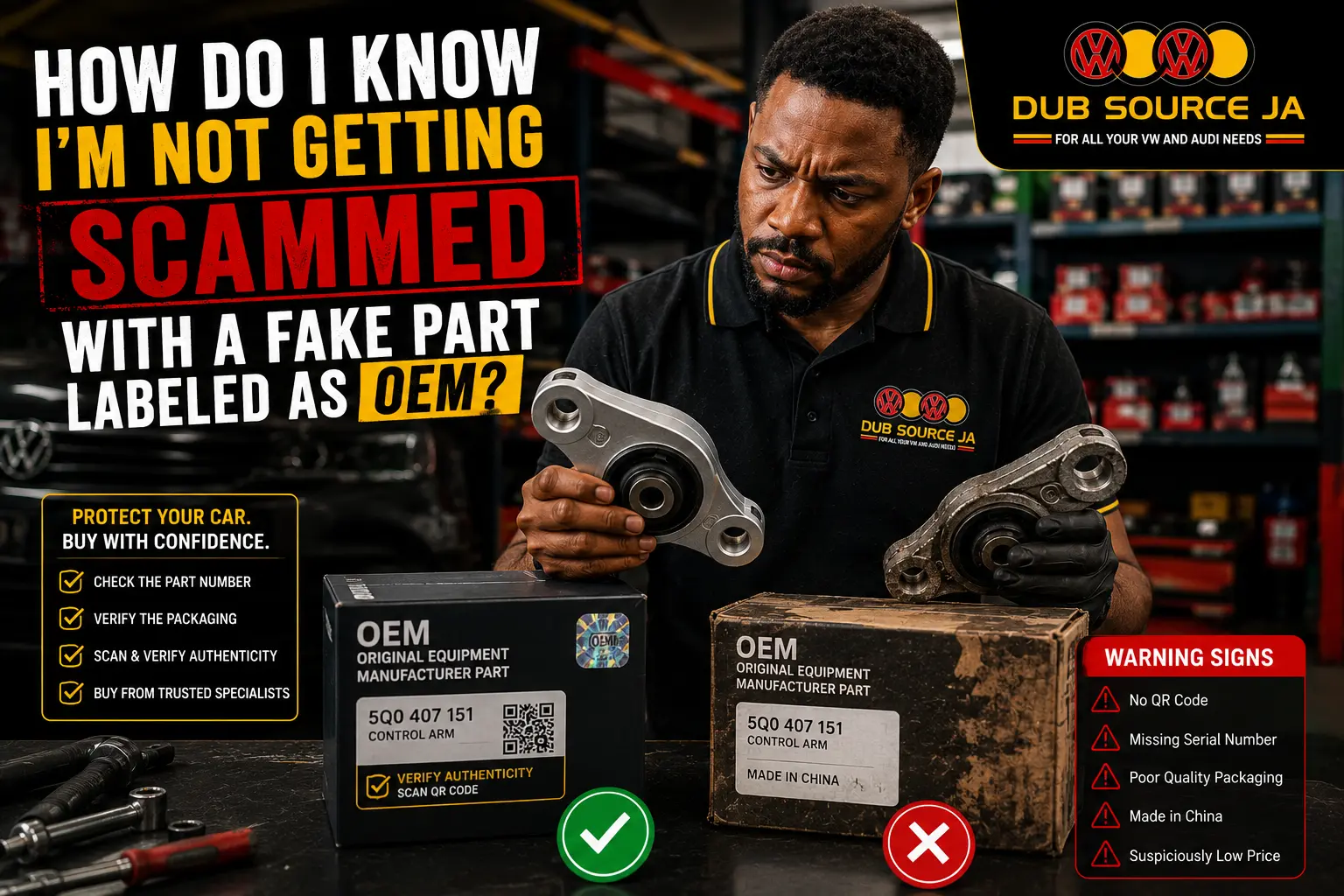
OEM is one of the most overused and misunderstood words in the auto parts market in Jamaica. It stands for Original Equipment Manufacturer, meaning the part was made by the same supplier that built it for the factory. But not every part labelled OEM in a Kingston store actually meets that standard.
This post explains what OEM genuinely means, how counterfeit and mislabelled parts reach the Jamaican market, and exactly what to look for before you spend money on a replacement part for your VW or Audi.
What OEM Actually Means and What It Does Not
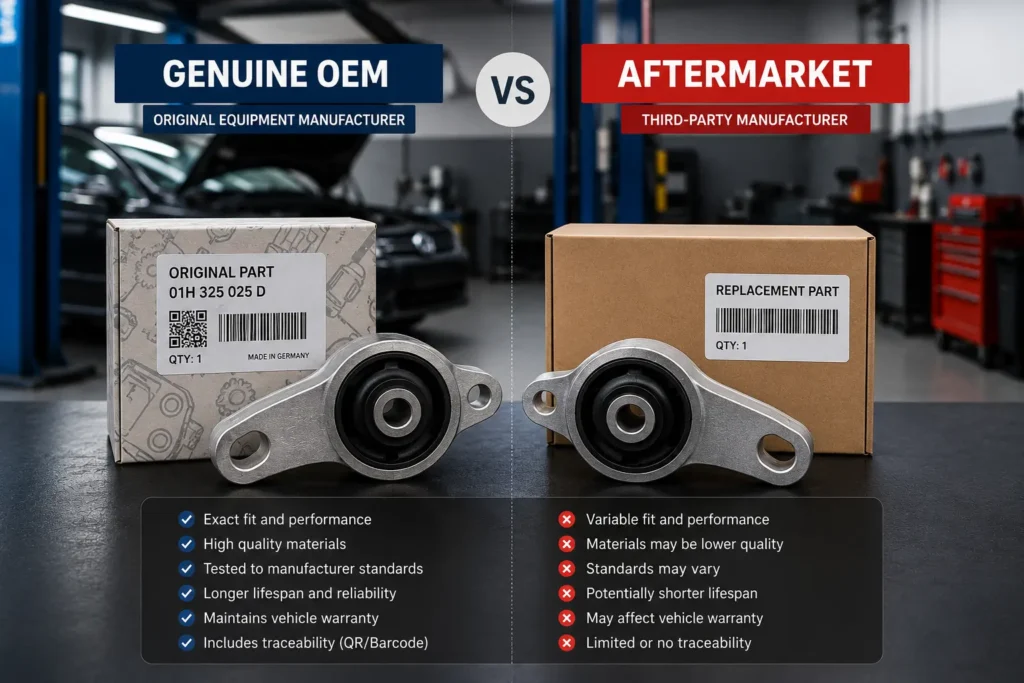
When a part is described as OEM, it should mean the part was manufactured by the same supplier that originally built that component for the vehicle’s production line. For VW and Audi, that includes brands like Bosch, Brembo, Lemforder, Febi Bilstein, and others companies that supply directly to the VAG factory.
What it does not mean: A part that looks similar, carries a similar box design, or is sold as ‘OEM quality’ or ‘OEM equivalent.’ Those terms are not the same thing. OEM equivalent means a part built to a similar specification by a different manufacturer. It may be acceptable depending on the brand but it is not the same as an original OEM part.
how counterfeit and Mislabelled Parts Enter the Jamaican Market
What to Check Before You Buy a VW or Audi Part in Jamaica
Step 1: Verify the Packaging and Labels
Step 1: Verify the Packaging and Labels
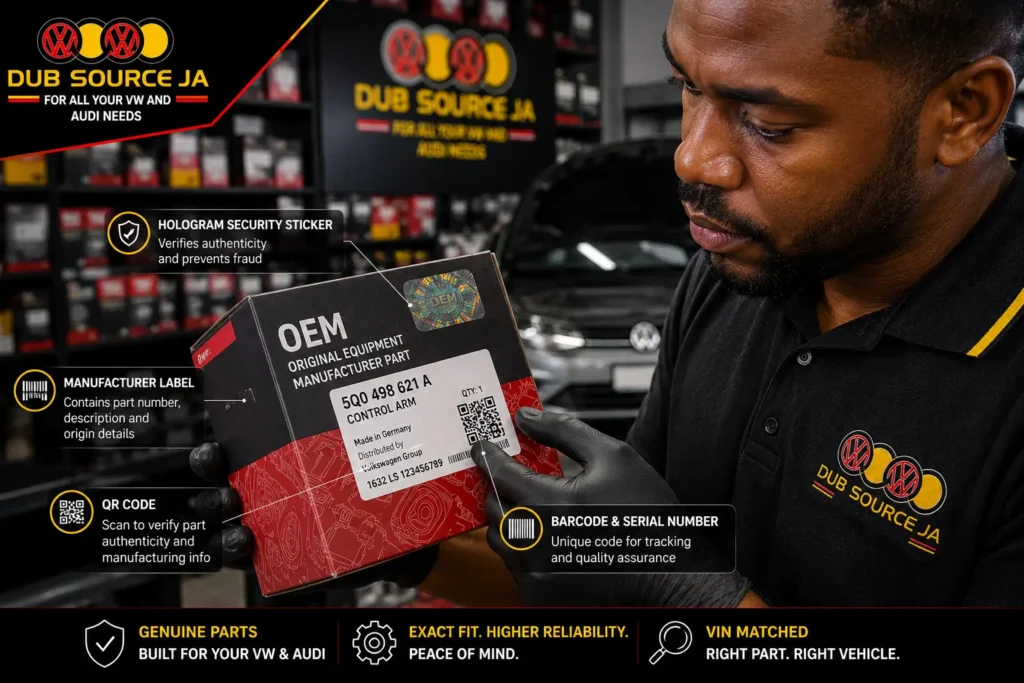
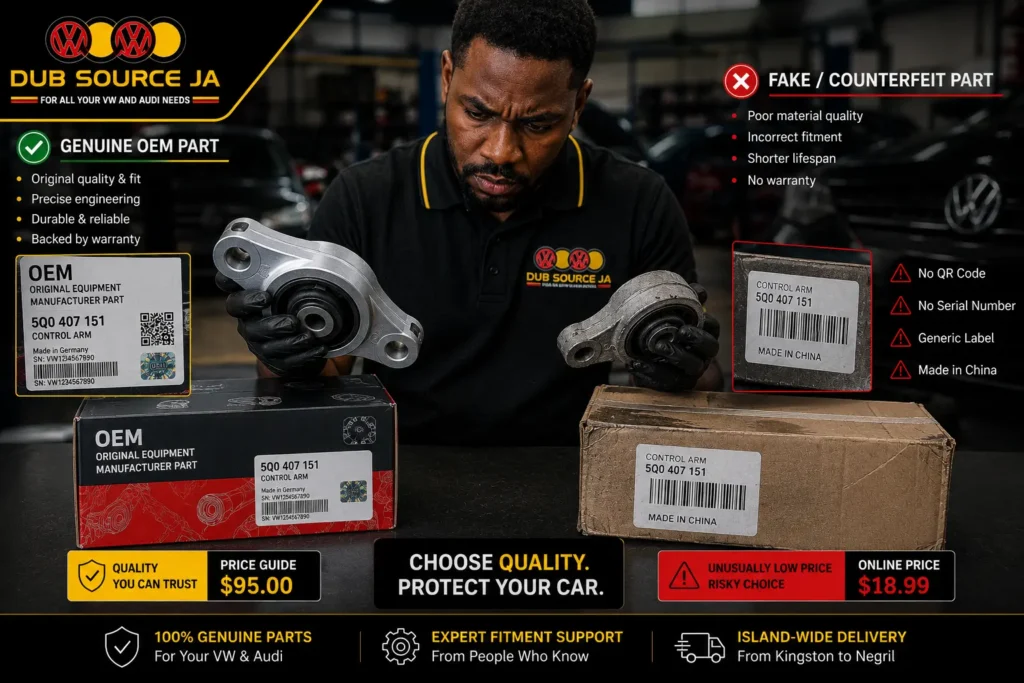
Genuine OEM parts always have consistent packaging, logos, and serial numbers. Look for:
| Checkpoint | What to Look For | Common Fake Signs |
|---|---|---|
| Logo | Crisp, correctly spaced | Blurry, wrong font |
| Part Number | Matches manufacturer database | Missing or inconsistent |
| Seal | Tamper-proof, intact | Opened, broken, or missing |
| Barcode/QR | Scans to manufacturer website | Doesn’t scan or leads to unrelated site |
Step 2: Inspect the Part Quality
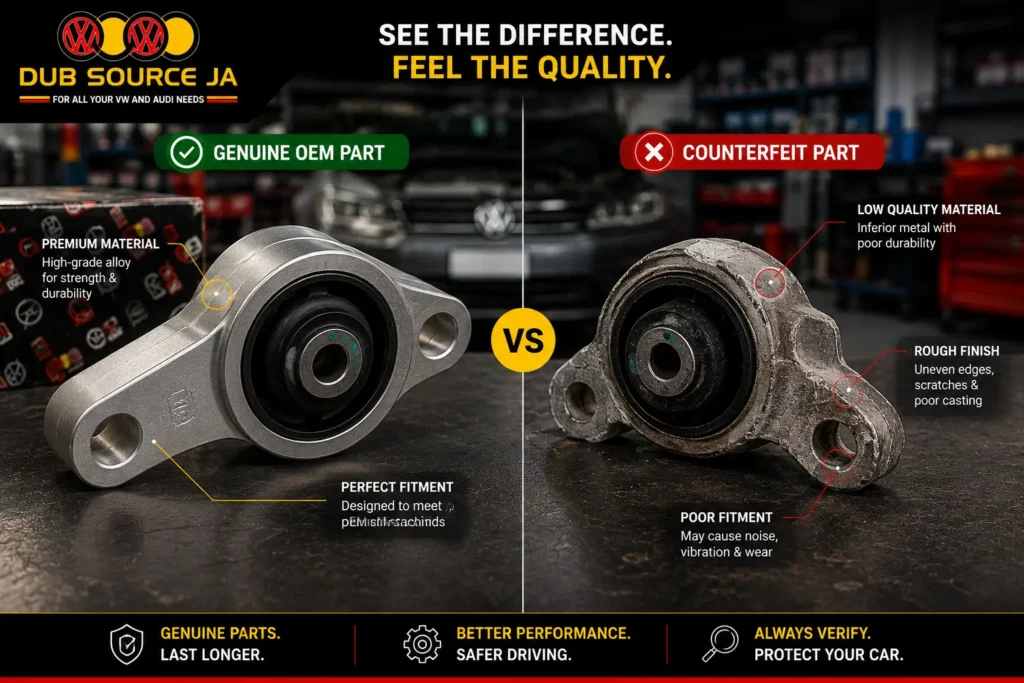
Counterfeit parts often use cheaper materials. Signs a part may be fake:
- Lighter or heavier than expected
- Rough edges or inconsistent finish
- Color slightly off from official specifications
- Missing serial numbers or stamping
Here’s a quick inspection checklist:
| Part Element | OEM Expectation | Red Flag |
|---|---|---|
| Material | Same as factory | Different metal/plastic quality |
| Fit | Matches perfectly | Too loose or tight |
| Finish | Smooth, uniform | Rough, uneven |
| Markings | Clear, correct | Smudged, incomplete |
Step 3: Research the Seller
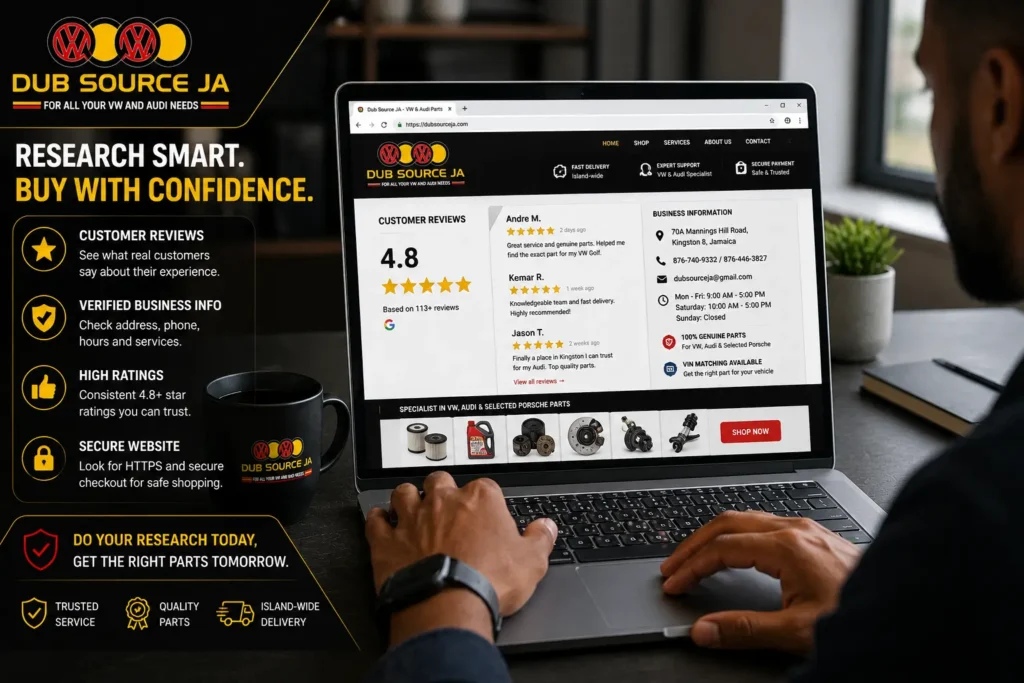
Even a perfect-looking part can be fake if sold by an unreliable source. Trusted sellers follow strict quality standards, you can learn more about how Dub Source confirms fitment before supply to see how a reliable vendor operates.:
-
- Official dealerships or verified online platforms
-
- Detailed contact information and return policies
-
- Positive reviews and buyer feedback
-
- Authentication guides provided by the manufacturer
Red flags for sellers:
-
- Price too good to be true
-
- No warranty or unclear return policy
-
- Only email contact, no physical address
-
- Negative reviews mentioning counterfeit items
Box Tip: Always cross-check seller information with the manufacturer’s authorized distributor list.
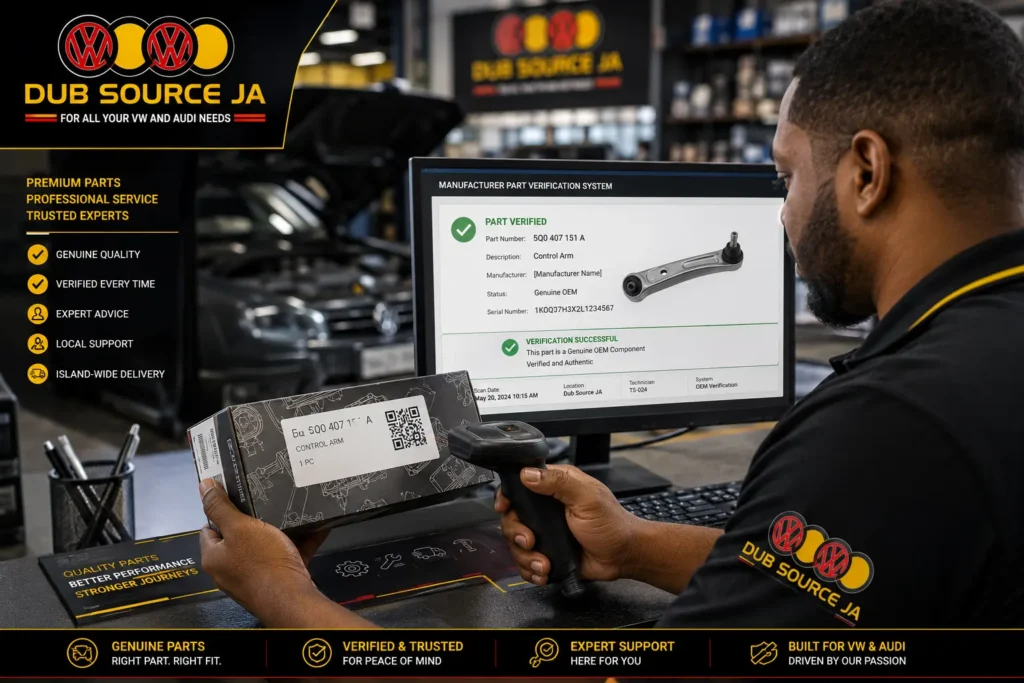
Step 4: Verify Part Numbers and Manufacturer Database
Step 5: Watch Out for Common Scams
Most OEM parts have unique part numbers or serial numbers. Manufacturers maintain online databases where you can verify authenticity.
Steps to check:
-
- Find the part number on your item or packaging
-
- Go to the manufacturer’s official verification tool
-
- Enter the number and confirm it matches your car make and model
-
- Scan QR codes or barcodes when available
This method removes guesswork and ensures you are not being scammed.
If you are ever unsure whether a part you are looking at is the real thing, the safest step is to contact a specialist before you buy. At Dub Source Limited, the team can verify the correct part reference for your VW or Audi using your vehicle details or chassis number, so you know exactly what you are getting before you spend.
Message the team on Instagram, WhatsApp, or call 876-740-9332 before the guesswork gets expensive.
Fraudulent sellers often exploit common patterns:
| Scam Type | How it Works | How to Avoid |
|---|---|---|
| Overpriced fakes | Sell fake OEM at a premium | Compare prices with official dealer |
| Aftermarket masquerade | Label aftermarket as OEM | Check manufacturer part number |
| Used parts relabeled | Old/damaged parts sold as new | Inspect packaging, serial numbers |
| Online-only sellers | No traceable contact | Stick to verified dealers |
How Dub Source Limited Verifies Parts Before Supply
At Dub Source Limited in Kingston, every part is sourced from confirmed OE-quality suppliers for VW and Audi platforms.The team cross-references the part against your vehicle’s specific build data before supply and can confirm the correct reference number matches your chassis number where needed.
The business does not sell from generic wholesale stock. Every part stocked comes from a confirmed distribution channel for the brand it claims to be..
Aftermarket parts are not automatically bad. They can be high quality and sometimes cheaper. But when safety-critical components are concerned (like brakes, airbags, engine parts), OEM is the safest choice.
Conclusion
Buying the wrong part from a store that labels everything as OEM costs you twice once when you buy it and once when you replace it with the correct one. Before spending money on any replacement part for your VW or Audi in Jamaica, send your vehicle details to a specialist who can confirm the correct part and verify the source.
Message Dub Source Limited on Instagram @dubsourceja, WhatsApp or Call 876-740-9332 before the guesswork gets expensive.