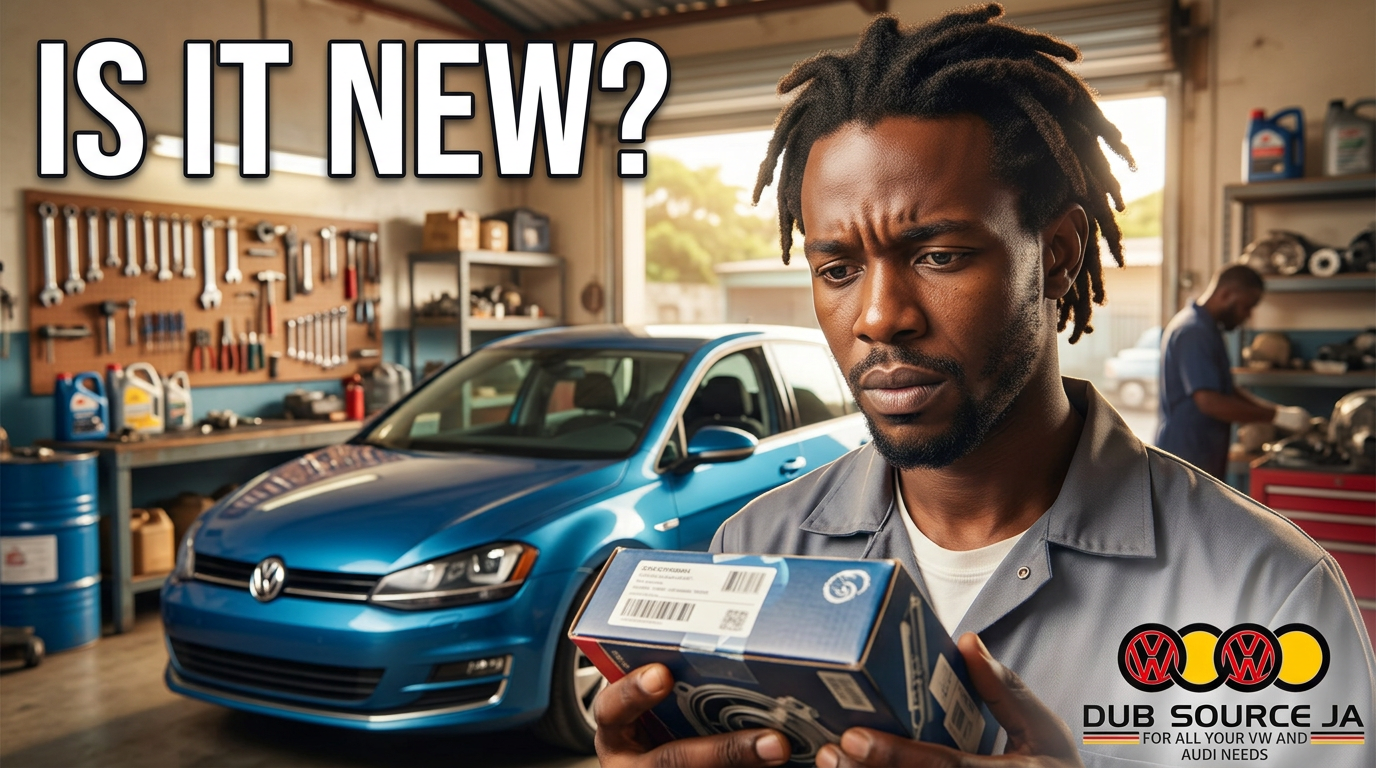
If you’ve ever paused, even for a second, and thought, “Are local shops using used parts and selling them as new?” you’re not being paranoid. You’re paying attention.
And honestly, that question usually doesn’t come from nowhere. It comes from a feeling. A moment. Something small that didn’t sit right.
Maybe the car didn’t feel the same after service. Maybe the part looked a bit off. Or maybe the price just didn’t match what you expected.
Most shops are honest. That’s important. But at the same time, the risk of mislabelled, low-quality, or even previously used parts being sold as “new” does exist. I couldn’t find verified data that shows how common this is across Jamaica as a whole, so it would be wrong to claim it’s widespread.
But here’s the reality – it happens enough for people to ask the question.
And in the automotive world, even a small mistake with parts can quietly turn into a bigger problem later.
For drivers in Kingston, especially those running Volkswagen, or Audi, this matters more than it may seem at first.
Because these cars don’t always fail loudly.
They change subtly.
A slight drop in smoothness.
A faint vibration.
A sound that wasn’t there before.
That’s where the doubt begins.

Why This Question Keeps Coming Up
People don’t ask this randomly.
They ask it after something feels off.
Not broken. Not dramatic. Just… different.
You might leave the shop thinking everything is fine. Then a few days later, something feels slightly out of place. And you can’t ignore it.
Maybe you paid for a new oil filter, but the box looked worn.
Maybe the price felt unusually low.
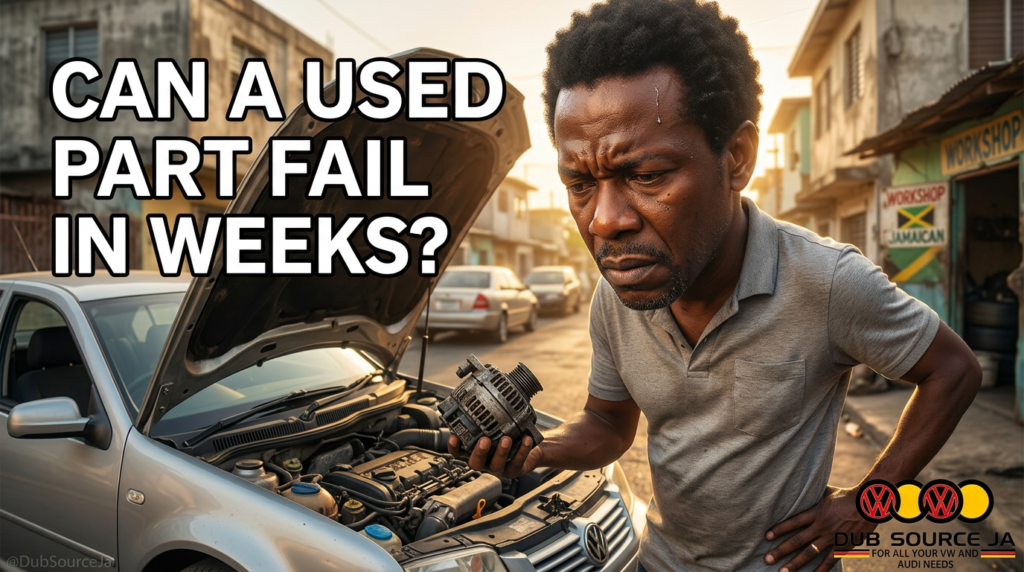
Or maybe the part failed sooner than it should.
And slowly, that thought builds.
Not aggressively. Just quietly sitting there in the back of your mind.
Here’s the part most people miss – it’s not always about someone literally taking a used part and reselling it.
It’s often more subtle than that.
It Can Show Up in Different Ways
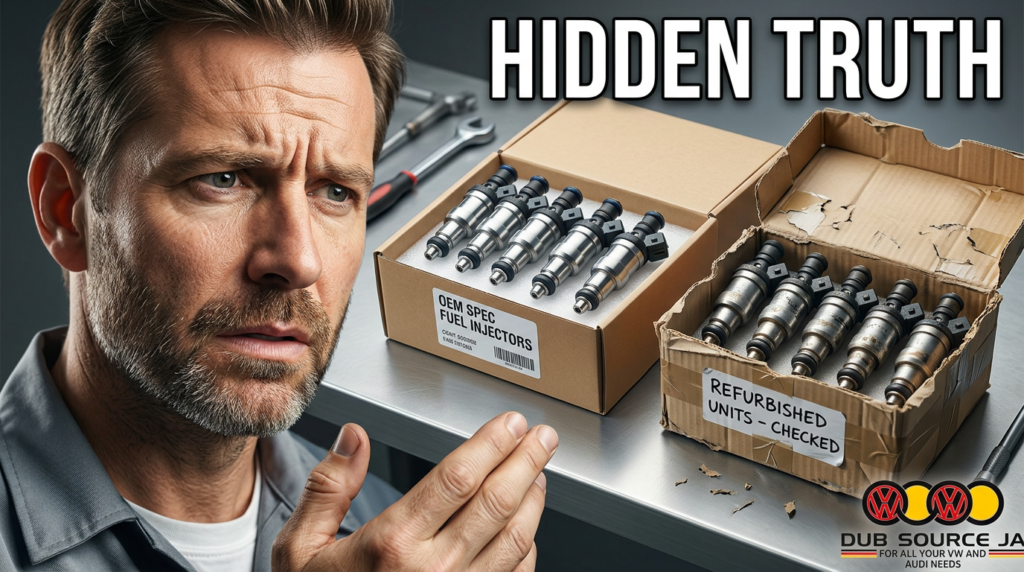
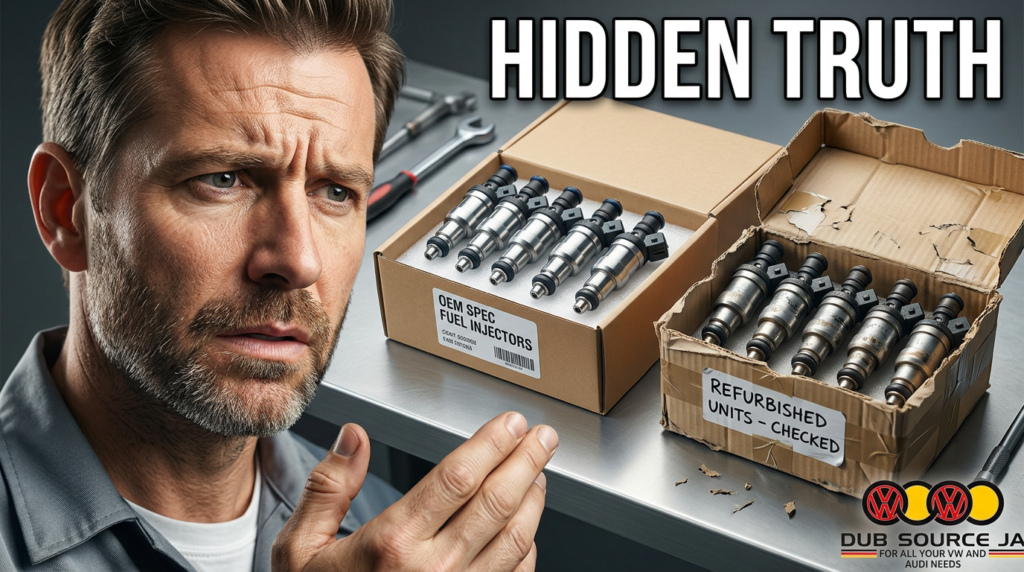
- A used part gets cleaned and repackaged.
- A counterfeit part is made to look identical to a known brand.
- A lower-quality part is sold as a premium one.
- Old stock is presented as fresh inventory.
- You’re charged for one part, but something slightly different is installed.
So the real issue isn’t just “used parts.”
It’s misrepresentation.
And once that happens, trust becomes fragile.
Why Fake or Mislabelled Parts Are a Real Risk
Let’s strip this down.
A bad part doesn’t always fail right away. That’s what makes it dangerous.
At first, everything seems normal. The engine starts. The car drives. Nothing obvious is wrong.
But underneath that, something may already be off.
And over time, that small difference starts to show.
What Can Actually Go Wrong?
- Engine protection becomes weaker over time
- Internal components wear faster than expected
- Fuel consumption slowly increases
- The engine loses smoothness
- You end up replacing parts earlier than you should
None of this happens overnight.
That’s why many drivers don’t connect the problem back to the part. It feels like normal wear. But sometimes, it’s not.
Consumer groups like AAA have warned about counterfeit and low-quality parts being sold in ways that make them look legitimate.
And manufacturers like Bosch have introduced verification systems because the issue is serious enough to require it.
That alone tells you something.
In Kingston, Price Can Be a Signal
Let’s be real for a second.
Everyone is trying to manage costs. That’s normal. No one wants to overspend on maintenance.
But sometimes, a price isn’t just a price.
It’s a clue.
If one seller is offering the exact same branded part at a much lower price than everyone else, it’s worth asking why.
Not accusing. Just understanding.
Because in some cases, the difference isn’t visible on the surface.
Jamaica has already seen cases involving counterfeit automotive products, including engine oil. That’s not speculation – it has been reported publicly.
You can see one example here: counterfeit engine oil case in Jamaica.
So yes, the risk exists locally too.
How to Tell If a Part May Not Really Be New
You won’t always know immediately.
But there are patterns. Small signals.
You just have to slow down enough to notice them.
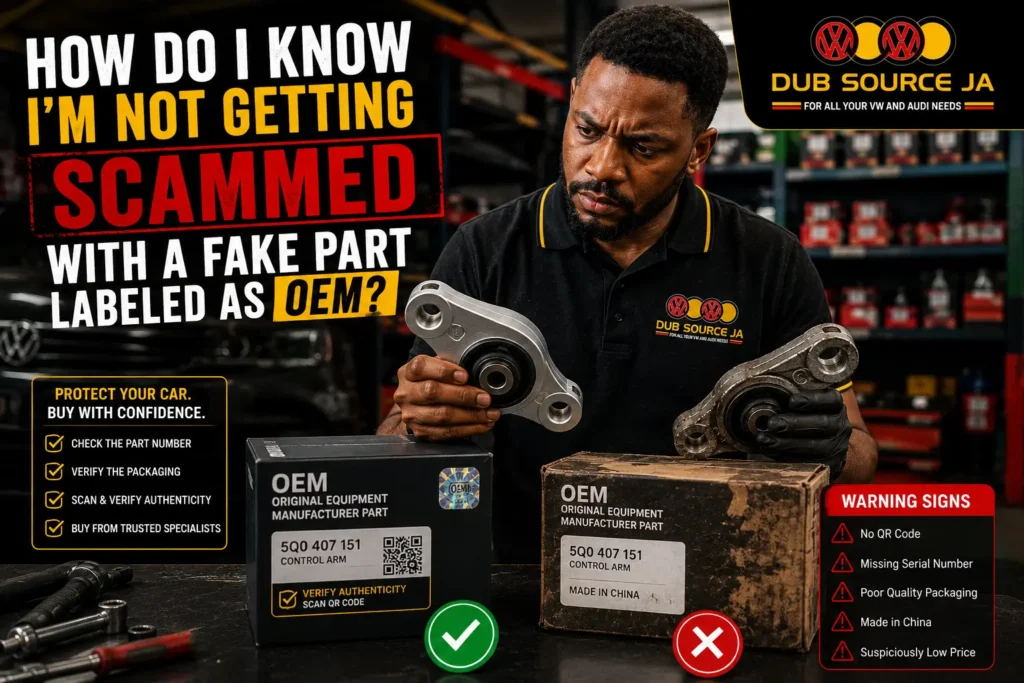
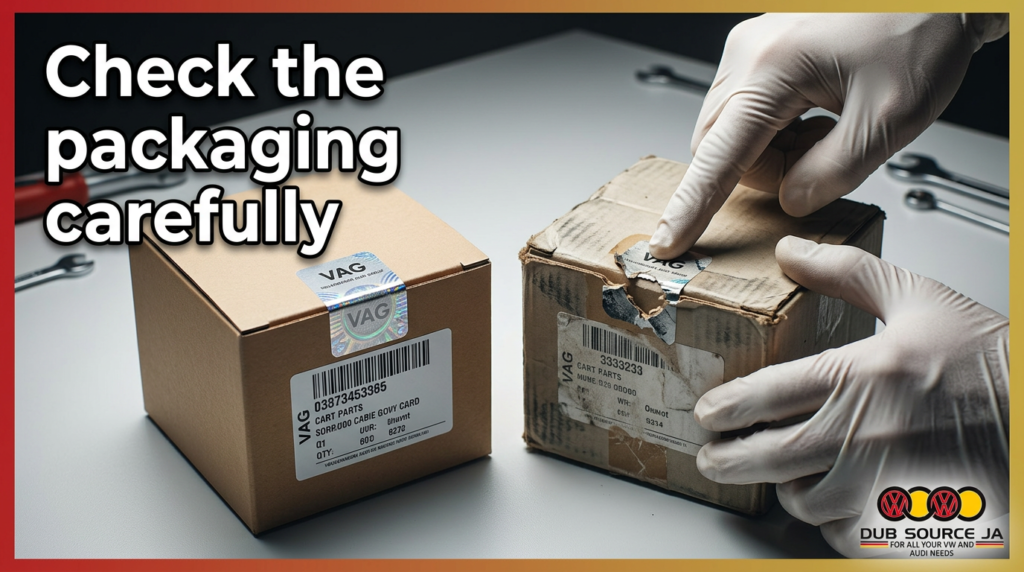
- The Packaging Feels Off
Start with the box.
- Faded printing
- Spelling errors
- Broken seals
- Inconsistent labels
- Signs the box has been opened before
A damaged box alone doesn’t prove anything. But multiple small issues together? That’s worth attention.
- The Price Doesn’t Make Sense
A lower price can be legitimate.
But a price that feels “too easy” often comes with a reason behind it.
- The Part Itself Feels Different
- Light scratches
- Tool marks
- Dust or residue in hidden areas
- Slight wear on edges
- Uneven finish
A new part usually has consistency. When that consistency breaks, it’s noticeable.
- The Answers Feel Vague
Ask simple questions.
- Where is this from?
- Is it genuine or aftermarket?
- Is it brand new?
If the answers feel unclear or rushed, pay attention to that feeling.
- The Car Feels Different After
This is often the strongest signal.
You drive away… and something feels slightly off.
Not enough to panic. But enough to notice.
That’s where many people start connecting the dots.
What Smart Buyers Do Differently

You don’t need technical knowledge.
You just need a better process.
A Simple 6-Step Approach
- Ask for the exact part number
- Ask what type of part it is
- Check the packaging before installation
- Keep your receipt and box
- Use verification tools if available
- Choose suppliers who are clear, not just cheap
That last one matters more than anything else.
Why This Matters More for VW and Audi Owners
If you drive a Volkswagen or Audi, you already know how these cars behave.
They don’t always fail loudly.
They react gradually.
A slightly wrong filter. A small mismatch in quality.
And over time, the car starts to feel different.
That’s why clarity matters.
Some suppliers in Kingston, like Dub Source Limited, focus on clearly labelled parts with proper references.
For example, their oil filter collection and listings like the Bosch Oil Filter P3318 make it easier to verify what you’re actually buying.
That doesn’t replace your own checks.
But it reduces uncertainty.
And that’s what most drivers really want — fewer unknowns.
What Good Shops Understand
The best shops don’t just sell parts.
They remove doubt.
- They clearly state if a part is new or used
- They show part numbers
- They explain what you’re getting
- They keep packaging visible
- They avoid vague language
It’s not complicated.
But it builds trust over time.
People Also Ask
- Are local shops using used parts and selling them as new?
It can happen. But I couldn’t verify how widespread it is across Jamaica. What is clear is that counterfeit and misrepresented parts exist globally and have appeared locally in certain cases. - Is every non-genuine part bad?
No. Many aftermarket parts are fine. The key is knowing what you’re buying and making sure it’s clearly described. - How can I check if a part is genuine?
Start with the part number and packaging. Some brands also offer verification tools, like Bosch’s authentication system. - What should I do if something feels wrong?
Don’t ignore it. Keep the packaging, take photos, and speak with the seller early.
What Do You Think?
So, back to the question.
Are local shops using used parts and selling them as new?
Sometimes, yes.
But the more important question is this:
Are you checking before you agree to the part?
Because that’s where your control is.
A few extra seconds. A few better questions.
That’s often the difference between confidence… and doubt.
And if you’re ever unsure, it’s always worth checking before your next drive.