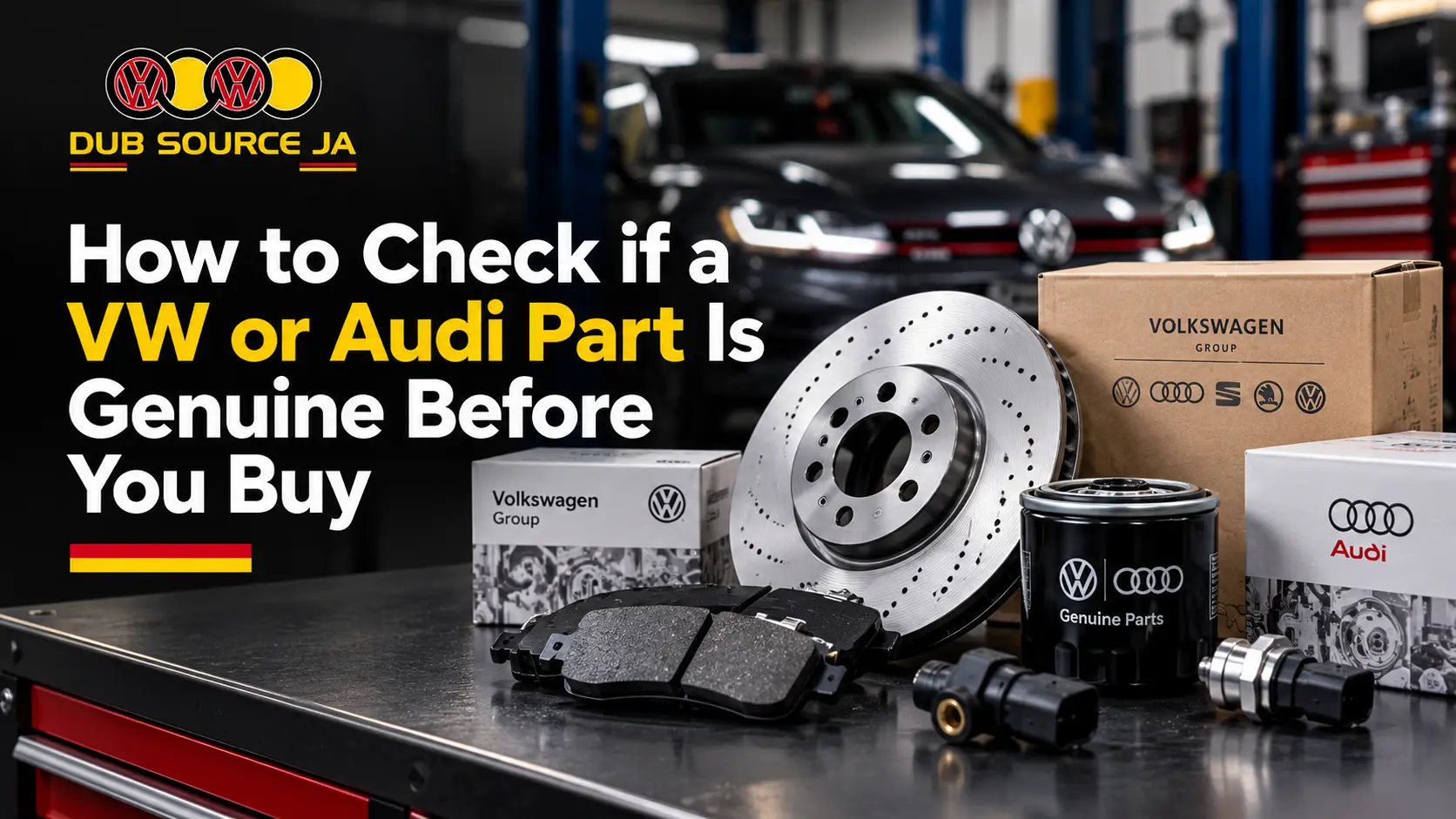
How can you tell a genuine OEM part from a counterfeit before you buy it? Start by checking the seller and the part number. Look for signs of altered packaging, and use the maker’s official security check if that product has one. Then confirm that the part fits your VW or Audi. No logo, barcode, or price can prove a part is genuine on its own.
You need brake pads before a family trip from Kingston. The box looks right, but no one can explain its source. Would you take the chance?
Why Counterfeit Car Parts Can Be Hard to Spot
A fake does not have to look fake. The printing may be sharp. The seal may look neat. Even the part number may match one you found online.
Think of a copied house key. The shape may match, but that proves little about who made it. Parts labels are much the same.
The UK government’s guide to counterfeit vehicle parts warns that fake brakes, filters, and spark plugs can look like the real products. Poor parts may fail and put people at risk.
Genuine parts carry the car maker’s brand. An OEM supplier may sell parts under its own name. Aftermarket parts are sold outside the car maker’s brand. A good aftermarket part is not a fake because it lacks a VW or Audi logo.
If those terms still feel unclear, read our guide to OEM car parts in Jamaica. The key here is simpler: does this item really come from the brand named on it?
There are three problems to keep apart. A counterfeit pretends to be a brand it is not. A poor-quality part may use its real name but still be a bad choice. A wrong-fit part may be real and well made, yet not suit your car.
They can all waste time and money, but they need different checks. First find out what is being sold. Then find out if it belongs on your vehicle.
7 Checks to Spot Counterfeit OEM Parts Before Buying
Each check below adds confidence, but none should stand alone.
1. Find Out Who Is Selling the Part
Start with the seller, not the box. Is there a business name, address, and way to get help? Will the receipt name the item?
Ask where the part came from. The seller should be clear about the brand and part type. “Factory original, trust me” is not enough.
For an online listing, save the seller’s details and the product page. Reviews do not prove that an item is genuine.
2. Get the Brand and Full Part Number
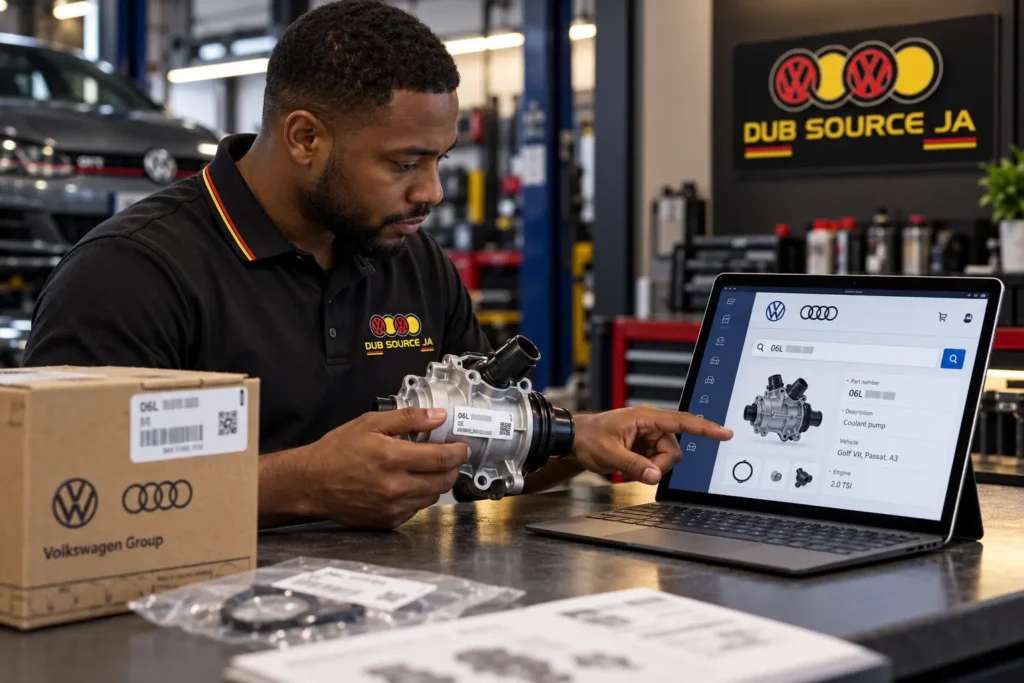
“Fits a Golf” is not a full parts description. Ask for the brand, item name, and exact part number. Check the number against the maker’s catalogue or with a parts specialist.
Small letters in a code may mark a different version. Fakes can copy codes, so a match is not proof.
Imagine buying a phone charger. The plug may fit, yet the charger may not be made for the device. A car part needs more than a label that looks close.
3. Look Closely at the Packaging and Part
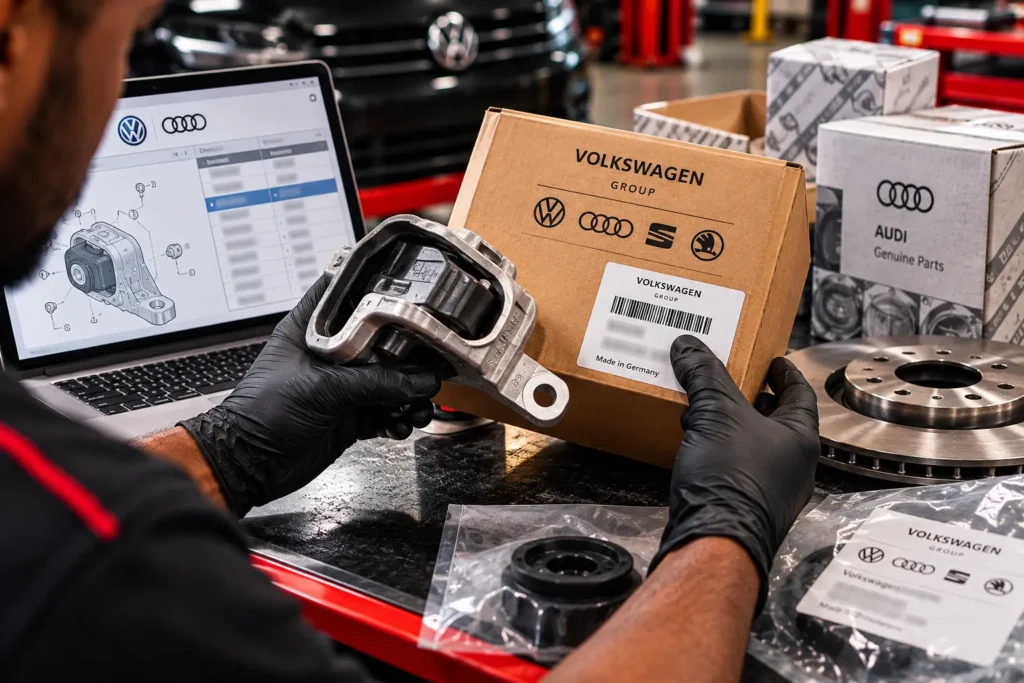
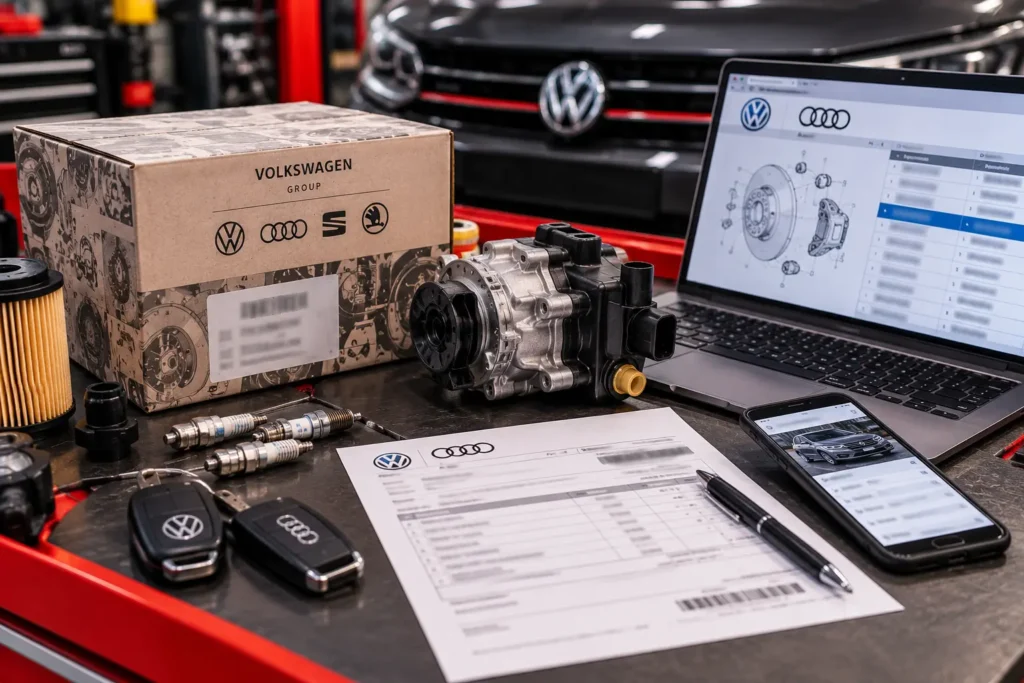
Check the spelling, print, seals, and labels. Does one label cover another? Is the box damaged? Do the marks on the part agree with the item on the box?
Audi’s brand protection guidance names poor packaging, spelling errors, missing part numbers, and poor product quality as warning signs.
But packaging may change between markets or over time. One odd detail is a reason to ask, not a final verdict.
Look at the part itself where you can do so without damage. Rough edges, cracks, loose pieces, or poor finish deserve a closer look. Do not break a seal or take a part apart just to test it.
4. Check Brand Security Features the Right Way
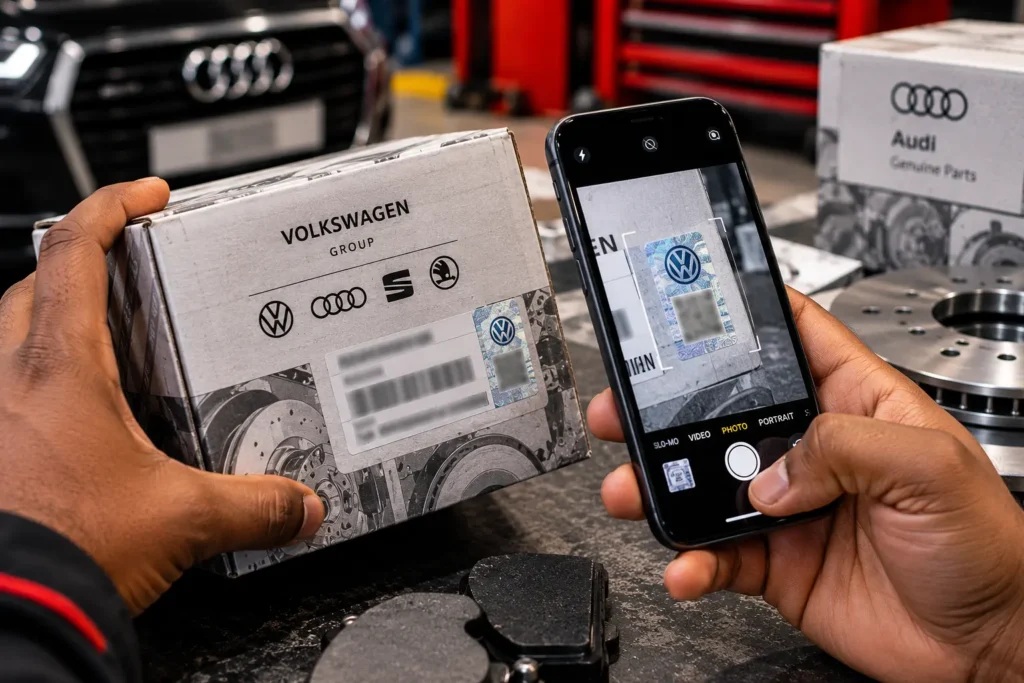
Some makers add holograms, QR codes, or unique security codes to selected items. Not every genuine part has one. And a normal QR code may simply open a product page.
For example, Bosch KeySecure lets buyers check codes on selected Bosch packages. MAHLE explains its security labels for certain engine components, but not its filters or thermostats.
Open the official brand website yourself rather than trusting a link sent by an unknown seller. Follow that product’s steps. If the code fails or the result is unclear, contact the brand before fitting the part.
A passing check still does not prove the right fit.
5. Question the Price Without Judging by It
A cheap item may be on sale. A costly item may still be fake. Price cannot settle the question.
Ask if it is new, and whether it is genuine, OEM-branded, or aftermarket. Changing answers are a reason to slow down.
6. Check Fitment Against Your Vehicle
This is easy to miss when you are focused on spotting a fake. A part can be genuine and still be wrong for your VW or Audi.
Two VW Golfs may look much alike but have different engines or build dates. A filter or sensor for one may not suit the other.
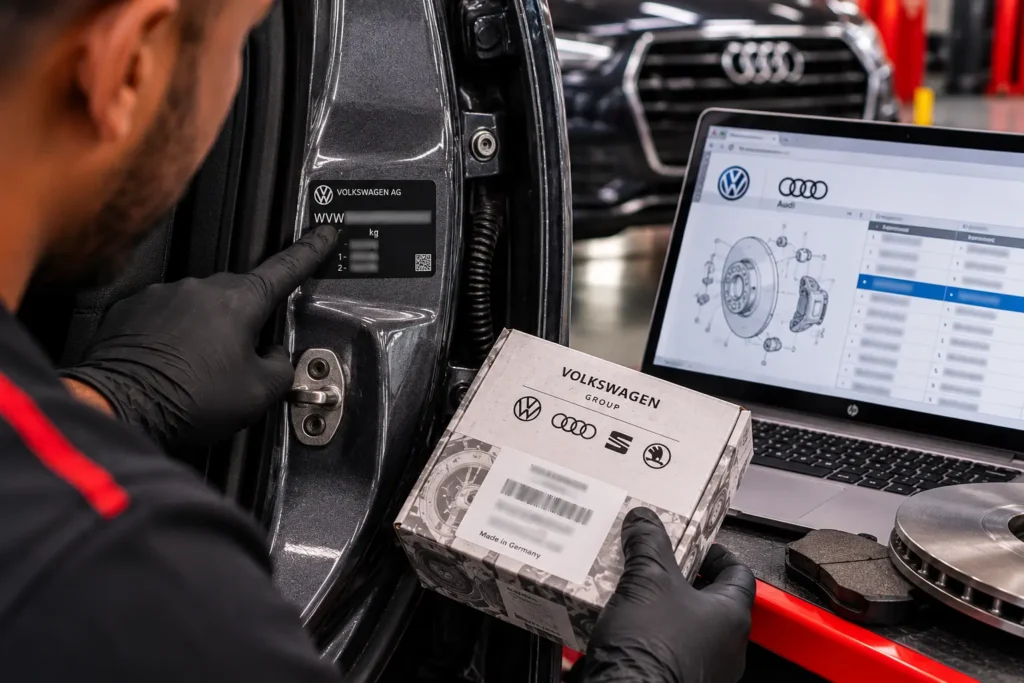
A VIN helps narrow down the correct replacement part, but some components may also require checking the vehicle’s build specifications, equipment details, or existing part before fitment is confirmed.
Dub Source’s VIN matching guide explains how the chassis number, engine code, and build details can guide the choice.
Authenticity asks who made the part. Fitment asks whether it belongs on your car. Check both.
A VIN helps narrow down the correct replacement part, but some components may also require checking the vehicle’s build specifications, equipment details, or existing part before fitment is confirmed.
7. Make Sure You Can Trace the Purchase
Before you pay, ask what will be written on the receipt and what happens if the part arrives damaged or does not match the order.
Keep a copy of the listing and messages if you order online. Records can help with a return, brand check, or workshop visit.
Which Warning Signs Matter Most? A Quick Comparison
| What you check | More reassuring | Reason to investigate |
|---|---|---|
| Seller | Clear identity and item details | No traceable business or vague answers |
| Part number | Consistent with a trusted catalogue | Missing, altered, or conflicting details |
| Packaging | Matches known brand information | Odd print, spelling, or seals |
| Security code | Official brand tool supports the item | Failed or unclear result that stays unresolved |
| Fitment | Confirmed for your exact car | Broad “fits all” claim with no vehicle check |
| Paperwork | Receipt names seller and item | No clear proof of what was sold |
These are clues, not proof. Trust the source and maker’s advice over a nice box.
Buying Parts by WhatsApp or Online in Jamaica
It is late on a Friday. Your Audi needs a sensor, and you want it ready for Monday. A seller sends a photo and says, “OEM. Good price.”
You can almost hear the car starting again.
But slow down long enough to ask for the brand and exact code. Check whether the photo shows the item you will get, not just a stock image. Send your car details for a fitment check through a trusted channel.
If it is sent to another parish, ask what happens if it is wrong or damaged. Keep the order details.
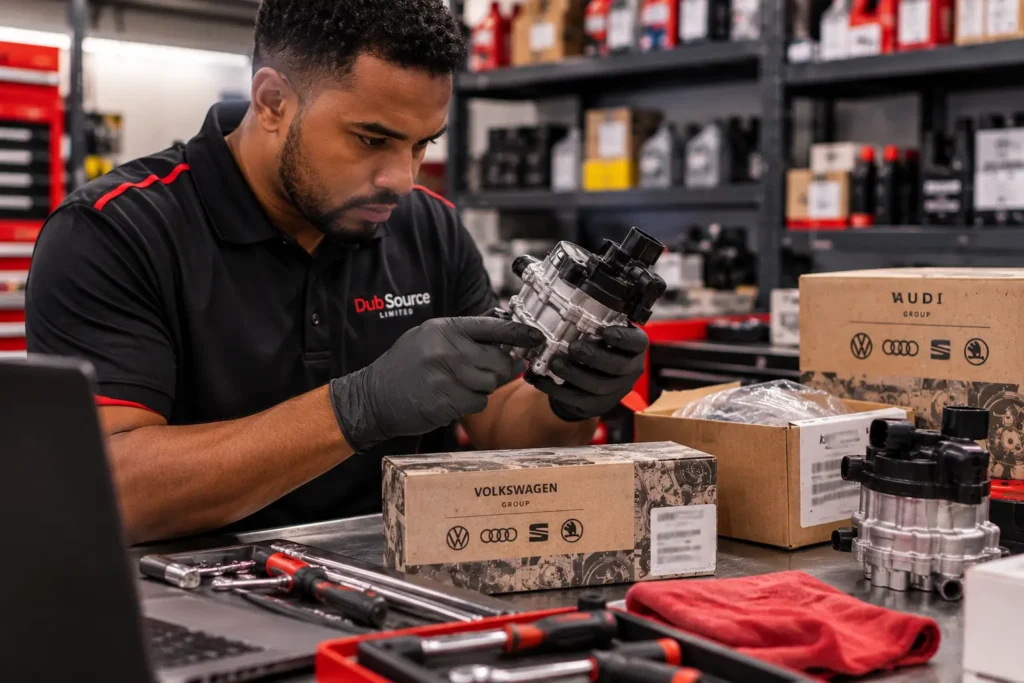
At Dub Source Limited, the parts enquiry process starts with vehicle details and a fitment check before supply. That is useful when a model name alone does not tell the full story.
Your Eight-Step Checklist Before You Spend
- Know what needs fixing. If a warning light is on, get the fault checked. A scan code alone does not name the failed part.
- Write down your car details. Make, model, year, engine information, and VIN all help.
- Ask for the exact product. Get the brand, part type, and full part number.
- Check the seller. Find a traceable business and ask where the part came from.
- Review the packaging. Look for odd labels, damage, or poor print without assuming each flaw means fake.
- Use official tools where offered. Check only supported codes on the maker’s own site.
- Confirm VIN fitment. A real part for the wrong car can still cost you money.
- Keep proof of purchase. Save the receipt, listing, and clear photos.
If the item is a brake, steering, or other safety part, get a skilled technician to inspect it before fitting. Do not treat a test drive as an authenticity check.
What If You Already Bought a Part That Seems Fake?
The label looks wrong, or the code fails. Do not panic, but do not fit the part to test it.
Keep the packaging, receipt, photos, and seller messages. Ask the seller for proof of origin. You can also contact the maker’s brand protection or support team with clear photos and the part details.
If the item is already fitted, a new noise or fault does not prove it is counterfeit. Ask a workshop to inspect the car and find the cause. If you suspect a brake or steering problem, avoid driving until a qualified person has checked it.
The UK government’s guidance for the motor trade advises keeping photos of the item, labels, and box when reporting a suspect part.
Its reporting contacts are for the UK; drivers in Jamaica should use the brand’s official support or relevant local channels.
Frequently Asked Questions
Can a Genuine OEM Part Come in a Plain Box?
Yes. Some supplier-brand items use plain trade packaging. Box styles can also change. Ask about the source and the exact product rather than judging the box alone.
Can a Counterfeit Part Have a Real Part Number?
Yes. A seller may copy a valid number onto a fake item. A number helps you check the product claim, but it cannot prove who made the item.
Does Scanning a QR Code Prove a Car Part Is Genuine?
Not always. Some codes link to a product page, while some brands use special codes for authenticity checks. Use the official tool only when that product supports it.
Are Low-Priced OEM Parts Always Fake?
No. A sale or a different product line can explain the price. A high price is not proof, either. Ask about the source, product, and fit.
Can Genuine Parts Still Be Wrong for My VW or Audi?
Yes. The same model name can cover different engines and build dates. A VIN and part-number check can help you avoid ordering the wrong item.
What if a Manufacturer’s Security Code Does Not Work?
Check that you used the correct brand site and followed its steps. If it still fails, keep the item unfitted and ask the maker or supplier for help.
What Should I Ask a Seller Before Buying Car Parts?
Ask for the exact brand, part number, source, proof of purchase, return terms, and a fitment check for your car. If key details are missing, wait before paying.
Choose the Part You Can Trust, Not Just the Box You Like
You want to leave the workshop sure of the repair, whether driving through Kingston or across Jamaica.
A careful parts check is not about finding a perfect-looking box. It is about a clear seller, reliable product details, a supported brand check where one exists, and the right fit for your car.
If you are unsure which VW or Audi part you need, send Dub Source Limited your vehicle details. Ask the team to confirm fitment before you buy.
A few good questions today can save a costly guess tomorrow.