Myth: the dealership is the only place that can confirm correct fitment. The truth is that a skilled VW or Audi parts expert can often confirm a part by checking your VIN, engine, build details, trusted parts data, and the item already fitted. A dealer is a valid choice, but not the only one. Good fitment comes from matching the exact car, not simply trusting the sign outside a shop. Some repairs still need special tools, authorised access, or dealer support. This guide shows what a proper check involves and when more help is needed.
Who Can Confirm the Right VW or Audi Part Beyond a Dealership?
It’s Friday in Kingston. Your Golf needs a brake part before a weekend trip to St Ann. The phone is hot in your hand, the road is loud, and a seller says, “Only the dealer can know which one fits.”
You want the car ready, not a long debate about parts. So what should you ask?
Ask how the fit was checked. Did someone use the car’s VIN and brake details? Did they look up the exact code? Or did they just match the year and model name?
A careful parts expert may give you a solid answer. A hurried guess can be wrong, no matter where it comes from.
What Does Correct Car Parts Fitment Really Mean?
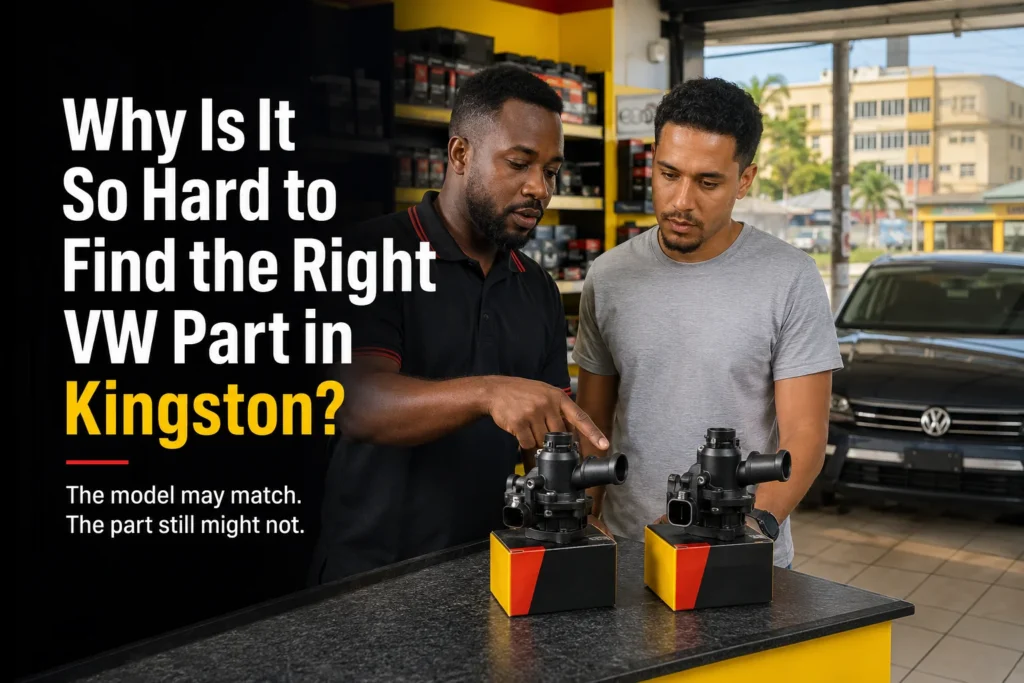
A part must suit the car’s actual system, not just look the same in a photo. Two VW Golfs from the same year can use different parts because of their engine, brakes, or build date.
Think of a house key. Two keys may look alike. One may slide into the lock but fail to turn. A car part can be just as close—and just as wrong.
Fit, Fault, and Source: Three Different Checks
Fitment asks whether the part suits your exact car. Diagnosis asks whether that part is the one you need to replace. Authenticity asks whether it truly came from the maker on the label.
A real Audi sensor may be the wrong type for your car. A correctly matched sensor will not fix a warning light caused by faulty wiring. And a matching part number alone does not prove a product is genuine.
Good advice keeps these questions apart before you spend.
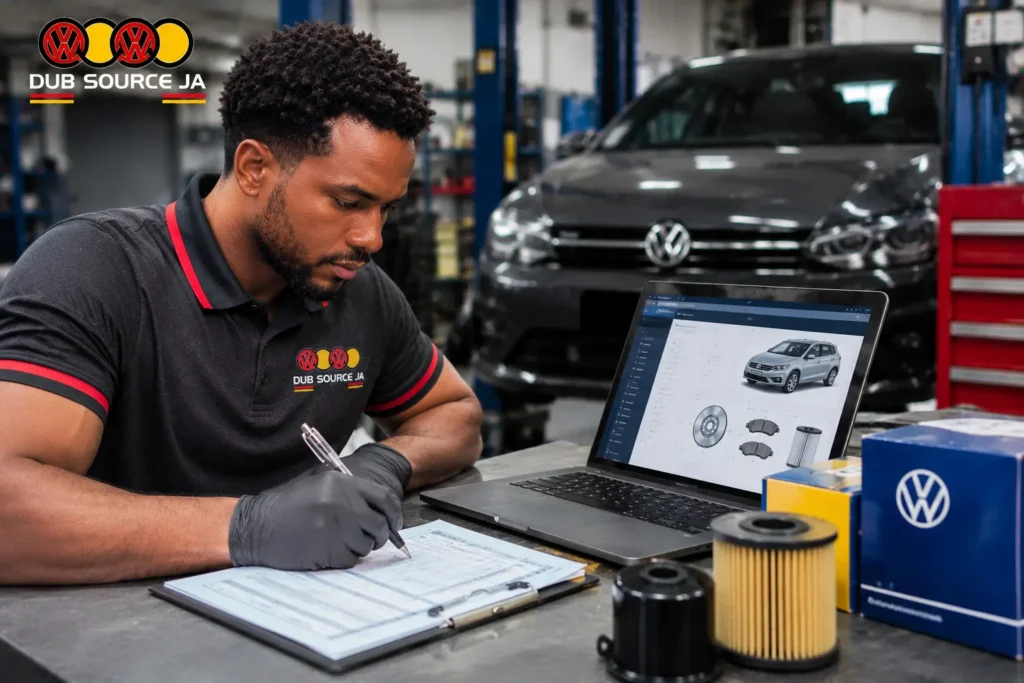
How Does an Independent VW or Audi Expert Confirm Fitment?
The process begins with the car. A useful request includes the make, model, year, VIN, engine details, and the job to be done. Photos of the old part can help when the car has had past repairs.
Start With the VIN, Then Read the Fine Print
The VIN is a unique ID for the car. It helps an expert check how it was built. But the VIN is not a magic answer to every parts question.
Some jobs also need a gearbox code, brake setup code, build date, or the code on the fitted item. If a past owner changed the brakes or engine, the car may no longer match its build record.
A thoughtful parts adviser will ask for more details when the first search leaves doubt.
Use Reliable Parts and Repair Data
Volkswagen provides independent repair information through its erWin system. Audi also offers manufacturer repair and workshop information through Audi erWin. For original parts information, ETKA directs non-dealer users to partslink24.
These resources support independent parts identification and repairs, but access conditions, fees, and availability may vary by market. Not every workshop has access to every system, so reliable information and an understanding of its limits remain important.
Dealer vs Independent Expert vs Online Listing
| Where you ask | What it may do well | What you still need to check |
|---|---|---|
| Authorised dealer | Factory parts support, dealer systems, recall and warranty routes | Whether the job or part needs a further physical check |
| Skilled VW/Audi expert | VIN lookup, part codes, and checks of fitted parts | Which tools, data, and permissions the shop actually has |
| General parts shop | Common service items and routine parts searches | Engine, build, and option differences |
| Online listing | A quick place to find a product and ask for a quote | Whether “fits your car” was checked against your exact VIN |
The best answer is not always the fastest one. It is the one the supplier can explain.
What Can Go Wrong Even When the VIN Is Correct?
Your VIN can point to the right original part. But a car has a life after it leaves the plant. It may have had a new engine, different brakes, or replacement suspension parts.
Say the parts list shows a brake disc for your Golf. At the workshop, the disc on the car looks different. You should not force the new part to fit or assume the parts list is useless.
Check the fitted brake setup and find out what changed. For brakes, steering, and other safety work, that check should be done by a skilled technician.
A photograph may help, but some parts need to be removed or measured correctly. When the records and the car disagree, the car needs a closer look.
Three Fitment Problems Jamaican Drivers Know Too Well
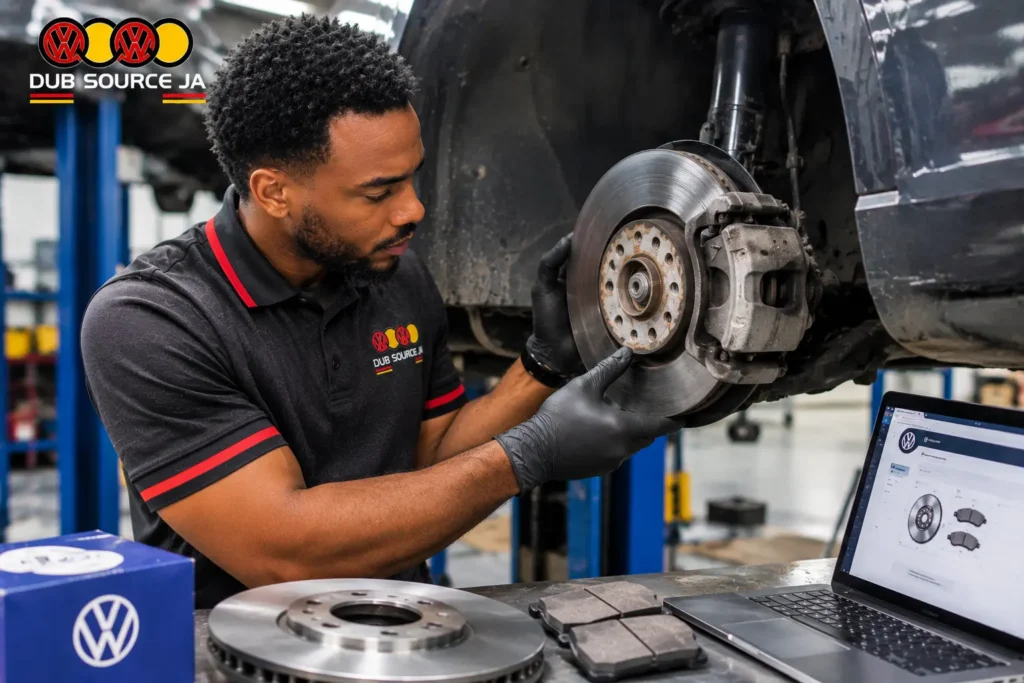
The Brake Part Needed Before a Parish Trip
Your family is going to Ocho Rios. You want the brakes checked before the drive. A listing says the pads fit every Golf of your year.
That sounds easy, but brake systems can vary. A shop that checks the VIN and fitted brake setup can save a return trip. First have the braking fault checked; don’t order pads only because you heard a noise.
The Filter That Delays a Routine Service
It’s a warm Monday morning. Your Audi is due for a service, and you need it back for work. The filter looks right in the seller’s photo, but the seal or fitting may differ.
An expert who checks the engine details and exact part code can catch the mismatch before the car is on the lift. That small check matters when your day is already full.
The Module With the Matching Number
An Audi warning light sends you searching for a control module. A seller sends a code that appears to match. It feels like the answer.
But the fault may be in wiring or another part. Even if the module is needed, it may require the right software, coding, or authorised setup. A proper fault check comes before buying the box.
When Is a Dealership or Special Access the Better Choice?
Sometimes it is the clearest path. If the car has an open recall, factory service campaign, or a repair that may be covered by a brand warranty, ask the relevant dealer or brand about the correct route.
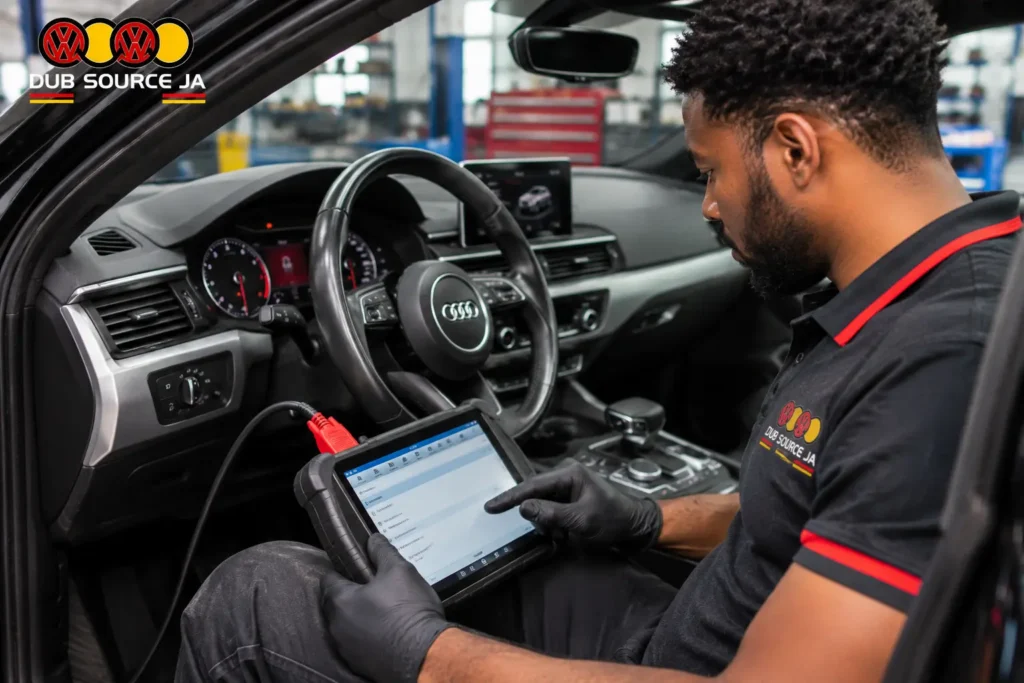
Car keys, immobilisers, and some control units may need special access. Volkswagen’s independent repairer guidance notes the role of training, tools, and diagnostic access. Some qualified independent repairers can gain certain permissions, but access and rules vary.
A good workshop should be able to say, “We can check the part, but that final step needs different access.” That is a sign of care, not a reason to lose trust.
Do not assume Dub Source—or any shop—holds a specific software licence or security approval without checking it for the job.
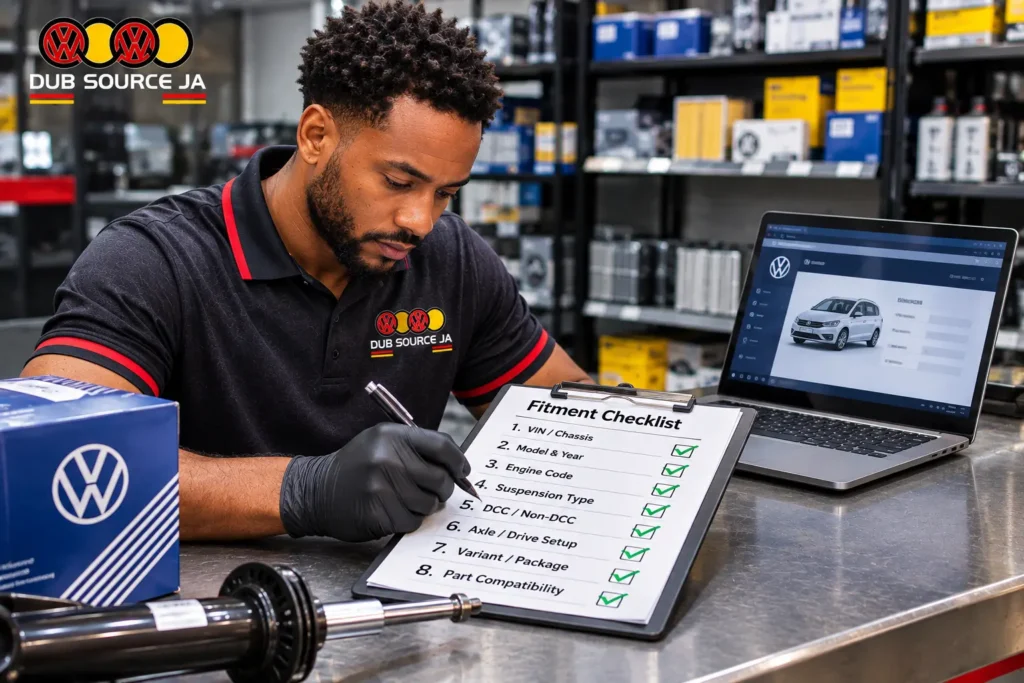
Eight Checks to Make Before Paying for a VW or Audi Part
- Confirm the fault. A warning light or knock is a clue, not proof that one part has failed.
- Share the exact car details. Give the model, year, VIN, and engine data through a trusted channel.
- Explain the repair. Say whether it is a service, brake, suspension, or electrical job.
- Ask for the full part code. A model name and photo are not enough.
- Check the build differences. Ask about engine, gearbox, brakes, build date, or car options where they matter.
- Review the fitted part if needed. Past repairs or changes may make a VIN lookup incomplete.
- Ask about extra work. Coding, setup, calibration, alignment, or more tests may be needed for some jobs.
- Get a clear order summary. Confirm brand, condition, fitment advice, price, and return terms before you pay.
Dub Source explains its approach in the VW and Audi VIN matching guide and parts enquiry process. Send your car details first so the team can check the correct reference and explain the next step.
Five Mistakes That Turn a Simple Part into a Costly Repair
Trusting a model name alone. “VW Polo” or “Audi A4” describes many cars. The badge is only the start.
Assuming a dealer label settles everything. A genuine part can still be wrong for another engine or option package.
Buying a module before a fault check. A fault code does not always name the failed component. Guesswork can be expensive.
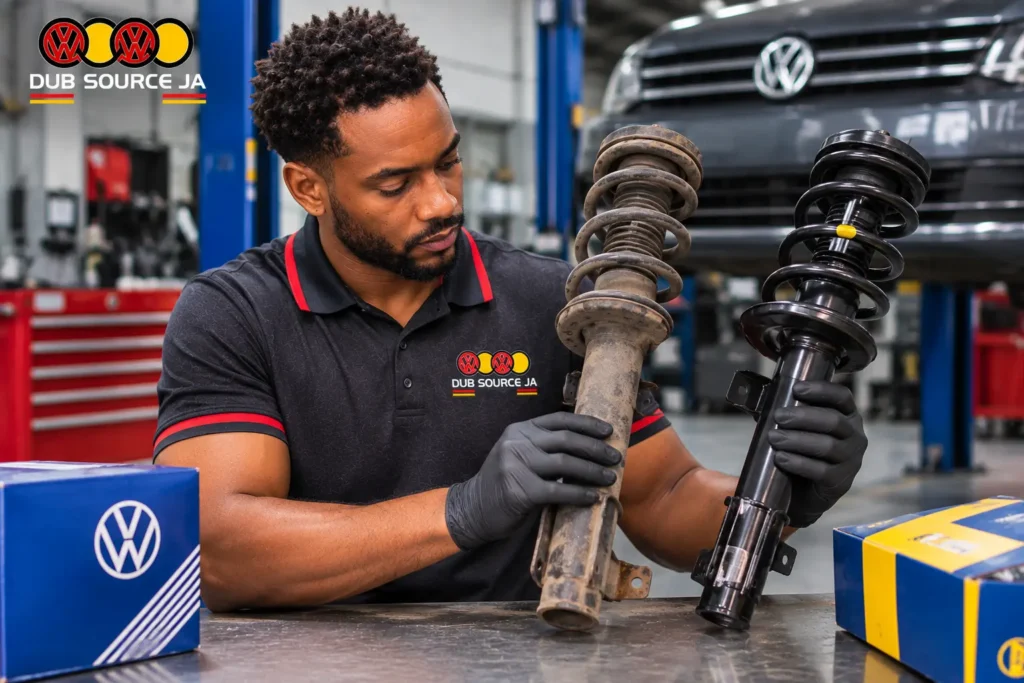
Skipping the old-part check. Cars can change hands and parts can change too. Build records may not tell the whole story.
Treating a quick yes as a guarantee. Ask how the seller reached the fitment answer. If something is unclear, let them check instead of rushing.
Frequently Asked Questions
Can an independent garage confirm VW or Audi parts fitment?
Yes. A skilled expert can often do so with the VIN, trusted parts data, and a car check. Ask what checks were used and whether any limits remain.
Do only dealerships have access to Volkswagen or Audi technical data?
No. The brands provide repair data for independent repairers. Original-parts catalogues also exist, but access may involve fees, rules, or country limits.
Is a VIN enough to pick every replacement part?
No. It is a strong starting point. The engine, gearbox, options, build date, or fitted part may need a closer check.
Can an independent shop fit genuine VW or Audi parts?
Often, yes, if it has the right part, tools, and skills. Some jobs may still need special coding, tools, or access. Ask before booking.
What if my car was modified by a previous owner?
Tell the expert what you know. The parts on the car may differ from the build record. A hands-on check can be more useful than another online search.
Does a matching part number guarantee fitment?
Not always. It may be for another build or refer to a changed part. The full car application and the item to be fitted still need checking.
When should I go to the dealership instead?
Ask the dealer about recalls, warranty work, or services that need restricted brand access. A trustworthy independent expert can also tell you when referral makes sense.
The Right Part Comes From the Right Questions
The dealership is one place to check fitment, but it is not the only place. A skilled VW/Audi expert can often match VW and Audi parts with sound car data, reliable parts lists, and a careful look at the car.
What matters is the method. Did someone check the VIN? Did they read the part notes? Did they ask what is fitted now? Did they say when more work was needed?
A wrong part can take away a workday or delay a trip. A few good questions before you buy may spare that stress.
If you need a Volkswagen or Audi part in Jamaica, contact Dub Source Limited with your car details. Ask the team to confirm fitment—or advise whether a car check is needed—before you commit.