
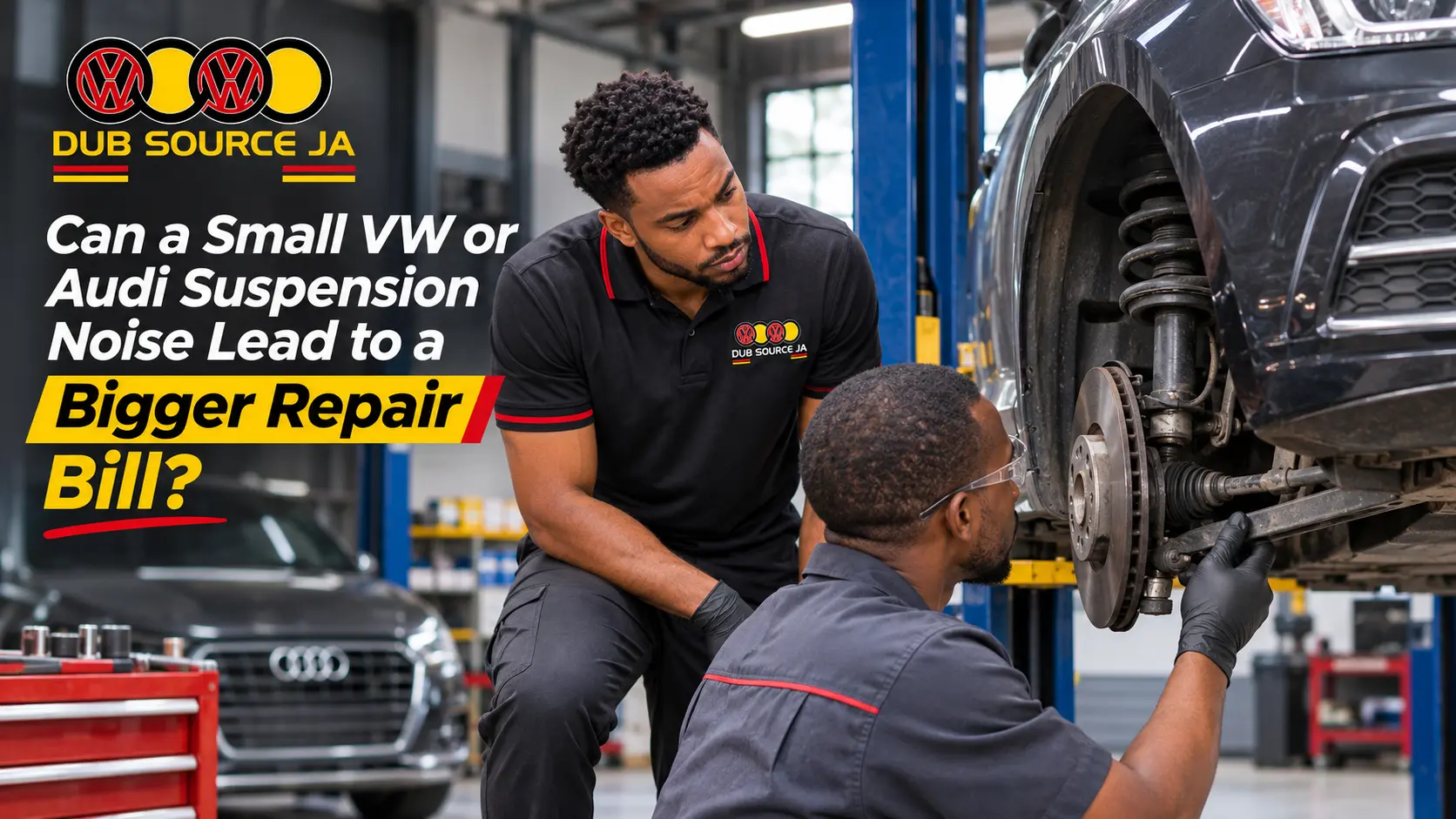
Can a small VW or Audi suspension noise lead to a bigger repair bill? Yes, sometimes. A light knock may be the first sign of a worn bush, joint, mount, or shock. If a faulty part is left to wear, it can affect other parts, wheel position, or tyre wear. A job that once needed one part may then need more parts, more labour, or new tyres. But a noise alone does not tell you what has failed. Some sounds have simple causes. The smart move is to have the car checked early, before a small concern becomes a costly guess.
Why a Small Suspension Knock Deserves an Early Check
You are heading home through Kingston. Your Golf makes a soft tok over a rough patch. You turn the radio down.
A week later, the noise returns. The car still gets you to work, so you put it off. Who wants another bill?
It may be harmless. It may also be the first clue that a part is worn. An early check gives you more choice.
What Is Your Suspension Doing Under the Car?
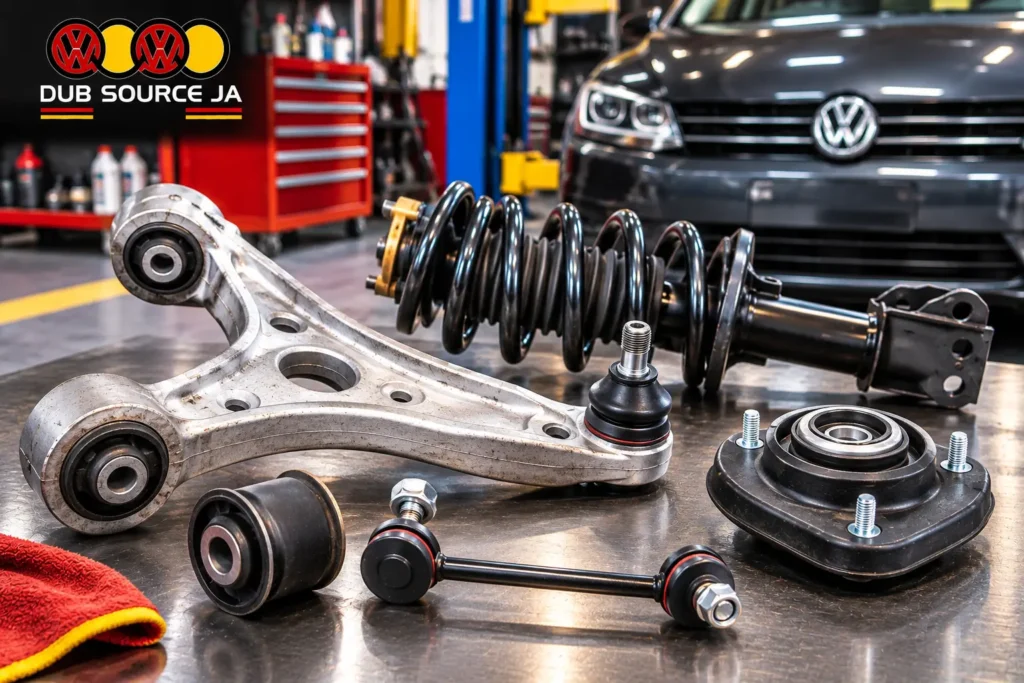
Your suspension does more than make bumps feel soft. Springs support the car. Shocks slow the bounce. Arms, bushes, joints, and links guide the wheels.
Think of a chair with one loose screw. At first, it may only creak. If you keep rocking it, the other joints may have to take more strain. Car parts are not chairs, but the idea helps: one loose part can affect parts beside it.
ZF Aftermarket’s guide to multi-link suspension explains that parts in a suspension system work together. A fault in one part can speed up wear in others. The cause matters more than the volume.
What Could a Small Knock, Creak, or Clunk Mean?
The sound gives a clue, not a diagnosis. A link, mount, joint, loose fitting, or even an item in the car may make a similar sound. A safe check is needed.
A knock over a speed bump
A worn stabiliser link, bush, ball joint, or top mount may knock as the wheel moves. It may happen only on rough roads. Tell the workshop.
A creak when you turn
A joint or rubber mount may creak while you steer or park. Steering and brake parts can also make noise near a wheel. Do not buy parts based on sound alone.
A thud, then too much bounce
If the car keeps bobbing after a dip, the shocks may not be doing their job. Springs, mounts, and tyres still need a check. A hard thud is not proof that the shocks are worn.
A knock after a deep pothole
A sharp hit may harm a tyre, wheel, or arm. Tell the technician when it began.
How Can One Small Fault Lead to More Costs?
There is no fixed rule that says a light knock will turn into a large bill. But there are clear ways an ignored fault can add costs.
1. A loose joint can wear a tyre
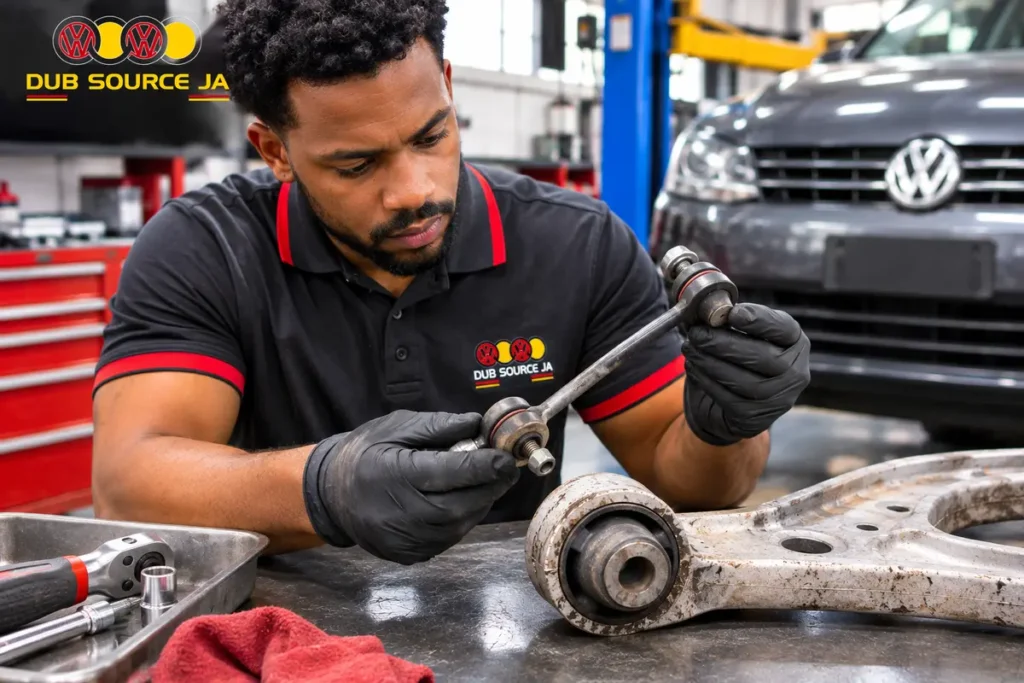
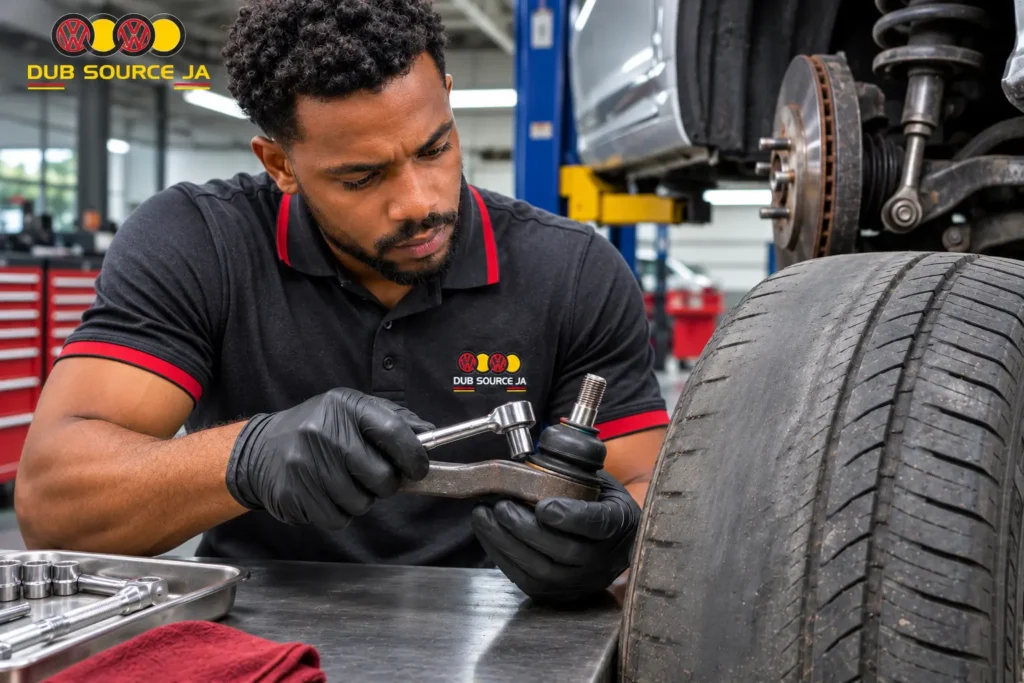
A worn ball joint or control arm bush may let a wheel move more than it should. The car may start to wander, and the tyre may wear on one edge. You may not spot it from the driver’s seat.
Now the repair may involve a joint, a tyre, and an alignment check. MOOG’s ball joint guide lists loose steering and uneven tyre wear as possible signs of joint wear. But poor tyre pressure can cause wear too.
2. Worn shocks can affect ride and tyre life
A shock helps keep body movement under control. When it gets weak, the car may bounce more or feel less steady in a bend. Tyres may wear in a patchy pattern.
Monroe’s guide to worn shocks and struts explains how poor damping can affect grip, braking, tyres, and nearby parts. Not every noise comes from a shock.
3. Delay may mean another visit and more labour
Say the first fault is one worn mount. If other parts are found damaged later, you may need to go back to the shop. A second visit can mean more labour, travel, and time off work.
A check may find one simple repair or several worn parts. Either way, you can plan.
A Noise Guide: What to Check Before Spending
| What you notice | What a workshop may check | Why prompt inspection helps |
|---|---|---|
| Light knock on bumps | Links, bushes, mounts, loose fittings | Finds the source before more wear is missed |
| Creak as you turn | Ball joints, top mounts, steering parts | Checks for wear that may affect steering |
| Thud and extra bounce | Shocks, springs, mounts, tyres | Checks ride control and tyre condition |
| Knock with a pull or wander | Control arms, joints, tie rods, tyres | Checks a possible safety risk and tyre wear |
| New noise after a pothole | Wheel, tyre, spring, arm, underbody | Finds impact damage that may be hard to see |
These are things to inspect, not a parts shopping list. Sound travels through a car. A fault at one point may seem to come from another.
Three Everyday Drives in Jamaica
The Golf on the school run
Your Golf crosses the same broken patch each morning. At first you hear one soft tap. Later, you start to listen for it every day. You now expect it.
A check may find a worn link or mount. It may even rule out the suspension. Find out before ordering.
The Audi heading across parishes
You plan a drive from Kingston to Montego Bay. The Audi feels loose on a bend, and you hear a clunk in the yard.
Do not treat that as background noise. Have the handling and steering checked before the trip. A video of the sound may help tell the story, but it cannot prove the car is safe.
The Touran with family and bags
The Touran feels fine with one person on board. With the family and bags inside, it settles slowly after a dip. A small noise seems louder too.
A full load may expose a fault. Have the springs, shocks, tyres, and mounts checked. Rule out overloading too.
When Is a Suspension Noise a Safety Warning?
A light knock with no change in how the car drives calls for a prompt workshop check. It does not always mean you must stop on the spot. Still, you cannot judge risk from the volume of the noise.
Stop driving when safe and seek professional help if the steering feels loose, the car pulls hard, a wheel looks out of place, or there is severe shaking, obvious tyre damage, or a broken spring. If the car cannot be driven safely, arrange recovery.
Do not crawl beneath a car held up only by a jack. Springs and other parts can hold great force. Let a trained technician do the hands-on check with safe tools.
What Does a Good Suspension Check Look Like?
It begins with a conversation. Tell the workshop when the noise began, what it sounds like, and when you hear it. Does it happen while turning, on bumps, or under braking? Did it start after a pothole?
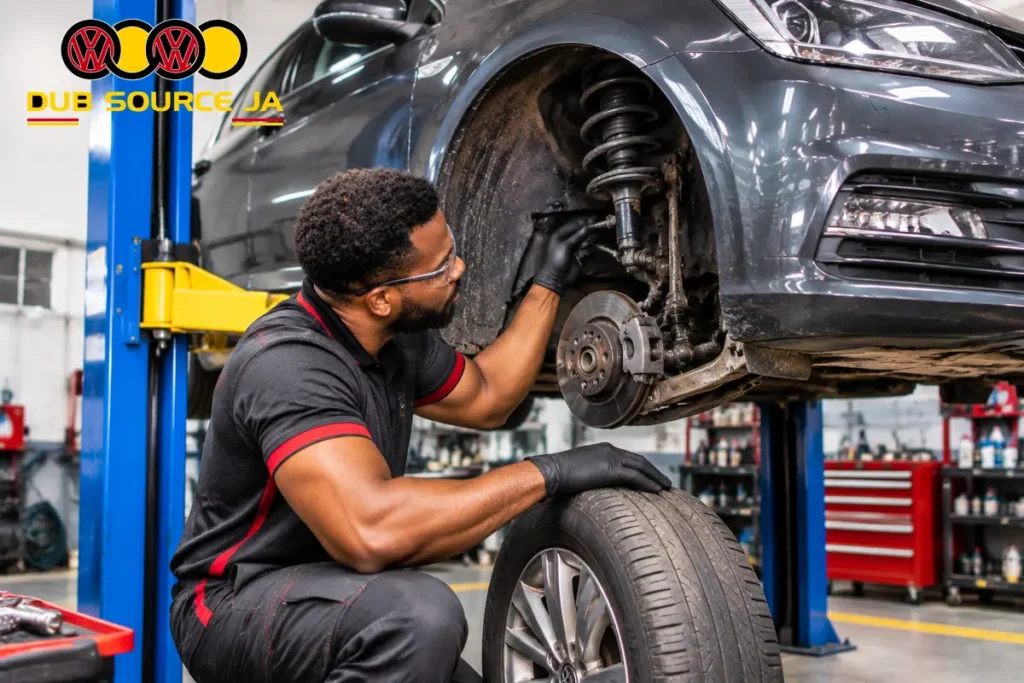
A technician may check tyre pressure and wear, wheels, bushes, ball joints, links, springs, shocks, top mounts, and steering parts. A safe road test may help confirm the sound. Some faults need a closer look with the car on a lift.
If you can, note whether the sound comes from the front or back and if it happens when the car is cold. A short recording made by a passenger may help. But never aim for potholes just to make the sound happen again. Some brake and wheel faults can sound like suspension noise too.
Ask to see what was found. A good repair plan should explain what needs work now, what can be watched, and why. If alignment is needed, have worn or bent parts dealt with first. Alignment cannot tighten a worn joint.
Dub Source’s Signs and Symptoms page lists common signs of worn control arm bushes. Its guide to finding the right VW part in Kingston also shows why a parts check matters before you buy.
Eight Steps That Help Avoid a Larger Bill
- Listen for the pattern. Note whether the sound happens on bumps, turns, or braking.
- Notice other changes. Look for bounce, steering pull, rough tyre wear, or a new vibration.
- Know when not to drive. If the car feels unsafe, stop and seek help rather than testing it again.
- Book an inspection. Describe the symptoms without deciding which part has failed.
- Ask what caused the noise. Request a clear reason for the repair and any safety concern.
- Check nearby parts. Ask about mounts, joints, boots, tyres, and any need for an alignment check.
- Match the replacement to the car. Give the VIN, year, engine, and other build details. See Dub Source’s VIN matching guide.
- Keep the record. Save the invoice and follow any advice for a test drive, alignment, or follow-up.
Five Mistakes That Can Make Things Worse
Turning up the radio. The sound may fade, but its cause will not go away just because you cannot hear it.
Buying the first part named online. Links, mounts, joints, and loose fittings may sound alike. A guess can turn into two bills.
Fitting new tyres before checking the cause of wear. If a loose part is still there, the new tyres may suffer too.
Assuming the whole suspension needs replacing. Some faults need one part. Others need a pair or related parts. Ask for the reason, not a broad claim.
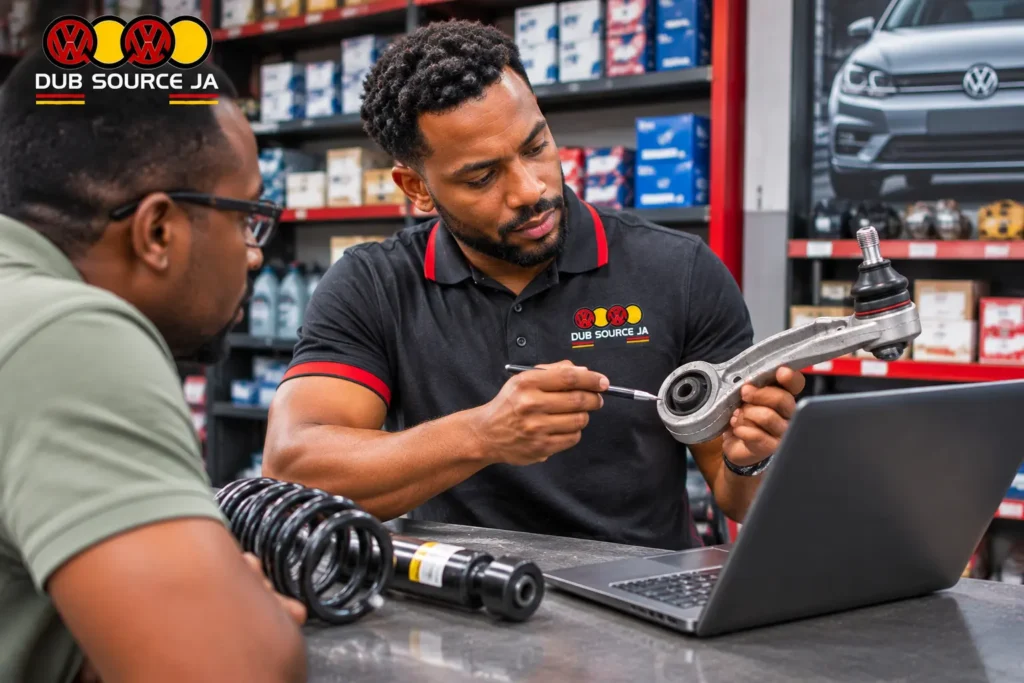
Skipping the fitment check. VW and Audi parts can differ by build and suspension setup. Confirm the exact part before paying.
Frequently Asked Questions
Can a small suspension noise become a big repair?
Yes, if a worn part starts to affect tyres or nearby joints. But some noises have a simple cause. Only an inspection can tell you what needs fixing.
Is it safe to drive with a faint knock over bumps?
The sound alone cannot answer that. Arrange a check soon. Stop driving if steering or control feels unsafe, or if you see damage to a wheel or tyre.
What makes a VW or Audi clunk over bumps?
Possible causes include stabiliser links, bushes, ball joints, top mounts, or loose fittings. A trained technician must find the true source.
Can a worn shock cause uneven tyre wear?
Yes. Poor damping can lead to patchy wear. Tyre pressure, alignment, and other worn parts may cause wear as well.
Will wheel alignment stop a knocking sound?
Not if the sound comes from a worn or loose part. Repair that fault first. Then check the alignment if needed.
Must I replace all suspension parts at once?
No. The repair should follow the inspection and maker’s fitting rules. Some parts may need to be changed in pairs, but not every noise calls for a full rebuild.
How do I avoid buying the wrong suspension part?
Find the fault first. Then check the VIN, build details, and the correct part code. Ask a VW or Audi specialist to confirm the match.
A Small Sound Is Worth a Clear Answer
That soft tok on a Kingston road may be nothing major. It may also be the first hint that a part needs care. You cannot tell which from the sound alone.
You do not need to panic, and you do not need to buy parts at random. Start with a good check. It can help protect your tyres, your time, and your peace of mind.
If your VW or Audi has a new knock or creak, contact Dub Source Limited with your car details and what you have heard. Ask the team about a workshop inspection and the right next step before the guesswork gets expensive.