loader image

Dub Source Limited

Call Us

1 876-740-9332

Our Location

70a Mannings Hill Road

Parts Sourcing

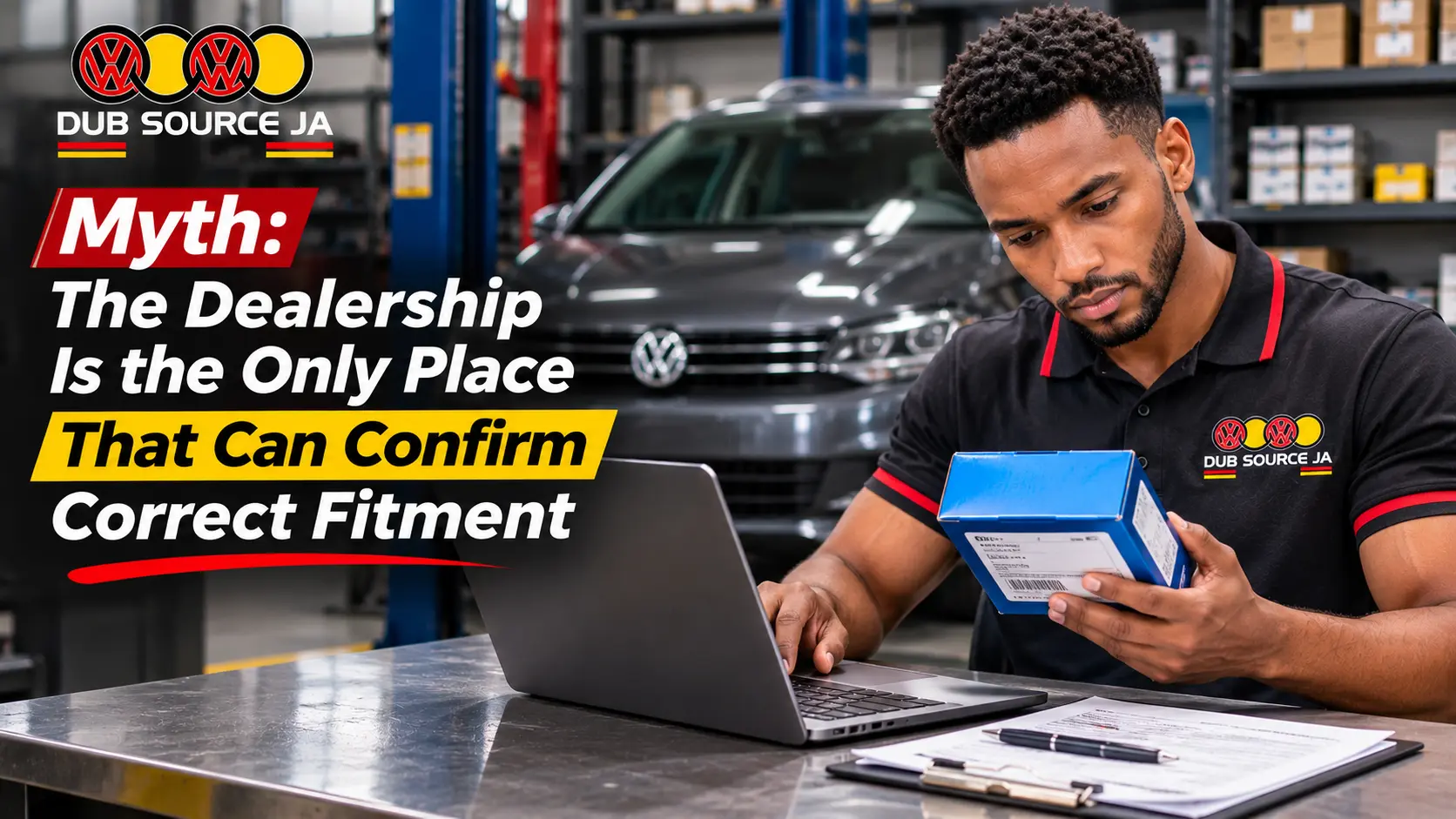
VW and Audi parts specialist checking a replacement component against vehicle VIN and catalogue information in Kingston, Jamaica.

Myth: The Dealership Is the Only Place That Can Confirm Correct Fitment

Myth: the dealership is the only place that can confirm correct fitment. The truth is that a skilled VW or Audi parts expert can often confirm a part by checking your VIN, engine, build details, trusted parts data, and the item already fitted. A dealer is a valid choice, but not the only one. Good fitment comes from matching the exact car, not simply trusting the sign outside a shop. Some repairs still need special tools, authorised access, or dealer support. This guide shows what a proper check involves and when more help is needed. Who Can Confirm the Right VW or Audi Part Beyond a Dealership? It’s Friday in Kingston. Your Golf needs a brake part before a weekend trip to St Ann. The phone is hot in your hand, the road is loud, and a seller says, “Only the dealer can know which one fits.” You want the car ready, not a long debate about parts. So what should you ask? Ask how the fit was checked. Did someone use the car’s VIN and brake details? Did they look up the exact code? Or did they just match the year and model name? A careful parts expert may give you a solid answer. A hurried guess can be wrong, no matter where it comes from. What Does Correct Car Parts Fitment Really Mean? A part must suit the car’s actual system, not just look the same in a photo. Two VW Golfs from the same year can use different parts because of their engine, brakes, or build date. Think of a house key. Two keys may look alike. One may slide into the lock but fail to turn. A car part can be just as close—and just as wrong. Fit, Fault, and Source: Three Different Checks Fitment asks whether the part suits your exact car. Diagnosis asks whether that part is the one you need to replace. Authenticity asks whether it truly came from the maker on the label. A real Audi sensor may be the wrong type for your car. A correctly matched sensor will not fix a warning light caused by faulty wiring. And a matching part number alone does not prove a product is genuine. Good advice keeps these questions apart before you spend. How Does an Independent VW or Audi Expert Confirm Fitment? The process begins with the car. A useful request includes the make, model, year, VIN, engine details, and the job to be done. Photos of the old part can help when the car has had past repairs. Start With the VIN, Then Read the Fine Print The VIN is a unique ID for the car. It helps an expert check how it was built. But the VIN is not a magic answer to every parts question. Some jobs also need a gearbox code, brake setup code, build date, or the code on the fitted item. If a past owner changed the brakes or engine, the car may no longer match its build record. A thoughtful parts adviser will ask for more details when the first search leaves doubt. Use Reliable Parts and Repair Data Volkswagen provides independent repair information through its erWin system. Audi also offers manufacturer repair and workshop information through Audi erWin. For original parts information, ETKA directs non-dealer users to partslink24. These resources support independent parts identification and repairs, but access conditions, fees, and availability may vary by market. Not every workshop has access to every system, so reliable information and an understanding of its limits remain important. Dealer vs Independent Expert vs Online Listing Where you ask What it may do well What you still need to check Authorised dealer Factory parts support, dealer systems, recall and warranty routes Whether the job or part needs a further physical check Skilled VW/Audi expert VIN lookup, part codes, and checks of fitted parts Which tools, data, and permissions the shop actually has General parts shop Common service items and routine parts searches Engine, build, and option differences Online listing A quick place to find a product and ask for a quote Whether “fits your car” was checked against your exact VIN The best answer is not always the fastest one. It is the one the supplier can explain. What Can Go Wrong Even When the VIN Is Correct? Your VIN can point to the right original part. But a car has a life after it leaves the plant. It may have had a new engine, different brakes, or replacement suspension parts. Say the parts list shows a brake disc for your Golf. At the workshop, the disc on the car looks different. You should not force the new part to fit or assume the parts list is useless. Check the fitted brake setup and find out what changed. For brakes, steering, and other safety work, that check should be done by a skilled technician. A photograph may help, but some parts need to be removed or measured correctly. When the records and the car disagree, the car needs a closer look. Three Fitment Problems Jamaican Drivers Know Too Well The Brake Part Needed Before a Parish Trip Your family is going to Ocho Rios. You want the brakes checked before the drive. A listing says the pads fit every Golf of your year. That sounds easy, but brake systems can vary. A shop that checks the VIN and fitted brake setup can save a return trip. First have the braking fault checked; don’t order pads only because you heard a noise. The Filter That Delays a Routine Service It’s a warm Monday morning. Your Audi is due for a service, and you need it back for work. The filter looks right in the seller’s photo, but the seal or fitting may differ. An expert who checks the engine details and exact part code can catch the mismatch before the car is on the lift. That small check matters when your day is already full. The Module With the

Myth: The Dealership Is the Only Place That Can Confirm Correct Fitment Read More »

Blog, Parts Sourcing
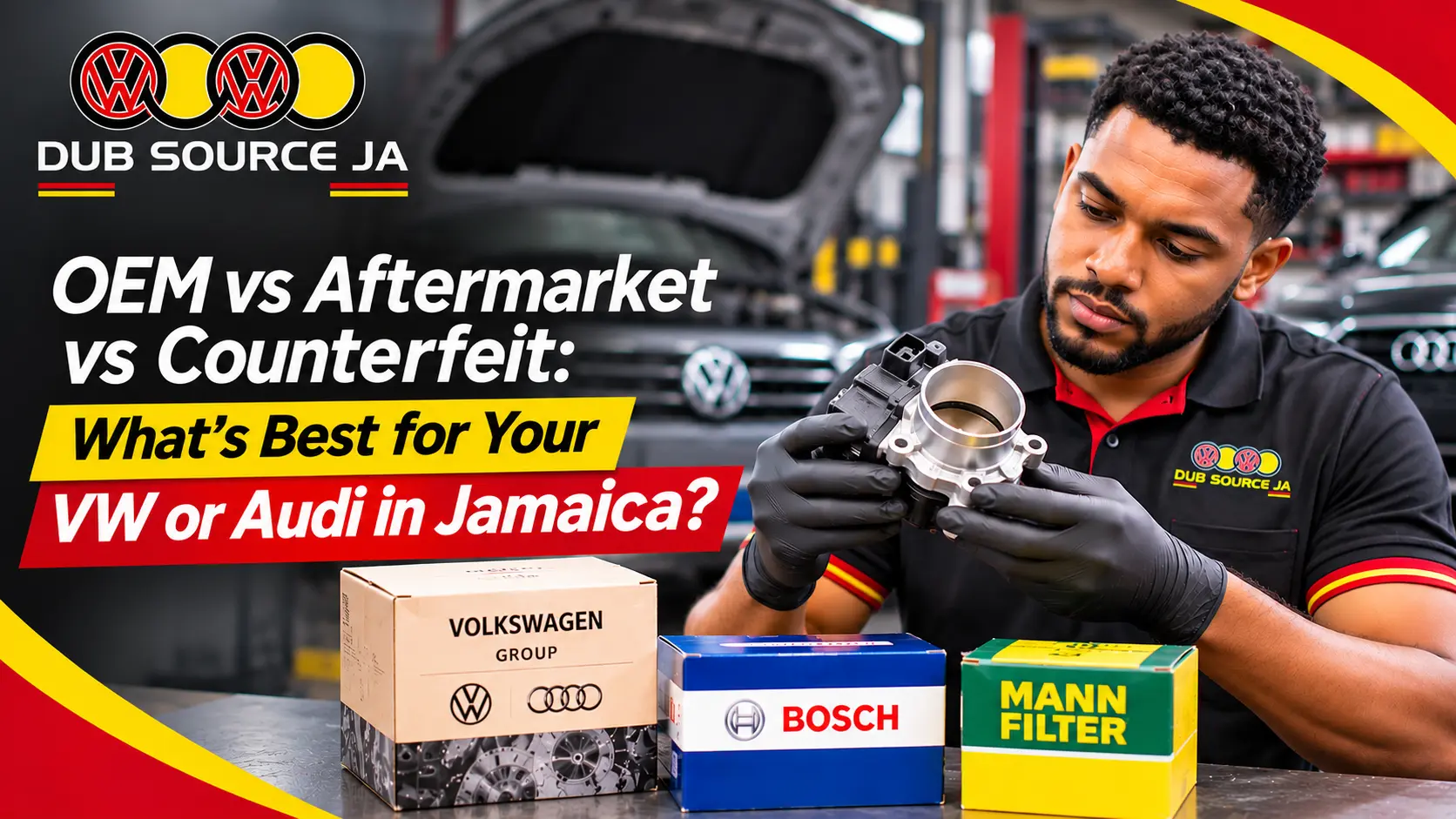
Parts adviser inspecting OEM replacement part packaging and manufacturer details for a VW or Audi in Jamaica.

How Do You Verify a Part Is Genuine Before Paying for It Online?

How do you verify a part is genuine before paying for it online? First, check that the seller is real. Make sure you can reach them. Ask for real photos. Get the brand and full part number. Use the brand’s own code check if it has one. Next, check that the part fits your VW or Audi. Read the order. Check who will get your money. No photo, logo, QR code, or low price can prove it is real. These steps help when you cannot hold the part first. What You Can Verify Before Paying Online It’s Friday afternoon in Kingston. Your Audi needs a sensor. You want the car back by Monday. A seller on WhatsApp sends a crisp photo. The box looks right. The next message says, “Pay now and I’ll send it out.” You can almost picture the repair done. Yet what if the photo is of a different part? What if the account is not who it claims to be? Online, you cannot hold the part or see what is inside a sealed box. Before you pay, check what you can. Know what must wait until the part arrives. That beats a guess based on a photo. Check the Seller Before You Trust the Listing Start away from the advert. Find the shop’s own website. Check its phone, address, and contact page. Search its name with words like “reviews” or “scam.” Read more than one source, not just a row of five-star ratings. Look at the web address with care. A fake page may swap one letter in a familiar name. A logo is easy to copy onto a social page. Jamaica’s Consumer Affairs Commission warns about lookalike websites and misleading online ads. It says to check the web address. It also says to call the shop on a trusted number. If the seller claims to be a known shop, call it via its own site. Do not rely on the phone number in the doubtful message itself. If the details do not match, stop there. Compare the seller’s details with an independently verified business listing or a contact you have used before. A professional-looking website alone does not prove the seller is genuine. Ask to See the Actual Part, Not Just a Perfect Photo A stock image helps you see the product type. It does not show what will reach your door. Ask to see the real box, its labels, and any marks on the part. Ask for the brand and full code. Is it new, used, or rebuilt? If the pack is sealed, ask what can be shown without opening it. Then ask a simple question: “Is this genuine VW or Audi, an OEM supplier-brand part, or a quality aftermarket option?” Those are not the same claim. A good aftermarket part may fit well. But it is not genuine VW or Audi stock. Use the maker’s parts list or ask a specialist to check the code. A fake may copy a real code. A match helps, but does not prove the part is real. What Does Each Online Check Really Prove? Think of buying a concert ticket. A clear picture may show a seat number, but it cannot prove the seller owns a valid ticket. You need to check the source and the terms too. The same is true for car parts. Each check tells you a bit more. What you check What it helps with What it cannot prove Verified business details Whether the seller can be traced and contacted That every part in stock is authentic Actual-item photos Visible brand, label, and stated condition That this is the exact item later shipped Full part number Which product is being offered That a physical item is genuine Maker security code Can support authenticity verification when the manufacturer provides an official check for that product. Fitment, or authenticity of products with no such system VIN and vehicle details Whether the reference suits your car Who manufactured the part in the parcel Invoice and payment record What was agreed, and who was paid That delivery or a refund is guaranteed Use the Maker’s Security Check When One Exists Some brands use seals or codes on certain packs. Bosch KeySecure, for example, lets buyers check codes on certain Bosch packages. Not every real Bosch part has a seal. A QR code may just open a web page. Do not trust an odd link that claims to check the brand. Go to the maker’s official site yourself. Follow the steps for that exact product. If the code is inside the pack, you may need to wait until it arrives. Ask what the brand can check before you buy. For more detail about suspect labels and packaging, see Dub Source’s guide to spotting counterfeit OEM parts. This guide stays focused on the decision before sending payment. A Real Part Can Still Be Wrong for Your VW or Audi Picture two VW Golfs outside the same shop. Same badge. Similar shape. Their engines or build dates may differ. So might their filters or sensors. What good is a genuine part if the plug does not match your car? You could lose another day waiting for the right one. Share your make, model, year, VIN, and engine details through a private, trusted channel. A photo of the old part may help too. Ask the supplier to match the exact reference, not merely say it “fits Golf.” Dub Source’s VIN matching guide for VW and Audi parts explains why model year, build information, and vehicle details matter. Some parts need more checks, such as the old part code. If the car has a warning light, get the fault checked first. A fault code is a clue, not proof that a certain sensor has failed. Check the Quote and Order Terms Before You Pay Before you pay, ask for a written quote. It should name the seller, brand, part code, and condition. Check the total cost and delivery fee too. Check

How Do You Verify a Part Is Genuine Before Paying for It Online? Read More »

Parts Sourcing
Shopping Cart