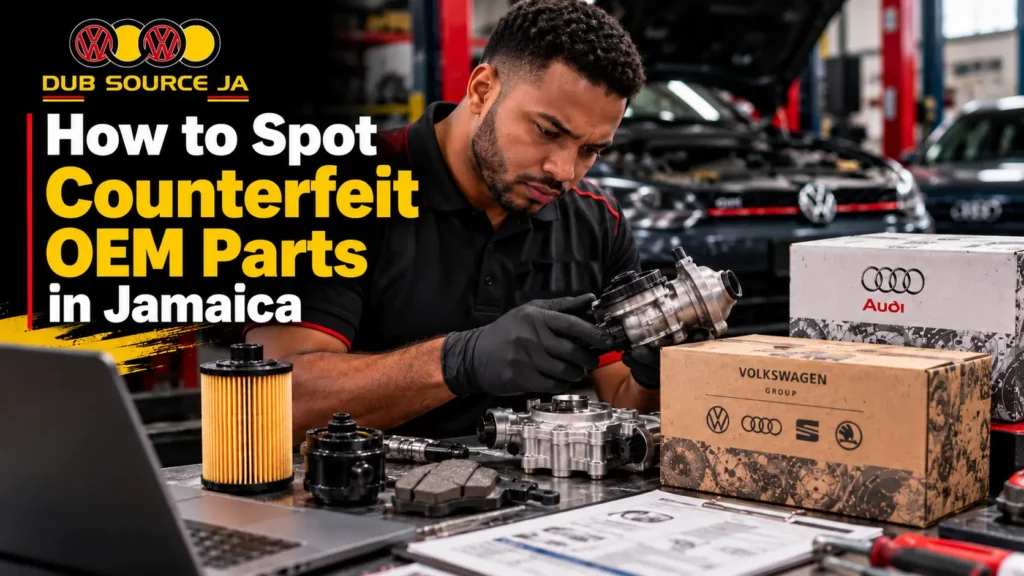
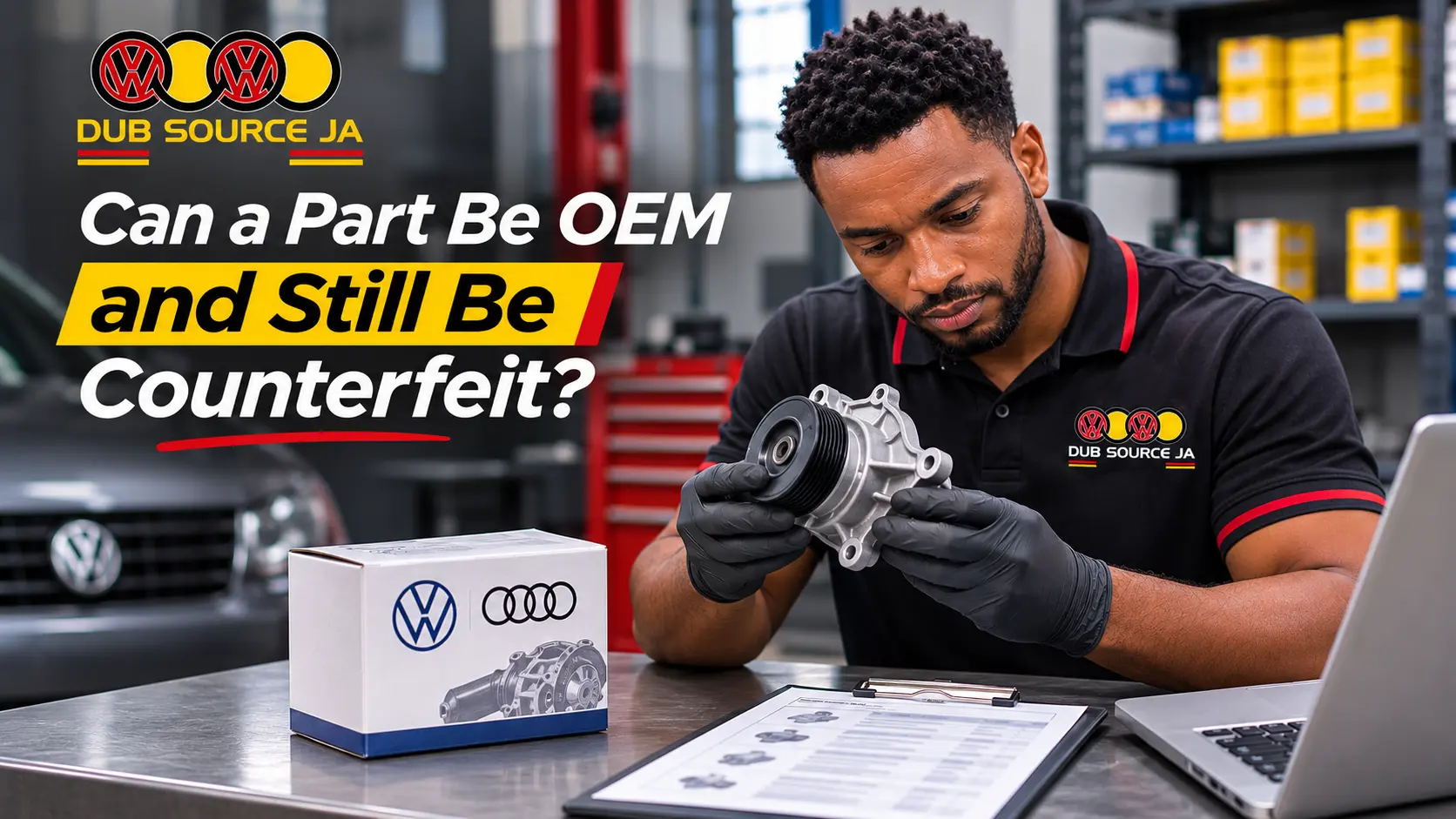
Can a part be OEM and still be counterfeit? A real part made by the brand on its label is not counterfeit. But a part sold as OEM can be fake if someone copies a brand, box, or maker’s name. A seller may also call an aftermarket part “OEM” without proof. That can mislead you, but it is not always counterfeiting.
For VW and Audi drivers in Jamaica, the safest approach is to check who made the part, where it came from, and whether it fits. Those checks may spare you a second purchase.
When Is an OEM Claim Misleading or Counterfeit?
Picture a neat parts box on a counter in Kingston. The brand looks familiar. The seller says, “It’s OEM.” You might feel relieved. After all, you just want your car fixed and back on the road.
But what does the word prove? On its own, very little. OEM means Original Equipment Manufacturer. At a parts shop, it often means a firm that makes parts for new cars. That firm may also sell new parts under its own name.
A real supplier-brand part and a fake of that brand are not the same. Think of a real concert ticket and a copy with the same print. They may look alike, but only one came from the named maker.
So the key question is not just, “Does it say OEM?” It is, “Who actually made this item?”
OEM, Genuine and Aftermarket Are Not the Same as Real and Fake
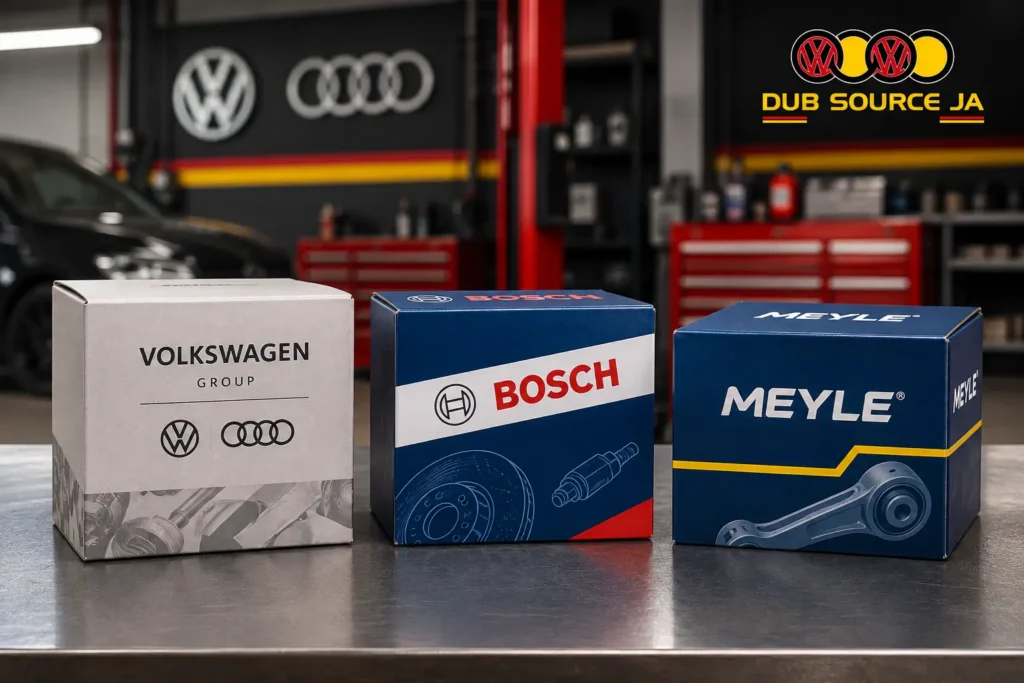
A genuine VW or Audi part is sold through the car brand’s parts system. A supplier-brand part may come from a firm that makes factory equipment. An aftermarket part is sold outside the car maker’s own parts brand.
These words tell you how parts are sold. Counterfeit means a fake that copies another brand’s goods or name.
A good aftermarket part is not fake because it has no VW badge. A neat box does not prove the source.
Want to understand the labels in more detail? Dub Source’s OEM versus original parts guide explains why the terms get confused.
In the wider automotive industry, OEM often refers to the vehicle manufacturer, while Original Equipment Supplier (OES) refers to a company supplying components for vehicle production. In replacement-parts sales, sellers may use OEM to describe supplier-branded parts. However, the term alone does not prove authenticity or factory origin.
Four Things That May Look Like the Same Problem
| What the buyer receives | What may be wrong | What to check |
|---|---|---|
| A fake product carrying a copied brand logo or trademark | Possible counterfeit | Brand and supplier origin |
| A real aftermarket item advertised as “OEM” | Misleading claim | Actual maker and product line |
| A real branded part sold as new when it is used | Wrong condition claim | Condition, receipt and sale terms |
| An authentic part that does not fit the car | Fitment error | VIN, engine details and exact reference |
Not every misleading OEM claim means a part is counterfeit. A genuine aftermarket product may be incorrectly advertised as factory-original without copying another brand. A counterfeit, however, falsely imitates a branded product. Knowing the difference helps you ask the right questions before buying.
Each problem needs a different step. A wrong fit needs a parts check. A false claim needs a talk with the seller. A suspected fake needs a source check.
A Fake Can Carry a Familiar Name
A fake logo or part number may look real. A seller’s stock photo may not show the item you receive.
Audi’s brand protection guidance lists poor packaging, spelling errors and missing part numbers as warning signs. Yet a clean box does not settle the question. Copies may be hard to see by eye.
A Misleading OEM Claim Is Not Always a Fake Brand
Suppose a seller offers a filter under its true aftermarket brand but calls it “OEM quality.” That may be a claim about its spec, not its factory origin.
If the seller calls it “factory original” without a basis, the description needs checking. But that does not automatically mean the product is a fake copy of a protected brand.
A Genuine Used Part Is Still Used
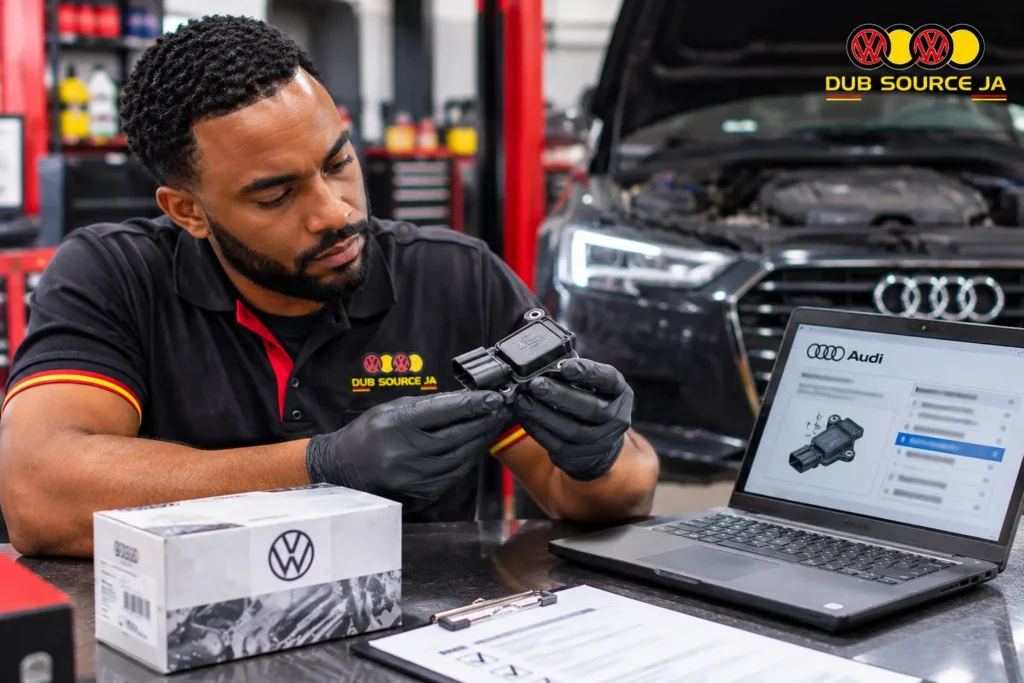
A real used sensor is not counterfeit simply because it came from a car. But a listing that says “brand new” when the part is used leaves out something important.
Ask what state it is in, and what happens if it does not match the description. Clear terms matter as much as the box.
Why This Matters When You Need Your Car in Jamaica
Imagine your Volkswagen needs a sensor on Friday. Kingston traffic is crawling, the heat is building, and you have plans to drive to another parish over the weekend.
A seller sends a sharp photo and says, “Original OEM, ready.” You want it fixed and may pay before asking more. Who wants another delay?
Now imagine the workshop opens the parcel and finds a part that cannot be matched to the claimed supplier. Or the connector does not suit your engine. Your plans may change, and you could pay for parts and labour again.
A quick check may save the trip.
Why Counterfeit Parts Are More Than a Money Risk
Some of the parts you rely on most are hidden once fitted. Brake components help you stop. Steering parts help the car respond. Filters and plugs have their own jobs inside the engine.
The UK government’s advice on fake vehicle parts warns that counterfeit brakes, spark plugs and filters can be hard to spot and may be unsafe. This does not mean a specific item sold in Jamaica is fake.
A poor part may not fail at once. A warning light or noise does not prove a fitted part is fake. If the car feels unsafe, have it checked rather than guessing at the cause.
You also want to feel safe with family in the car. That trust comes from sound parts and good checks, not a bold label.
How Much Can You Trust a Part Number, Seal or QR Code?
A part number helps a parts expert find the item on offer. But a copied product can carry a real number. A barcode may also be copied or lead only to a product page.
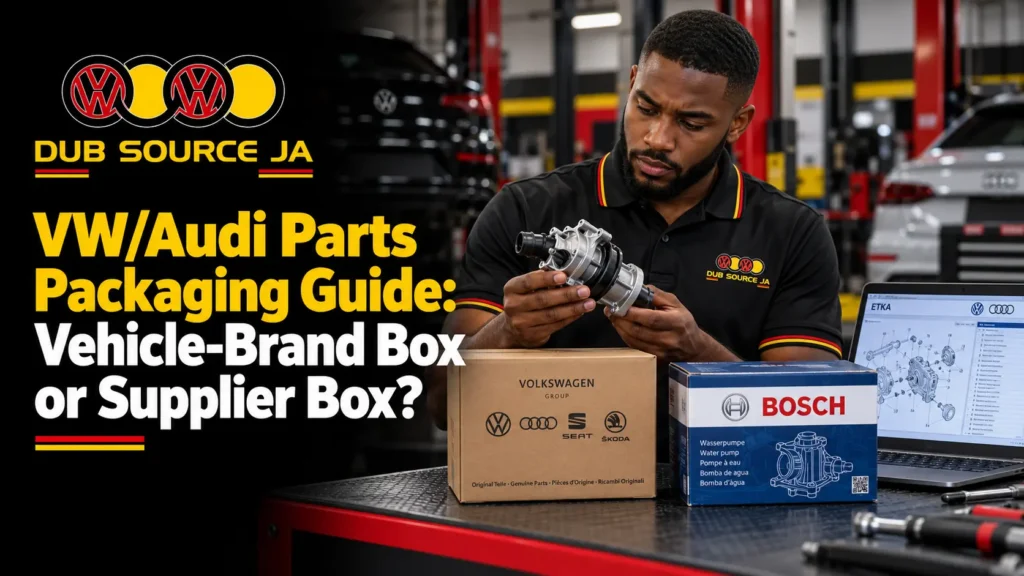
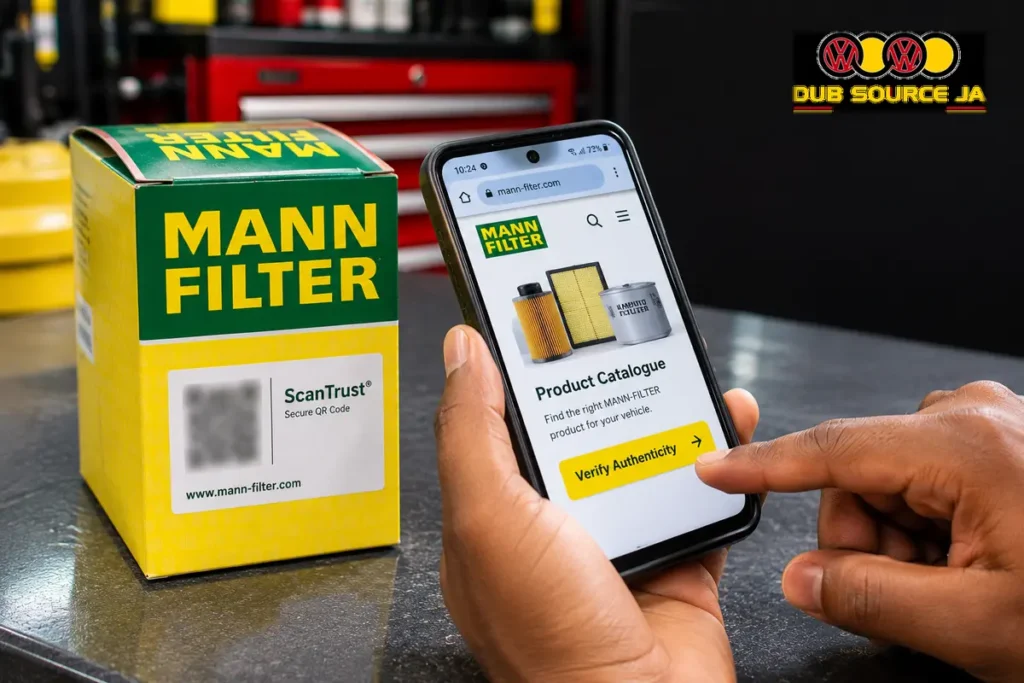
Some makers provide tools to check selected products. For instance, Bosch KeySecure uses security seals and codes on certain Bosch packages. Not every genuine Bosch product has that seal.
Open the maker’s site to follow its steps. If the result is unclear, contact the maker or a trusted supplier. A passing brand check does not prove the part fits your car.
A ticket may have a valid seat number but the wrong date. A part number can be valid yet wrong for your car.
An Authentic OEM Part Can Still Be the Wrong Part
Two Audi A4s may look alike from the street, but their engines, build dates or equipment can differ. A real part for one may not suit the other.
That is why source and fit are separate questions. First ask whether the part really came from the named maker. Then ask whether that exact reference belongs on your car.
A VIN is your car’s unique ID number. It can help a parts expert narrow down the correct item, along with the engine code and other details.
Dub Source’s VIN matching guide for VW and Audi drivers explains what details to share before ordering. A VIN check helps, but some jobs still need a closer check or the old part’s reference.
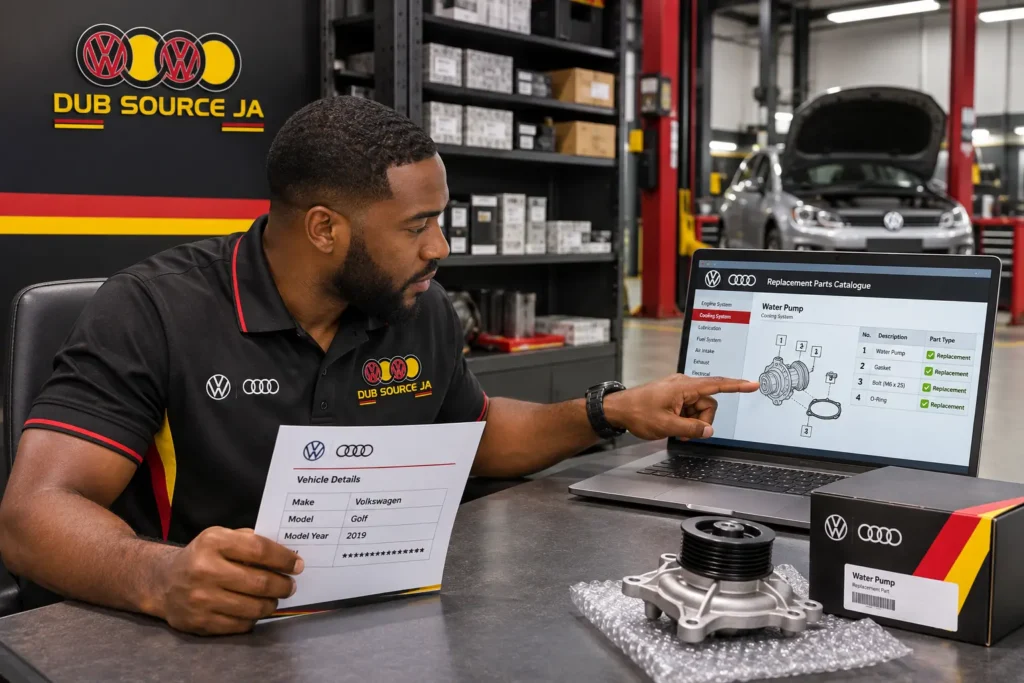
A Simple Eight-Step Check Before Buying
Keep this checklist on your phone, especially when buying through an online listing or WhatsApp.
- Know what needs fixing. A noise or fault code may have more than one cause. Have the fault checked before ordering a part based on a guess.
- Ask what “OEM” means here. Is it genuine vehicle-brand stock, an original supplier’s product or an aftermarket item?
- Get the exact maker and part number. A brand name or model name alone is not enough.
- Ask about the source. Look for a clear seller identity and an invoice that describes the product.
- Review the actual item. Ask for photos of the part and label, not just a stock photo.
- Use official checks where offered. Follow the maker’s steps for that part, and do not assume every item uses a code.
- Confirm fitment for your car. Share the VIN, model year and engine details through a trusted channel.
- Keep your purchase records. Save the listing, messages, receipt and box until the part has been checked and fitted.
For brakes, steering and other safety parts, use a skilled technician. Never fit a suspect part merely to see whether it works.
You can also read how Dub Source handles parts enquiries before sending your car details.

Already Bought a Part That Seems Fake? What to Do Next
Do not panic or accuse a seller based on one odd mark. Set the part aside if it has not been fitted. Keep the box and take clear photos of the labels, part and receipt.
Ask the seller to explain the source and the terms of the purchase. If the maker has a brand protection team, use that route to report your concern.
If the part is already fitted, ask a technician to check the car and the cause of any fault. A bad sound is not a test for a fake. If a brake or steering issue could make the car unsafe, avoid driving until it has been checked.
The UK government’s business guidance recommends keeping photos of suspect items and labels. Its report links apply to the UK. In Jamaica, ask the brand or local authorities what to do.
Frequently Asked Questions
Can a Real OEM Part Be Counterfeit?
A part that truly came from the maker it claims is not counterfeit. But a part sold as OEM may be a fake copy or falsely described product. Check the exact claim.
Can Counterfeit Parts Copy Genuine OEM Logos?
Yes. Counterfeit items can copy logos, boxes and part numbers. A real-looking label is not enough to prove the part’s source.
Is an Aftermarket Part Fake If It Is Not OEM?
No. Aftermarket parts are a normal part of the parts market. A part sold under its true brand is not automatically fake just because it was not factory-fitted.
Does “OEM Quality” Mean the Part Is Genuine?
No. “OEM quality” is usually a claim about the part’s design or standard. It does not prove the firm supplied the car factory or that the car maker approved that item.
Will a QR Code Tell Me If a Car Part Is Real?
Only when the brand provides an official code check for that product. A normal QR code may just show product details. Follow the maker’s own steps.
Can a Genuine VW or Audi Part Still Be Wrong for My Car?
Yes. Parts can vary by engine, year or equipment. Ask for an exact part reference and VIN fitment check before buying.
What Details Should I Send Before Ordering VW or Audi Parts?
Send your make, model, year, VIN and engine details if known. Add a photo of the old part when useful. Ask the supplier to confirm the right match.
The Best Question Is Not Just “Is It OEM?”
You do not need to know every car part to make a better choice. You need a clear answer about what you are buying and whether it belongs on your car.
A genuine OEM-supplier part is not counterfeit. But the word “OEM” on a listing can hide a false claim, and even a real part may be the wrong fit. Check the source, then the part reference, then your car details.
If you need help with VW or Audi parts in Jamaica, contact Dub Source Limited and share your car details. Ask the team to confirm fitment before you buy. It is better to ask now than pay for the same repair twice.