How do you verify a part is genuine before paying for it online? First, check that the seller is real. Make sure you can reach them. Ask for real photos. Get the brand and full part number. Use the brand’s own code check if it has one. Next, check that the part fits your VW or Audi. Read the order. Check who will get your money.
No photo, logo, QR code, or low price can prove it is real. These steps help when you cannot hold the part first.
What You Can Verify Before Paying Online
It’s Friday afternoon in Kingston. Your Audi needs a sensor. You want the car back by Monday. A seller on WhatsApp sends a crisp photo. The box looks right. The next message says, “Pay now and I’ll send it out.”
You can almost picture the repair done. Yet what if the photo is of a different part? What if the account is not who it claims to be?
Online, you cannot hold the part or see what is inside a sealed box. Before you pay, check what you can. Know what must wait until the part arrives. That beats a guess based on a photo.
Check the Seller Before You Trust the Listing
Start away from the advert. Find the shop’s own website. Check its phone, address, and contact page. Search its name with words like “reviews” or “scam.” Read more than one source, not just a row of five-star ratings.
Look at the web address with care. A fake page may swap one letter in a familiar name. A logo is easy to copy onto a social page.
Jamaica’s Consumer Affairs Commission warns about lookalike websites and misleading online ads. It says to check the web address. It also says to call the shop on a trusted number.
If the seller claims to be a known shop, call it via its own site. Do not rely on the phone number in the doubtful message itself. If the details do not match, stop there.
Compare the seller’s details with an independently verified business listing or a contact you have used before. A professional-looking website alone does not prove the seller is genuine.
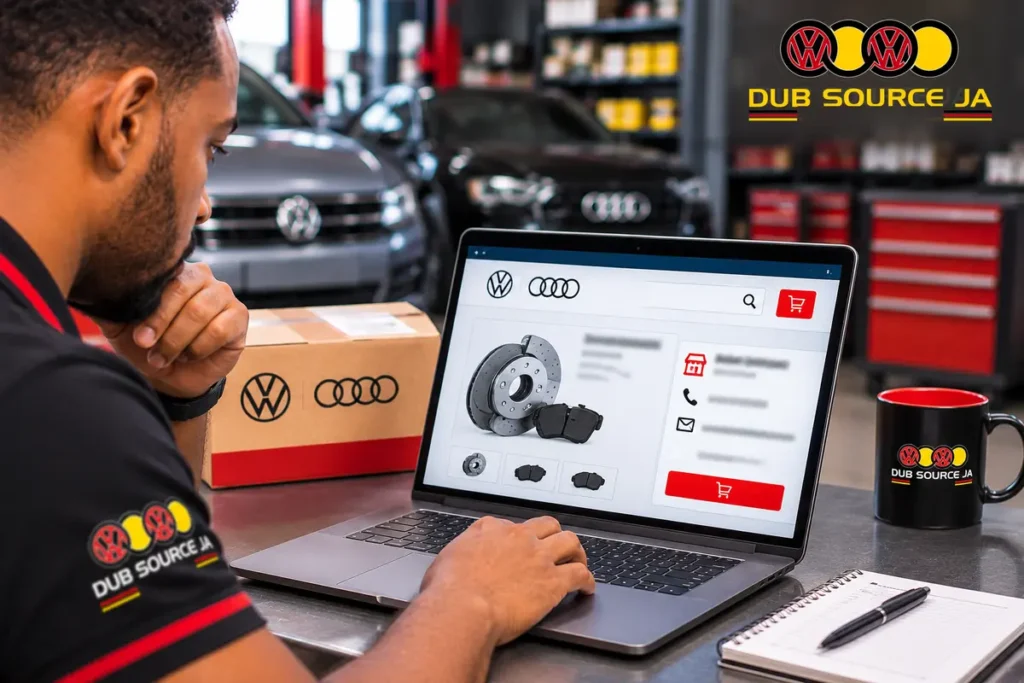
Ask to See the Actual Part, Not Just a Perfect Photo
A stock image helps you see the product type. It does not show what will reach your door.
Ask to see the real box, its labels, and any marks on the part. Ask for the brand and full code. Is it new, used, or rebuilt? If the pack is sealed, ask what can be shown without opening it.
Then ask a simple question: “Is this genuine VW or Audi, an OEM supplier-brand part, or a quality aftermarket option?” Those are not the same claim. A good aftermarket part may fit well. But it is not genuine VW or Audi stock.
Use the maker’s parts list or ask a specialist to check the code. A fake may copy a real code. A match helps, but does not prove the part is real.

What Does Each Online Check Really Prove?
Think of buying a concert ticket. A clear picture may show a seat number, but it cannot prove the seller owns a valid ticket. You need to check the source and the terms too.
The same is true for car parts. Each check tells you a bit more.
| What you check | What it helps with | What it cannot prove |
|---|---|---|
| Verified business details | Whether the seller can be traced and contacted | That every part in stock is authentic |
| Actual-item photos | Visible brand, label, and stated condition | That this is the exact item later shipped |
| Full part number | Which product is being offered | That a physical item is genuine |
| Maker security code | Can support authenticity verification when the manufacturer provides an official check for that product. | Fitment, or authenticity of products with no such system |
| VIN and vehicle details | Whether the reference suits your car | Who manufactured the part in the parcel |
| Invoice and payment record | What was agreed, and who was paid | That delivery or a refund is guaranteed |
Use the Maker’s Security Check When One Exists
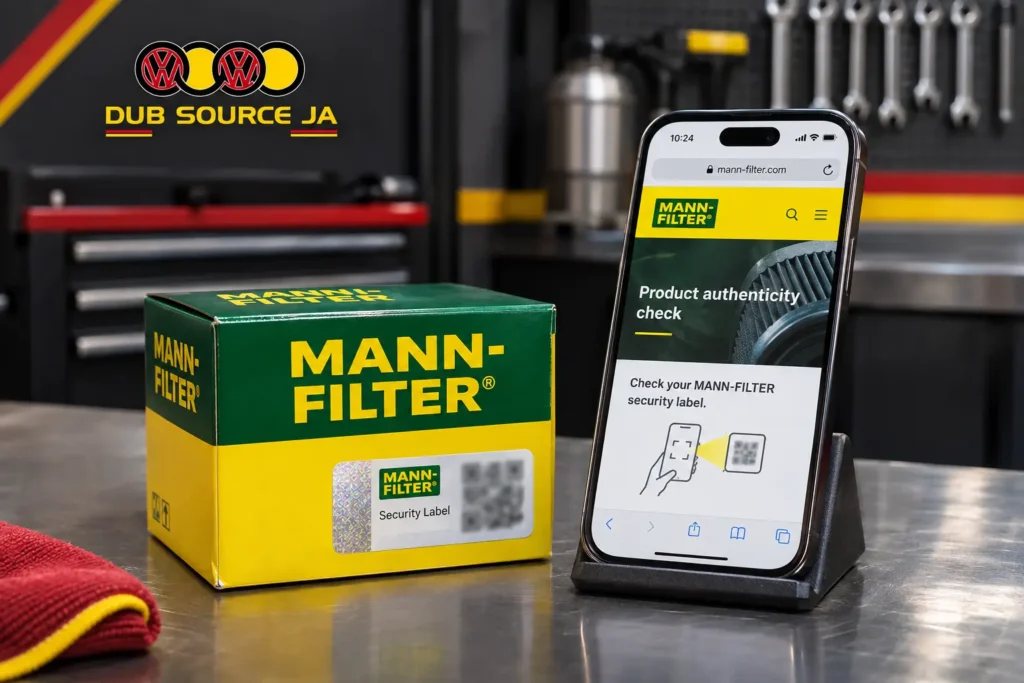
Some brands use seals or codes on certain packs. Bosch KeySecure, for example, lets buyers check codes on certain Bosch packages.
Not every real Bosch part has a seal. A QR code may just open a web page. Do not trust an odd link that claims to check the brand.
Go to the maker’s official site yourself. Follow the steps for that exact product. If the code is inside the pack, you may need to wait until it arrives. Ask what the brand can check before you buy.
For more detail about suspect labels and packaging, see Dub Source’s guide to spotting counterfeit OEM parts. This guide stays focused on the decision before sending payment.
A Real Part Can Still Be Wrong for Your VW or Audi
Picture two VW Golfs outside the same shop. Same badge. Similar shape. Their engines or build dates may differ. So might their filters or sensors.
What good is a genuine part if the plug does not match your car? You could lose another day waiting for the right one.
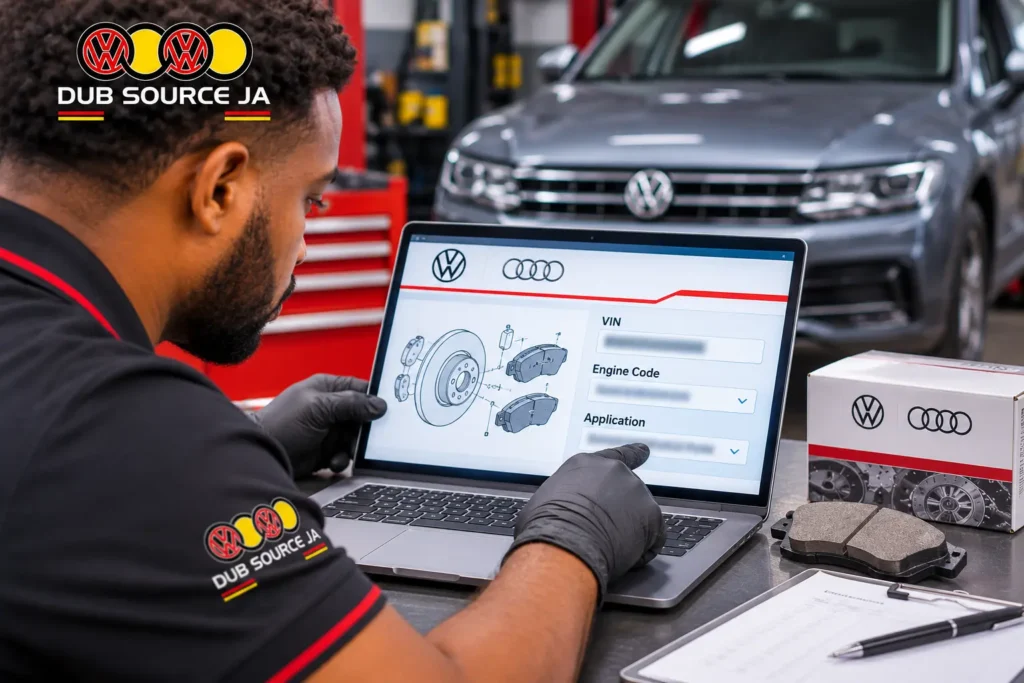
Share your make, model, year, VIN, and engine details through a private, trusted channel. A photo of the old part may help too. Ask the supplier to match the exact reference, not merely say it “fits Golf.”
Dub Source’s VIN matching guide for VW and Audi parts explains why model year, build information, and vehicle details matter. Some parts need more checks, such as the old part code.
If the car has a warning light, get the fault checked first. A fault code is a clue, not proof that a certain sensor has failed.
Check the Quote and Order Terms Before You Pay
Before you pay, ask for a written quote. It should name the seller, brand, part code, and condition. Check the total cost and delivery fee too. Check the tax wording and currency. Do not guess from a dollar sign.
Ask what happens if the part is wrong, damaged, or late. Is a return possible? Who pays the return cost? Are special orders handled differently?
If you live in Mandeville or Montego Bay, ask how it will ship. Ask when it may arrive. Do not assume “send it tomorrow” means the part will arrive tomorrow.
The Consumer Affairs Commission advises Jamaican online shoppers to check seller credibility and act quickly when goods are not right. Written terms help if there is a dispute.
Check Where Your Money Is Going
At the last step, slow down. A seller may change bank details at the last minute. They may ask you to pay a private account.
If you pay by bank transfer, check who will get the money. Use a phone number you found on the shop’s own site. For card payments, check the web address and terms. HTTPS helps protect the connection; it does not prove the shop is real.
Never send a PIN, password, or one-time bank code in chat. If they move you off a market site, ask what safeguards you may lose.
The FTC’s online marketplace guide explains why seller checks, refund rules, and payment methods matter. US laws are not Jamaica’s laws. Your options depend on local rules and how you paid.
A short check now may spare you a hard call to the bank.
Nine Checks to Make Before Paying Online
Save this list to your phone for your next parts order.
- Confirm the fault. Do not buy a part based only on a dash light or guess.
- Find the real business. Check its own site, contact details, and recent feedback.
- Ask for actual-item photos. Request the box, label, part markings, and condition.
- Name the product type. Is it genuine, OEM supplier-brand, or aftermarket?
- Match the full part number. Use trusted product data, not just a model name.
- Check official security features. Only if that exact product supports them.
- Confirm fitment. Share VIN and other needed vehicle details privately.
- Read the full order. Check price, currency, delivery, returns, and item condition.
- Verify payment details. Keep your receipt, listing, chat, and order record.
If the answers keep changing, do not rush to pay. A clear seller should know what they are selling.
You can also read how Dub Source handles parts enquiries to see why confirming the right part comes before payment.
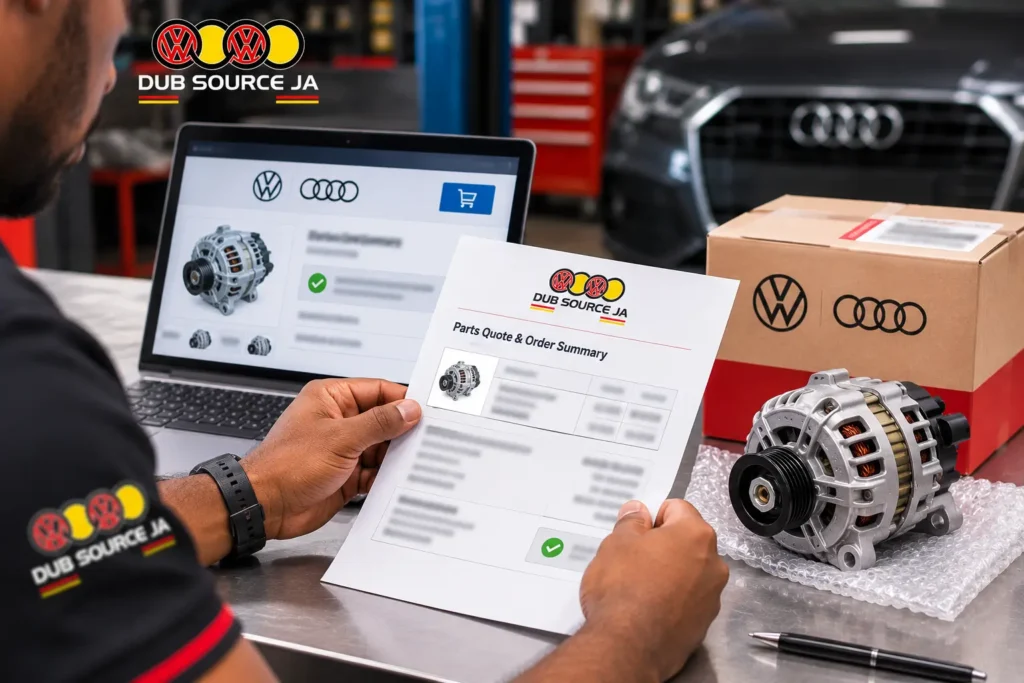
What if the Part Arrives and Looks Wrong?
Do not fit it just to test it. Keep the box, labels, receipt, and seller messages. Take photos first. Compare the item with the order.
Ask the seller to explain the mismatch. If you fear it may be fake, ask the brand through its own support site. For a suspected brake or steering issue, avoid using the vehicle until a qualified technician has checked it.
If the seller will not help, call your bank or card firm soon. Ask what you can do. You can also seek guidance from Jamaica’s Consumer Affairs Commission. A noise or fault after fitting does not, by itself, prove a part is counterfeit.
Frequently Asked Questions
Can You Prove a Car Part Is Genuine From Photos Alone?
No. Photos show the label, state, and code. They cannot prove which item will arrive or who made it. Verify the seller and any supported brand check too.
Does a QR Code Prove an OEM Part Is Real?
Not always. Some makers use special codes on selected products. Others use QR codes for product details. Check the maker’s official instructions for that exact item.
Is It Safe to Buy VW or Audi Parts Through WhatsApp?
WhatsApp can be useful for an enquiry. But the chat itself does not verify the seller. Check the shop, part, and payee through a trusted route.
Should I Pay Before the Seller Checks My VIN?
It is better to confirm the exact part first. Even a genuine item may not fit your model, engine, or build date. Ask for a fitment check before committing.
Are Very Cheap Genuine Parts Always Fake?
No. A lower price may reflect a sale or a different product line. Yet an unusually cheap offer with unclear source details deserves a second look.
What if the Seller Changes Bank Details at Checkout?
Stop and verify the new details through the business’s independently confirmed contact. Do not trust a last-minute chat message alone, even if it uses a familiar logo.
What Records Should I Keep After Paying?
Keep the listing, brand, code, seller name, chats, bill, pay slip, and delivery note. Save the return terms too.
Buy With More Confidence, Not Just More Speed
An online order can save a drive across Kingston. But your car still needs a real part that fits. The best time to check is before the payment leaves your account.
Take a moment to verify the seller, product, fitment, and written terms. Then confirm the payment route. A screen cannot prove it all. But these checks help you avoid costly guesses.
If you need VW or Audi parts in Jamaica, contact Dub Source Limited with your vehicle details. The team can help you check the part and fitment before you commit. Ask before the guesswork gets expensive.