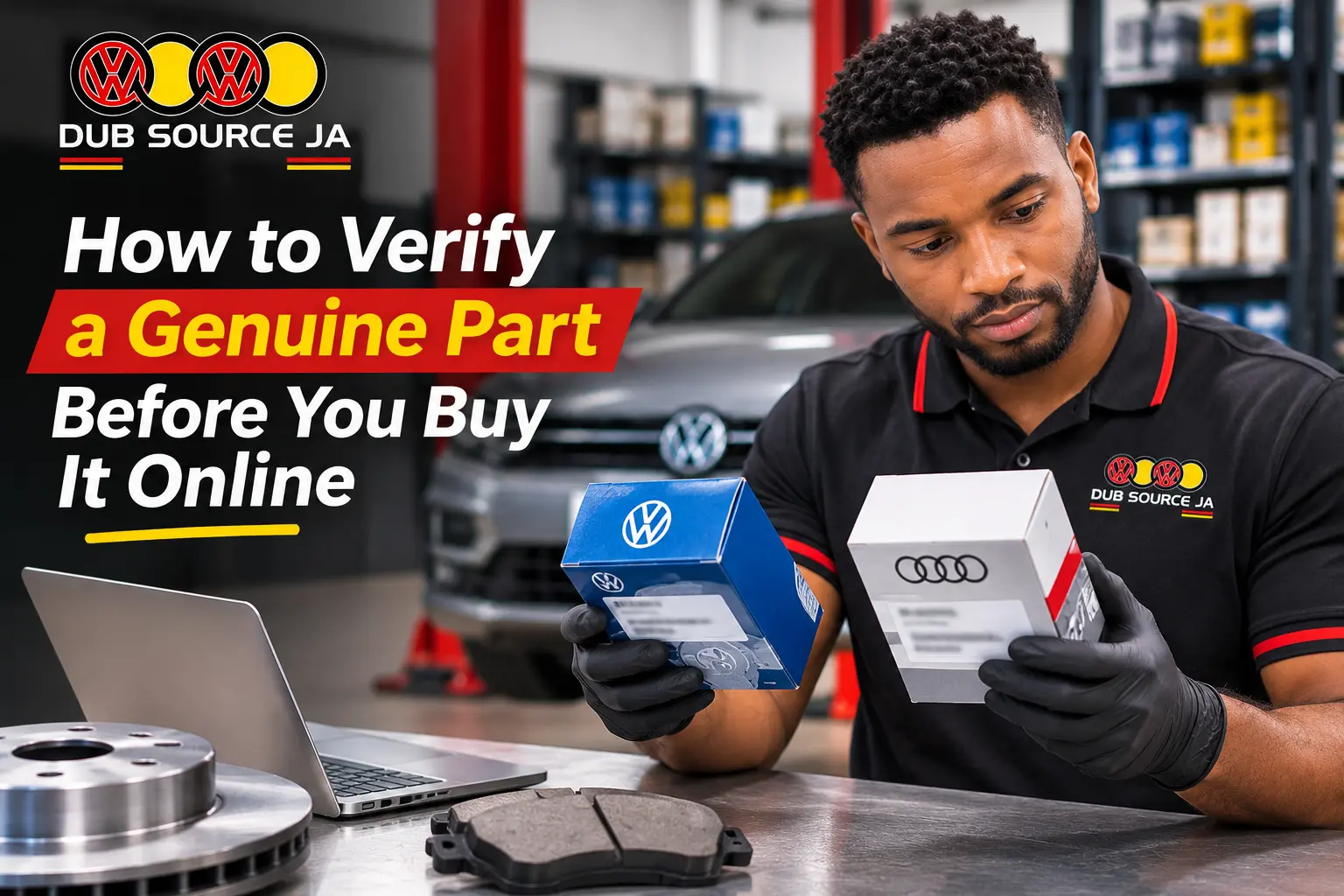
What is the real difference between OEM, aftermarket, and counterfeit parts? OEM refers to a maker of original equipment, often a firm that supplies parts for new cars. Aftermarket parts are replacements sold outside a car brand’s own parts range. They can be good, poor, or somewhere in between. Counterfeit parts are fakes that pretend to be products from another brand. Aftermarket does not mean fake, and an OEM label does not prove that a part is genuine or right for your car. For VW and Audi drivers in Jamaica, the smart choice starts with the source, part number, and fit.
Three Parts Labels That Mean Different Things
It’s a hot afternoon in Kingston. Your VW Golf needs a filter before the weekend, and you are standing at a parts counter. One box says “OEM”. Another has a brand you know less well. The last one looks just like a VW box you saw online.
Which one should you pick? These words may sound like a ranking from best to worst. They are not.
OEM is about a maker’s role. Aftermarket is a way parts reach buyers. Counterfeit means a product is pretending to be something it is not. That distinction makes the labels clearer.
What Does OEM Really Mean for VW and Audi Parts?
OEM stands for Original Equipment Manufacturer. In the wider car industry, the term can refer to a vehicle manufacturer such as Volkswagen. Firms that supply components for new cars are also called Original Equipment Suppliers (OES). In parts shops, sellers often use OEM for supplier-branded replacements. But the label alone does not prove that the exact part was fitted at the factory.
Think of a restaurant that sells bread under its own name. A baker may make that bread for the restaurant. The baker may also sell bread under a separate label. The recipes may differ.
A parts maker can work in much the same way. It may make an item for a new VW or Audi, then sell other spares under its own brand. The exact part still matters.
Does OEM mean genuine VW or Audi?
Not always. A genuine VW or Audi part is sold through the car brand’s own parts system. Some parts come from outside firms. The car brand still backs its own genuine range.
Volkswagen explains its Genuine Parts as parts it also uses in new vehicles. A part sold by the maker may fit too, but do not assume it is the same.
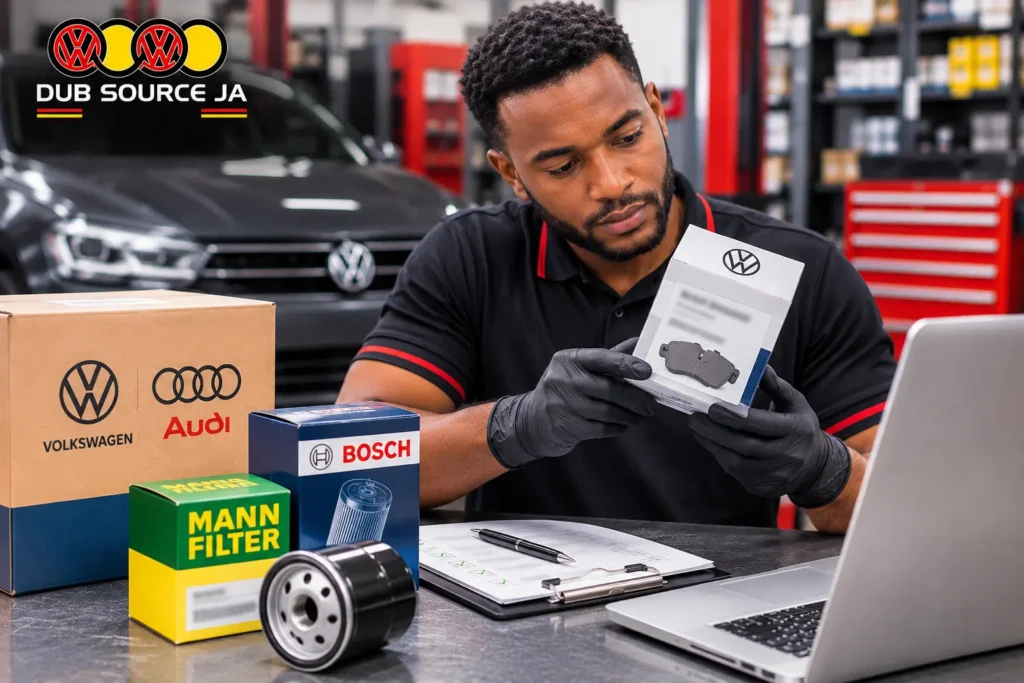
Are Aftermarket Parts Bad, or Just Different?
Aftermarket is not another word for fake. It means a spare sold outside the car maker’s own brand. Makers vary.
A good filter from another brand may suit your Polo if its design and fit are right. A poor one may have the wrong seal or fail to meet the required standard. The label alone tells you little about how well it works.
Think of tyres. You would not buy a tyre only because it has a famous name or a low price. You would check its size, intended use, and other key details. Do the same for car parts.
What about “OE quality” and “OEM equivalent”?
Those words often mean the seller or maker claims the part meets certain original requirements. It does not prove the item came from the factory’s original supplier, or that VW or Audi approved it.
Ask which standard it meets. A product sheet means more than a bold phrase.

What Makes a Part Counterfeit?
A counterfeit part tries to pass as a product from another brand. It may copy a logo, box, label, or part number. That is not the same as a real part sold under its own name.
Fakes can target VW, Audi, or aftermarket brands. That is why counterfeit is not a third quality grade beside OEM and aftermarket. A fake can show up in either group.
The UK government’s guidance on fake vehicle parts warns that fake brakes, filters, and spark plugs can look convincing. Some may put drivers at risk. A legitimate aftermarket part may be a suitable choice when its source, specifications, and fit are properly checked.
A neat logo does not settle the issue. Nor does a high price. Check its source before fitting.
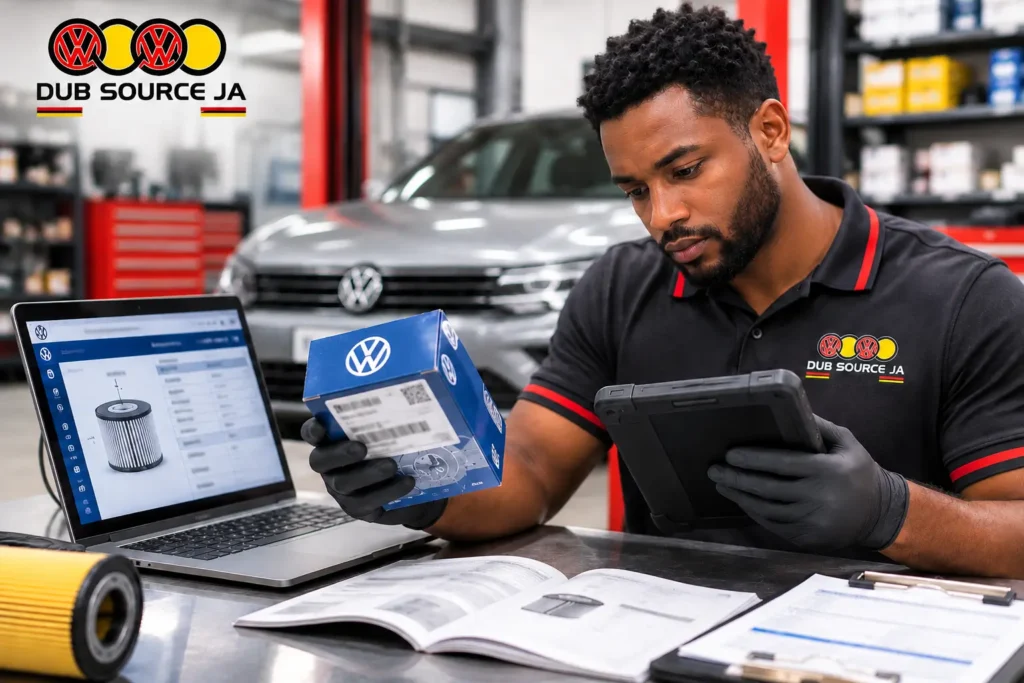
OEM vs Aftermarket vs Counterfeit: A Simple Comparison
| Type | What it tells you | What to check |
|---|---|---|
| Genuine VW or Audi | Sold under the car maker’s parts brand | Trusted source and exact fit |
| OEM supplier-branded | Sold under a maker’s own brand; that maker may supply original equipment | Exact product code, specification, and fit |
| Legitimate aftermarket | Replacement sold outside the car maker’s brand | Brand, quality evidence, and car application |
| Counterfeit | Fake pretending to be another brand’s product | Do not fit; seek brand or seller verification |
These are not four separate quality grades. An original equipment supplier may also sell parts under its own brand in the aftermarket. Counterfeit is different because it involves a false brand identity. A fake can imitate either a genuine vehicle-brand part or an aftermarket brand.
What Happens When You Buy by Label Alone?
A filter before Monday morning
Your Golf needs a service. You find two oil filters: one in a VW box, and one from a spare-parts maker. Either may work if its reference and requirements match.
A neat box cannot fix a poor seal. Compare the exact items, not just their names.
If you live outside Kingston, a wrong filter may mean a return trip or a new delivery fee. You may also need more time off work. The right fit helps keep a simple service from turning into a longer job.
Suspension work after rough roads
Your Audi makes a knocking sound after a stretch of broken road. It is tempting to order the first “OEM quality” suspension link you see.
But what caused the sound? It may need an inspection, not a guess. A wrong part wastes labour. For steering, brakes, or suspension, use a skilled technician and a traceable product.
A sensor that looks the same
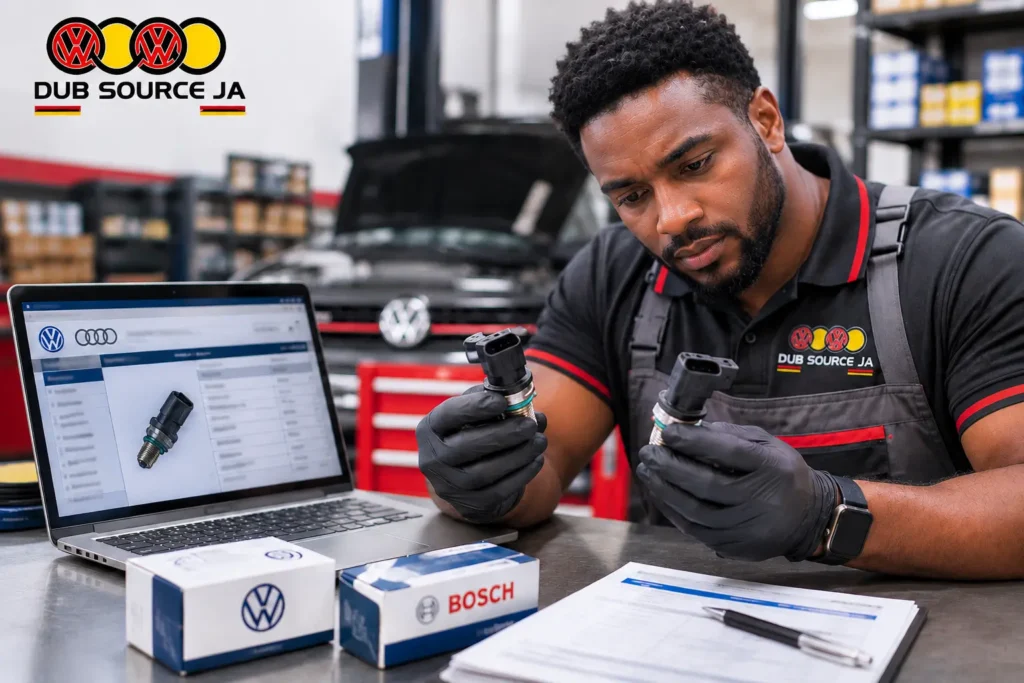
Two sensors may have the same shape in a photo. Yet the plug, signal, or fit could differ. A real part for one engine may not suit yours.
That is why a fault code should start a check, not trigger an instant order. You need to fix the real fault.
Is OEM Always Better Than Aftermarket?
Not always. A genuine item has a clear brand-backed supply route. A well-made spare can also suit the repair. Choose by the job and the exact part.
For a service job, a known spare-parts brand may work. For brakes or complex sensors, a poor match can cost much more. Ask for guidance when needed.
Price matters, of course. But think about the full cost. If you buy the wrong part and must pay for labour again, was it really cheaper?
Price alone does not show how well it works or who made it. Ask why it suits your car.
A good seller should welcome that question. Ask if the part is new, what the maker says it fits, and what happens if there is a mismatch. You deserve to know what you are paying for, even when the repair feels urgent.
Check Three Things: Source, Standard, and Fit
Source: Who made this exact item, and who is selling it? Ask for an invoice and clear product details. A logo is not enough.
Standard: Does the part meet the requirements for its job? Oil, fluids, and safety parts can need precise specifications. “Fits VW” is not a full technical answer.
Fit: Is this the correct part for your specific car? Two Audi A4s may look alike but have different engines or build dates. A real part can still be wrong.
Dub Source’s VIN matching guide explains why a chassis number, engine code, and build details can help narrow down the correct reference.
Some makers let you check certain packs. Bosch KeySecure, for example, uses security features on certain Bosch packs. Not all Bosch packs use it. A normal QR code alone is not proof that a product is genuine.
An Eight-Step Checklist Before You Buy
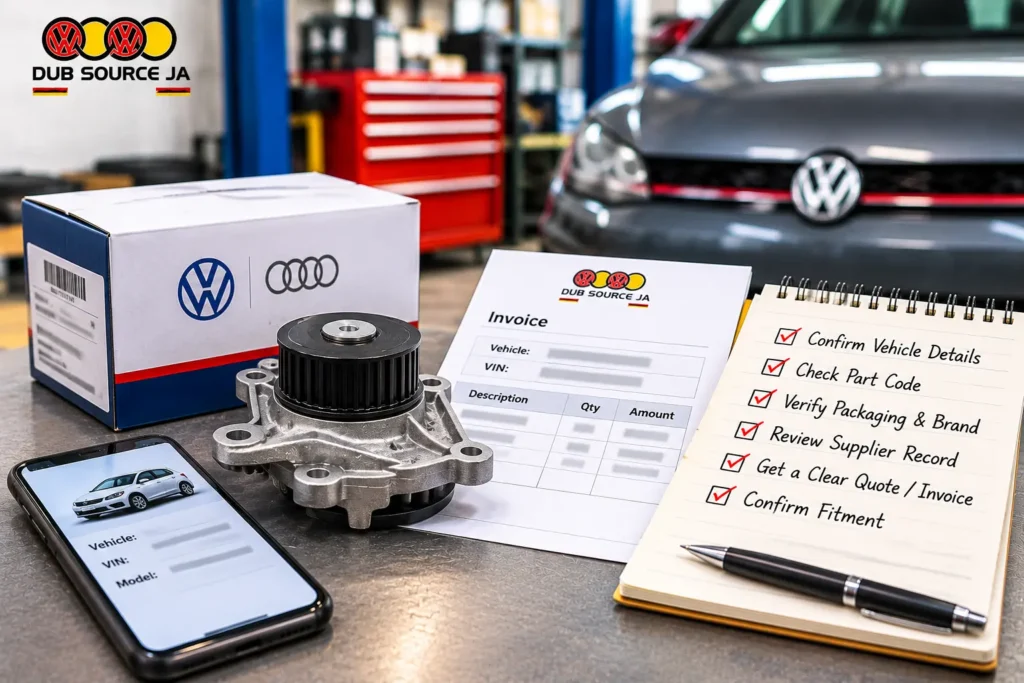
- Find the fault first. If a warning light or noise is unclear, have the car checked before you order anything.
- Note the vehicle details. Keep the make, model, year, VIN, and engine type ready.
- Ask which type of part is offered. Genuine vehicle-brand, OEM supplier-brand, or aftermarket?
- Get the full part code. Do not buy from a model name or product photo alone.
- Check the required specification. Ask what the part is made to meet and whether it suits the job.
- Check the source. Confirm the seller, brand, and what is written on the invoice.
- Use official maker checks when offered. Do not rely on a copied seal or a random QR link.
- Confirm fit before paying or fitting. Ask a parts specialist to check the code against your VIN and other vehicle details.
For a closer look at the buying process, read how Dub Source helps customers order parts. Start with the car, not the box.
Common Mistakes to Avoid
“Aftermarket means fake.” No. A real spare is sold under its own brand. Fakes misuse a brand name.
“OEM always means the part came from VW.” No. An outside supplier may make original equipment and sell its own parts too.
“It looks the same, so it must fit.” Not always. Even small differences in a plug, seal, or design can matter.
“The most expensive option must be best.” Price does not prove source, fit, or how long a part may last.
“A security code proves everything.” A supported official check may help with authenticity. You must still confirm the part belongs on your car.
Frequently Asked Questions
Are aftermarket parts the same as counterfeit parts?
No. Aftermarket parts are real spares sold outside the car brand. Fakes claim to come from a brand they do not belong to. They can copy both types.
Does OEM mean genuine Volkswagen or Audi?
Not always. Genuine parts are sold under VW or Audi. An OEM maker may sell parts under its own name. Check each exact item.
Can aftermarket parts be as good as OEM parts?
Some can be well suited to the same repair. Compare the exact brand, part, specifications, and fit. The words on the box alone cannot tell you how a part will perform.
Does “OEM quality” mean factory approved?
No. It is often a claim about matching a standard or design. Ask whether the car maker has approved the exact product. Do not infer approval from the phrase.
Are cheap car parts always fake?
No. A low price may have an honest reason. Yet a very low price from an unknown seller is worth checking. So are vague part details and unclear return terms.
Can a genuine part be wrong for my car?
Yes. Parts can vary by engine, build date, and equipment. A real part for one Golf or A4 may not suit yours. Confirm the full reference and VIN.
What should I check before buying safety parts?
Have the fault inspected. Confirm a traceable source, correct specifications, and exact fit. Use a qualified technician for brakes, steering, and other safety-critical work.
The Right Part Matters More Than the Name on the Box
You need not be a parts expert. Just know what each term can—and cannot—promise.
OEM points to who makes parts for new cars. Aftermarket is a valid way to buy spares. Counterfeit means a fake is being sold as the real thing. None of those words replaces a fitment check.
For your VW or Audi in Jamaica, start with the fault, then the exact part and source. If you need help, contact Dub Source Limited with your vehicle details. Ask the team to confirm fitment before you buy. A few clear questions now can save a second repair later.