Why does a part number alone not prove a part is genuine? Because it names a type of part, not the person or factory that made the item in the box. A fake can copy a real number. A seller can also print the right code on the wrong item. And a code found in a parts list does not prove the part will fit your exact VW or Audi. To buy with more peace of mind, check the seller, the product’s source, any official brand security check, and your car details together. The number is a good start, not the last word.
Why a Matching Part Number Is Not Proof of Authenticity
It is late afternoon in Kingston. The road is hot, traffic is moving slowly, and your Golf needs a filter before the next workday. A seller sends a clear photo. The number on the box matches the one you found online.
That feels like good news. But what have you proved? Only that the printed number matches a real code. You have not yet proved that the brand made the part in that box.
Think of a concert ticket. A copied ticket can show the right event, date, and seat. The print looks right, but the ticket may not be valid. A part number is much the same: it helps you identify a claim, not confirm its source.
What Does a Car Part Number Actually Do?
A part number helps a parts team find a product design or version. It may point to a filter, sensor, or brake part. Parts lists use these codes to help shops find a match.
That matters for VW and Audi cars. Two cars may share a model name but use different engines. Their parts may look alike but need other codes.
Part Number, Serial Number, and Batch Code: Three Different Jobs
A part number often applies to many units of one product. A serial number, when used, may identify one unit. A batch or lot code may help the maker trace a group made at one time.
Not every item carries all three. Nor does any printed mark make a product immune to copying. A seller may show a valid code on a pack without proving what is inside it.
How Can a Fake Carry a Real Part Number?
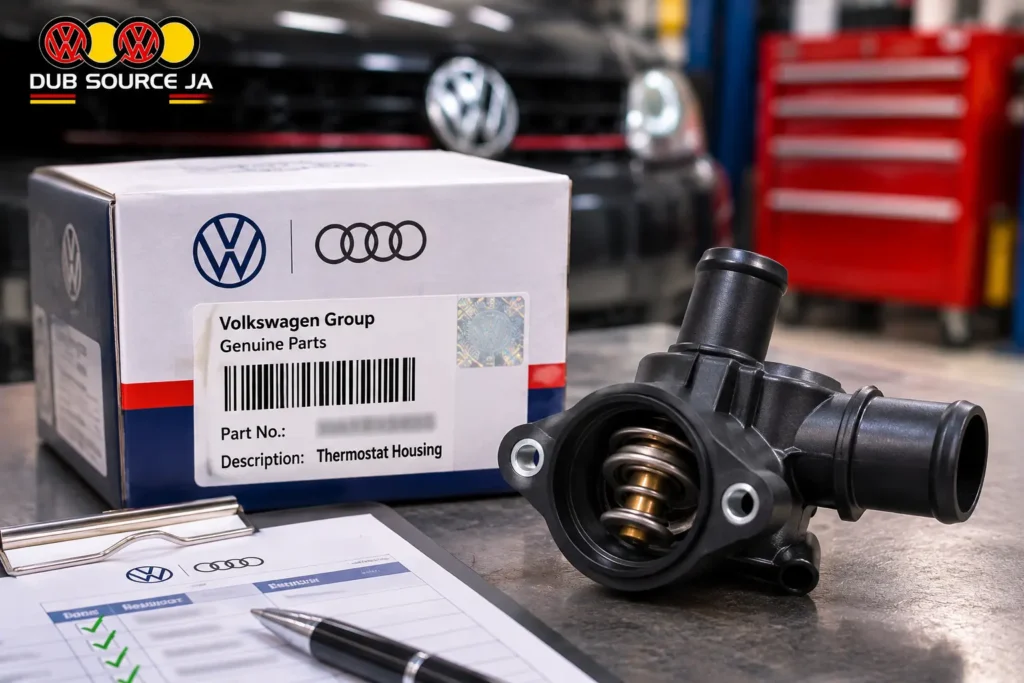
The code may be on a public parts list. A person who copies a brand can also copy its product code, logo, and box design. A quick web search then brings up a real part, even if the item for sale is not real.
That is why matching search results can feel so convincing. The result may describe a genuine item. It says nothing about the origin of the part sitting on a stranger’s shelf.
The UK government’s guide to fake car parts explains that fake parts and packs can be hard to spot. It urges buyers to check the seller, not just the item. This is UK advice, but the core lesson applies to Jamaican drivers too.
A number that does not match is a reason to ask more questions. A number that does match is not a reason to stop asking.
What a Part Number Can and Cannot Tell You
| Check | What it helps you learn | What it does not prove |
|---|---|---|
| Part number on the box | The product the seller claims to supply | That the stated maker built the item |
| Match in a parts list | That the code exists for a listed use | That the item is real |
| Aftermarket cross-reference | A maker’s suggested part for another code | That both items are the same as factory parts |
| Serial or batch marking | Extra product or production details, if the maker uses them | That the mark has not been copied |
| Brand security check | Whether the manufacturer can authenticate the supported security code | That every product detail is correct or the part fits your car |
| VIN and car build check | Whether a code suits that car | Who made the item sent to you |
What the part is, who made it, and what it fits are three separate questions. A sound purchase checks all three.
Why a Cross-Reference Does Not Mean “Genuine VW or Audi”
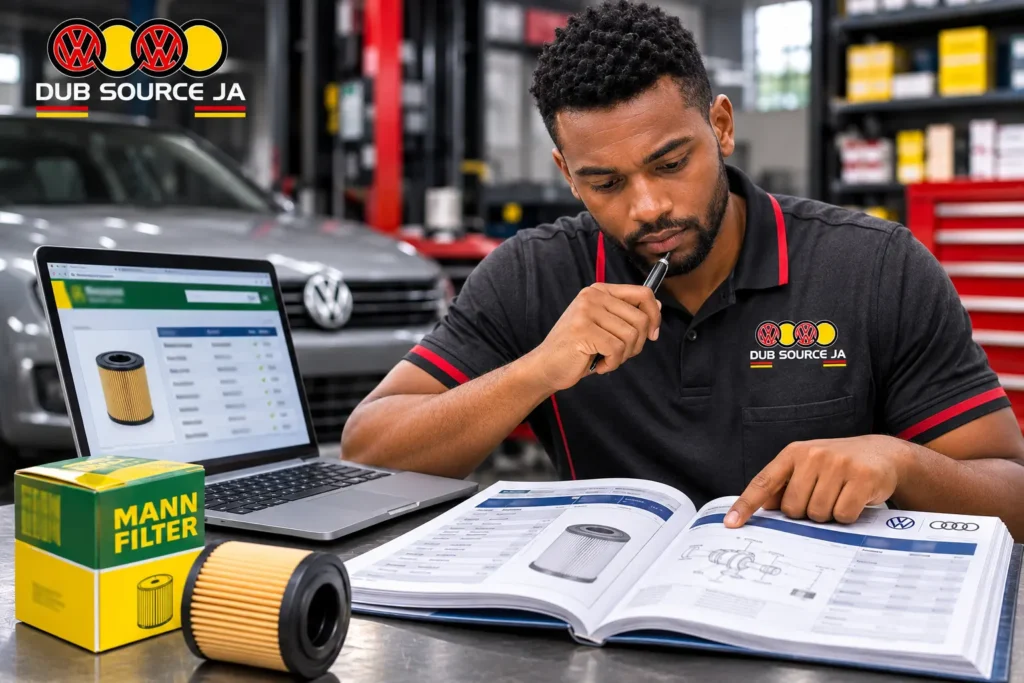
You may see an aftermarket filter listed against a VW or Audi reference number. This is called a cross-reference. It helps identify a possible replacement, but the exact specifications and vehicle application still need checking.
It does not mean VW made the filter, or that the parts maker sold that item to the car plant. It may be a valid aftermarket option sold under its own brand.
Think of a shop that stocks two phone chargers for the same phone. Both may list that model. That does not mean both came from the phone maker.
A parts maker may change a design and give it a new code. So if a code has changed, ask the supplier to check the maker’s current parts list. Do not assume that every similar number can replace the old one.
Does a QR Code or Hologram Prove More?
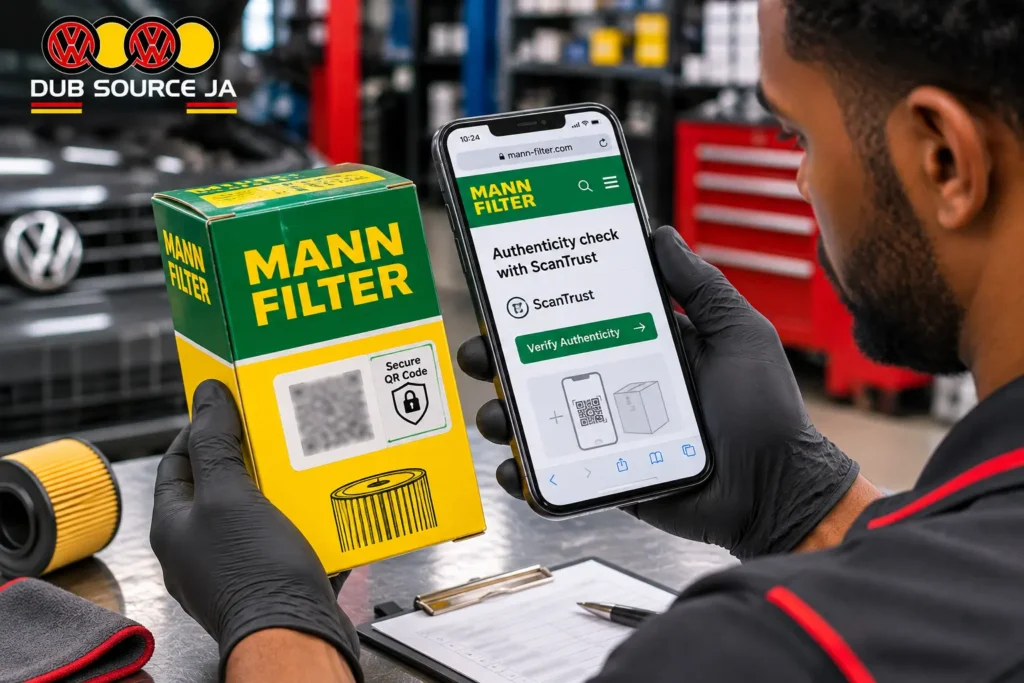
Sometimes. A few makers use special security marks and codes for certain products. These can give you more evidence than a normal part number.
For example, Bosch KeySecure lets buyers check a security code on selected Bosch packs. Not all genuine Bosch parts use that seal. ZF Aftermarket also explains how its own brand checks work for supported packaging.
A normal barcode may only tell a scanner which product is listed. A QR code might open a sales page. Neither is proof unless the maker says it is a true check for that item.
Open the maker’s site yourself. Follow its current steps. If a code fails or the result is unclear, ask the maker before fitting the part. And remember: a genuine result still does not check your VIN.
Why a Valid Part Number May Still Be Wrong for Your VW or Audi
Imagine two Audi A4s parked near the same workshop. From the road, they look alike. But one may have another engine or build date. The right sensor or brake part for one may not suit the other.
Now imagine buying a genuine part online. The packaging is authentic and the part number exists in the manufacturer’s catalogue. But nobody has confirmed that it matches your exact VIN and engine. At the workshop, the connector does not fit. The part may be genuine, but intended for a different version of your car.
That is a hard way to lose a day, especially when you need the car for work or a trip across parishes.
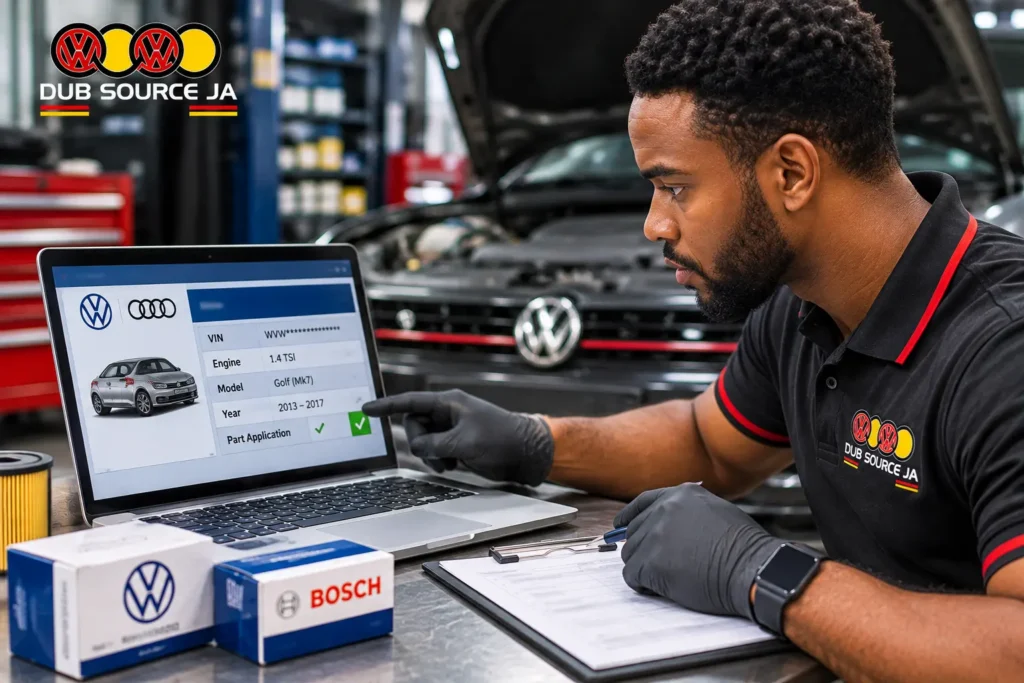
A VIN, or chassis number, helps you find the right part. The engine code, build details, or old part may be needed too. Dub Source explains this in its VW and Audi VIN matching guide.
Do not buy a sensor based only on a dash light. A fault code may point to a system, not prove which part has failed. Get the fault checked first.
What Should You Ask the Seller Before You Pay?
You do not have to know each parts code. You do need clear answers. Ask who made the item, what type it is, and where the stock came from. Is it genuine VW or Audi, supplier-brand, or aftermarket?
Ask for clear photos of the actual part and box. Get a quote with the maker’s code, its condition, and the sale terms. Keep the messages and receipt.
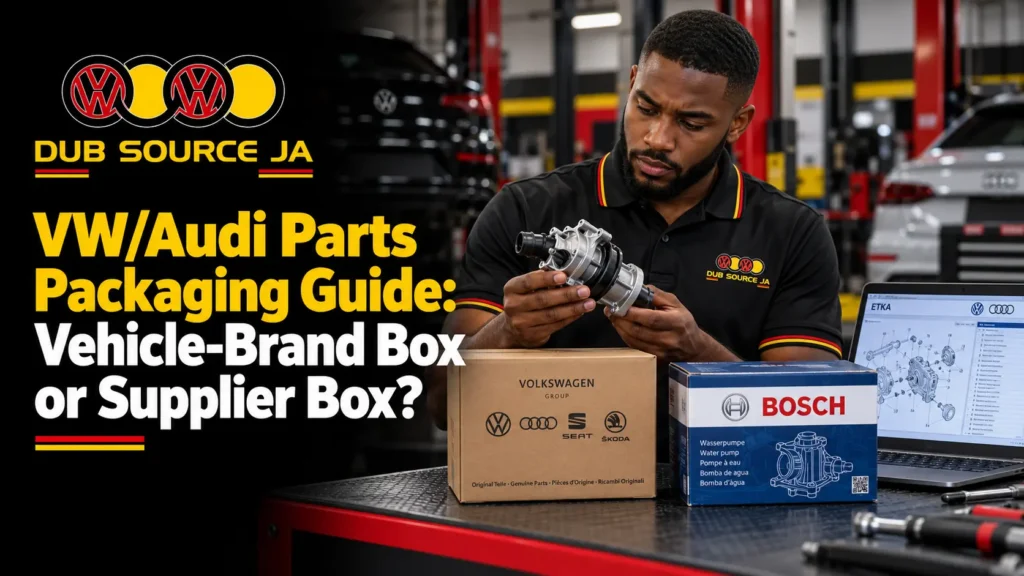
ZF Aftermarket’s advice on fake parts notes that packaging can vary and that a trusted supply source is key. An odd label is worth checking, but it is not proof of a fake.
When the seller knows the part, they should be able to explain it without leaning on the words “original” or “OEM quality” alone.
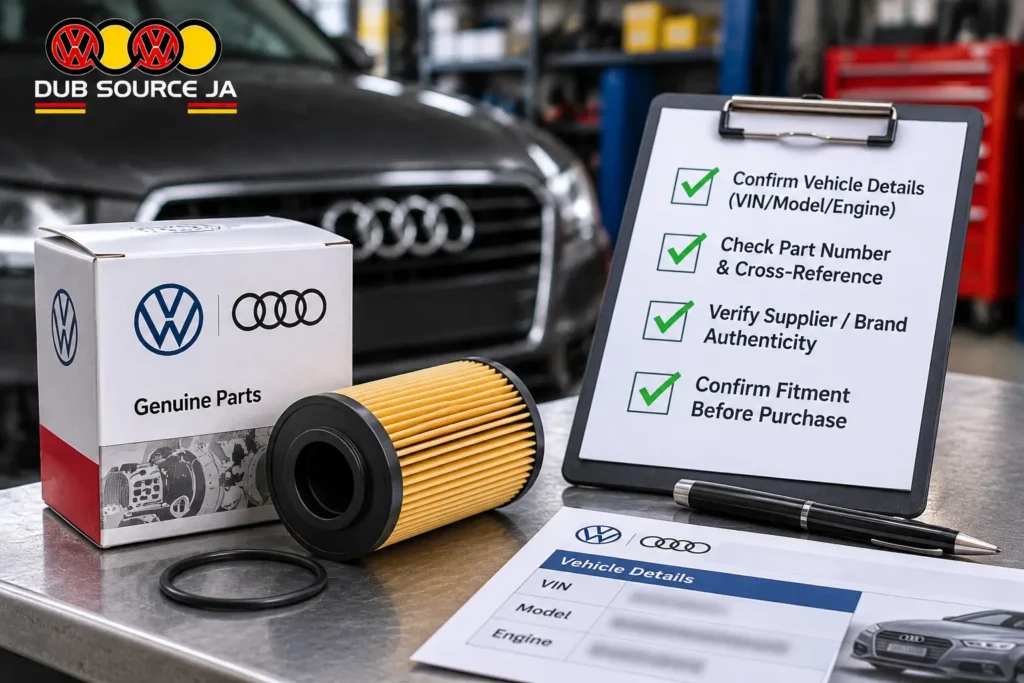
An Eight-Step Check Before Buying VW or Audi Parts
- Find the real fault. If the cause is unclear, arrange an inspection before you order a part.
- Gather your car details. Note the make, model, year, VIN, and engine code if known.
- Ask for the exact maker and code. A model name alone is not enough.
- Check the parts list. Does the maker list that code for the right car and job?
- Ask about a cross-reference. If the number differs, find out why the supplier says it is suitable.
- Check the seller and item. Ask for a traceable source, actual-item photos, and a clear invoice.
- Use a brand check if offered. Follow the maker’s own steps for that part.
- Confirm fit before payment or fitting. Have the part code matched to your VIN and key car details.
This is how to turn one promising number into a better-informed choice. Dub Source’s parts enquiry process explains how the team checks vehicle details before a customer commits.
What If You Already Bought a Part That Seems Wrong?
Keep the part, box, invoice, and seller messages. Take clear photos of any mark or mismatch. If you have not fitted it, do not install it just to see if it works.
Ask the seller for the product’s source. If the brand has an official check or support team, ask them too. Do not accuse a seller based on one blurry print mark; packs and labels may change.
If the part is fitted and the car acts oddly, have it checked. A new noise is not proof of a fake. For a suspected brake or steering fault, avoid driving until a trained technician has inspected it.
For a wider guide to labels, sellers, and packaging, read Dub Source’s article on spotting counterfeit OEM parts.
Frequently Asked Questions
Can Fake Car Parts Use Real Part Numbers?
Yes. A copied item can carry a valid code from a real catalogue. The number tells you what the fake claims to be, not who made it.
Does a Matching VW or Audi Part Number Mean the Part Is Genuine?
No. A match may help identify the correct product type. You still need to check the seller, the maker’s claims, and any brand security marks.
Is a Serial Number Better Proof Than a Part Number?
A serial number may help trace one item when the maker uses it. But a printed serial number can also be copied. Use the maker’s own process where one exists.
Can an Aftermarket Part Use an OEM Reference Number?
A maker may list an original reference as a cross-reference. That can help show intended use. It does not turn the part into genuine VW or Audi stock.
Will a QR Code Tell Me If the Part Is Real?
Only if the maker uses that code to check if a part is real. A normal QR code may just link to product details. Check the brand’s site.
Can a Genuine Part With the Right Number Fail to Fit?
Yes. The code may be valid for another engine, build date, or set of parts. Have the exact fit checked against your VIN.
What Should I Do If the Number Matches but the Box Looks Odd?
Pause and ask the seller or maker to check it. Do not assume it is fake from the box alone. Save the invoice, photos, and product details.
A Good Number Is Only the First Clue
A part number can save time. It helps you ask for the right item and check a parts list. But it cannot speak for the maker, the seller, or the part inside the box.
For a VW or Audi driver, the best choice brings three things together: a source you can trace, a part you can trust, and a fit that has been checked. That matters more than seeing a familiar string of letters and numbers.
If you are unsure, contact Dub Source Limited with your vehicle details. Ask the team to check the exact part before you buy. A few questions now may save you a second purchase later.