loader image

Dub Source Limited

Call Us

1 876-740-9332

Our Location

70a Mannings Hill Road

Audi Parts Jamaica

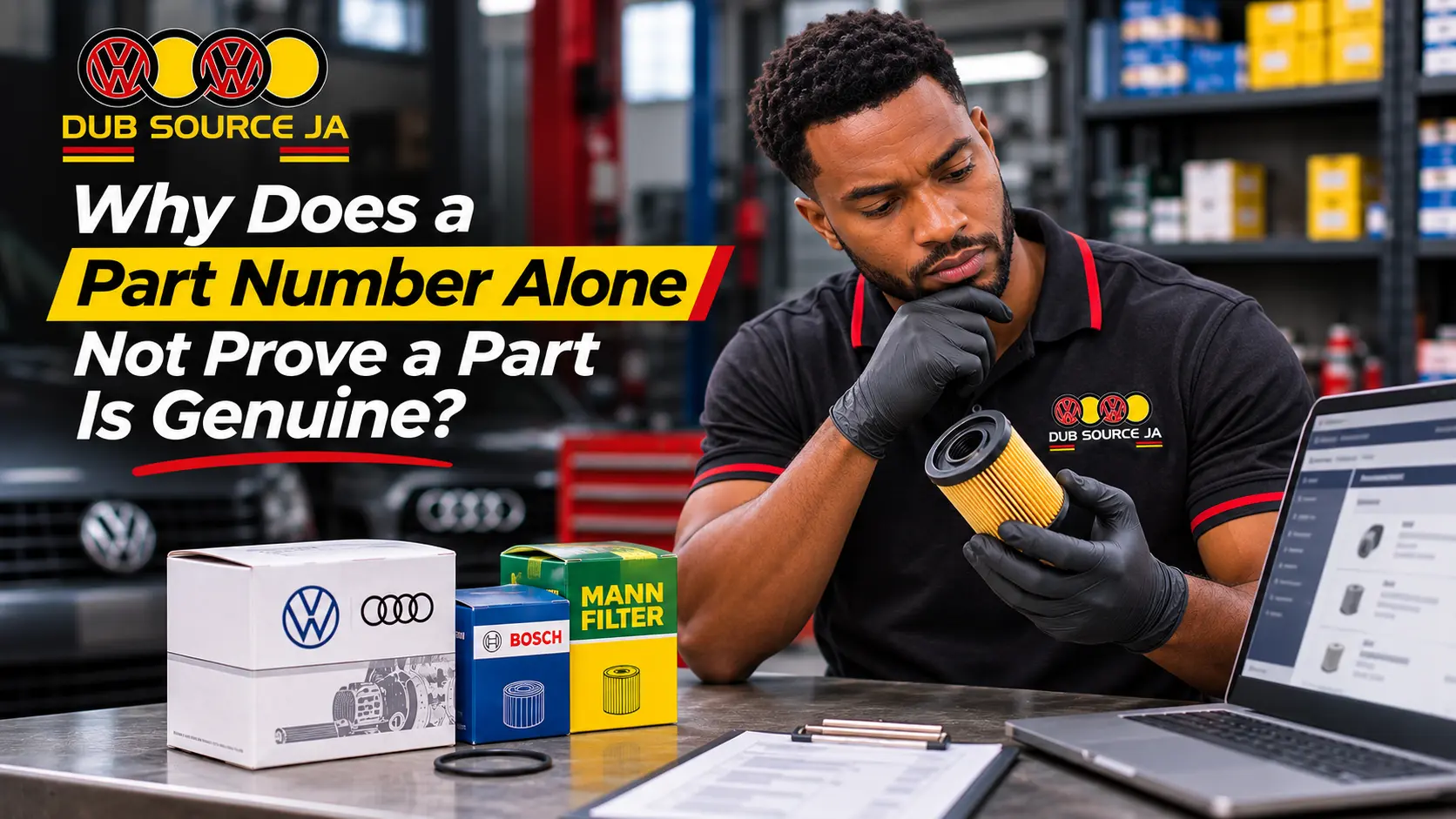
VW and Audi parts adviser checking a replacement part number against packaging and catalogue details in Kingston, Jamaica.

Why Does a Part Number Alone Not Prove a Part Is Genuine?

Why does a part number alone not prove a part is genuine? Because it names a type of part, not the person or factory that made the item in the box. A fake can copy a real number. A seller can also print the right code on the wrong item. And a code found in a parts list does not prove the part will fit your exact VW or Audi. To buy with more peace of mind, check the seller, the product’s source, any official brand security check, and your car details together. The number is a good start, not the last word. Why a Matching Part Number Is Not Proof of Authenticity It is late afternoon in Kingston. The road is hot, traffic is moving slowly, and your Golf needs a filter before the next workday. A seller sends a clear photo. The number on the box matches the one you found online. That feels like good news. But what have you proved? Only that the printed number matches a real code. You have not yet proved that the brand made the part in that box. Think of a concert ticket. A copied ticket can show the right event, date, and seat. The print looks right, but the ticket may not be valid. A part number is much the same: it helps you identify a claim, not confirm its source. What Does a Car Part Number Actually Do? A part number helps a parts team find a product design or version. It may point to a filter, sensor, or brake part. Parts lists use these codes to help shops find a match. That matters for VW and Audi cars. Two cars may share a model name but use different engines. Their parts may look alike but need other codes. Part Number, Serial Number, and Batch Code: Three Different Jobs A part number often applies to many units of one product. A serial number, when used, may identify one unit. A batch or lot code may help the maker trace a group made at one time. Not every item carries all three. Nor does any printed mark make a product immune to copying. A seller may show a valid code on a pack without proving what is inside it. How Can a Fake Carry a Real Part Number? The code may be on a public parts list. A person who copies a brand can also copy its product code, logo, and box design. A quick web search then brings up a real part, even if the item for sale is not real. That is why matching search results can feel so convincing. The result may describe a genuine item. It says nothing about the origin of the part sitting on a stranger’s shelf. The UK government’s guide to fake car parts explains that fake parts and packs can be hard to spot. It urges buyers to check the seller, not just the item. This is UK advice, but the core lesson applies to Jamaican drivers too. A number that does not match is a reason to ask more questions. A number that does match is not a reason to stop asking. What a Part Number Can and Cannot Tell You Check What it helps you learn What it does not prove Part number on the box The product the seller claims to supply That the stated maker built the item Match in a parts list That the code exists for a listed use That the item is real Aftermarket cross-reference A maker’s suggested part for another code That both items are the same as factory parts Serial or batch marking Extra product or production details, if the maker uses them That the mark has not been copied Brand security check Whether the manufacturer can authenticate the supported security code That every product detail is correct or the part fits your car VIN and car build check Whether a code suits that car Who made the item sent to you What the part is, who made it, and what it fits are three separate questions. A sound purchase checks all three. Why a Cross-Reference Does Not Mean “Genuine VW or Audi” You may see an aftermarket filter listed against a VW or Audi reference number. This is called a cross-reference. It helps identify a possible replacement, but the exact specifications and vehicle application still need checking. It does not mean VW made the filter, or that the parts maker sold that item to the car plant. It may be a valid aftermarket option sold under its own brand. Think of a shop that stocks two phone chargers for the same phone. Both may list that model. That does not mean both came from the phone maker. A parts maker may change a design and give it a new code. So if a code has changed, ask the supplier to check the maker’s current parts list. Do not assume that every similar number can replace the old one. Does a QR Code or Hologram Prove More? Sometimes. A few makers use special security marks and codes for certain products. These can give you more evidence than a normal part number. For example, Bosch KeySecure lets buyers check a security code on selected Bosch packs. Not all genuine Bosch parts use that seal. ZF Aftermarket also explains how its own brand checks work for supported packaging. A normal barcode may only tell a scanner which product is listed. A QR code might open a sales page. Neither is proof unless the maker says it is a true check for that item. Open the maker’s site yourself. Follow its current steps. If a code fails or the result is unclear, ask the maker before fitting the part. And remember: a genuine result still does not check your VIN. Why a Valid Part Number May Still Be Wrong for Your VW or Audi Imagine two Audi A4s parked near the same workshop. From the

Why Does a Part Number Alone Not Prove a Part Is Genuine? Read More »

OEM and Authenticity
VW and Audi parts adviser comparing genuine vehicle-brand, OEM supplier-brand and aftermarket replacement parts in Kingston, Jamaica.

What Is the Real Difference Between OEM, Aftermarket, and Counterfeit Parts?

What is the real difference between OEM, aftermarket, and counterfeit parts? OEM refers to a maker of original equipment, often a firm that supplies parts for new cars. Aftermarket parts are replacements sold outside a car brand’s own parts range. They can be good, poor, or somewhere in between. Counterfeit parts are fakes that pretend to be products from another brand. Aftermarket does not mean fake, and an OEM label does not prove that a part is genuine or right for your car. For VW and Audi drivers in Jamaica, the smart choice starts with the source, part number, and fit. Three Parts Labels That Mean Different Things It’s a hot afternoon in Kingston. Your VW Golf needs a filter before the weekend, and you are standing at a parts counter. One box says “OEM”. Another has a brand you know less well. The last one looks just like a VW box you saw online. Which one should you pick? These words may sound like a ranking from best to worst. They are not. OEM is about a maker’s role. Aftermarket is a way parts reach buyers. Counterfeit means a product is pretending to be something it is not. That distinction makes the labels clearer. What Does OEM Really Mean for VW and Audi Parts? OEM stands for Original Equipment Manufacturer. In the wider car industry, the term can refer to a vehicle manufacturer such as Volkswagen. Firms that supply components for new cars are also called Original Equipment Suppliers (OES). In parts shops, sellers often use OEM for supplier-branded replacements. But the label alone does not prove that the exact part was fitted at the factory. Think of a restaurant that sells bread under its own name. A baker may make that bread for the restaurant. The baker may also sell bread under a separate label. The recipes may differ. A parts maker can work in much the same way. It may make an item for a new VW or Audi, then sell other spares under its own brand. The exact part still matters. Does OEM mean genuine VW or Audi? Not always. A genuine VW or Audi part is sold through the car brand’s own parts system. Some parts come from outside firms. The car brand still backs its own genuine range. Volkswagen explains its Genuine Parts as parts it also uses in new vehicles. A part sold by the maker may fit too, but do not assume it is the same. Are Aftermarket Parts Bad, or Just Different? Aftermarket is not another word for fake. It means a spare sold outside the car maker’s own brand. Makers vary. A good filter from another brand may suit your Polo if its design and fit are right. A poor one may have the wrong seal or fail to meet the required standard. The label alone tells you little about how well it works. Think of tyres. You would not buy a tyre only because it has a famous name or a low price. You would check its size, intended use, and other key details. Do the same for car parts. What about “OE quality” and “OEM equivalent”? Those words often mean the seller or maker claims the part meets certain original requirements. It does not prove the item came from the factory’s original supplier, or that VW or Audi approved it. Ask which standard it meets. A product sheet means more than a bold phrase. What Makes a Part Counterfeit? A counterfeit part tries to pass as a product from another brand. It may copy a logo, box, label, or part number. That is not the same as a real part sold under its own name. Fakes can target VW, Audi, or aftermarket brands. That is why counterfeit is not a third quality grade beside OEM and aftermarket. A fake can show up in either group. The UK government’s guidance on fake vehicle parts warns that fake brakes, filters, and spark plugs can look convincing. Some may put drivers at risk. A legitimate aftermarket part may be a suitable choice when its source, specifications, and fit are properly checked. A neat logo does not settle the issue. Nor does a high price. Check its source before fitting. OEM vs Aftermarket vs Counterfeit: A Simple Comparison Type What it tells you What to check Genuine VW or Audi Sold under the car maker’s parts brand Trusted source and exact fit OEM supplier-branded Sold under a maker’s own brand; that maker may supply original equipment Exact product code, specification, and fit Legitimate aftermarket Replacement sold outside the car maker’s brand Brand, quality evidence, and car application Counterfeit Fake pretending to be another brand’s product Do not fit; seek brand or seller verification These are not four separate quality grades. An original equipment supplier may also sell parts under its own brand in the aftermarket. Counterfeit is different because it involves a false brand identity. A fake can imitate either a genuine vehicle-brand part or an aftermarket brand. What Happens When You Buy by Label Alone? A filter before Monday morning Your Golf needs a service. You find two oil filters: one in a VW box, and one from a spare-parts maker. Either may work if its reference and requirements match. A neat box cannot fix a poor seal. Compare the exact items, not just their names. If you live outside Kingston, a wrong filter may mean a return trip or a new delivery fee. You may also need more time off work. The right fit helps keep a simple service from turning into a longer job. Suspension work after rough roads Your Audi makes a knocking sound after a stretch of broken road. It is tempting to order the first “OEM quality” suspension link you see. But what caused the sound? It may need an inspection, not a guess. A wrong part wastes labour. For steering, brakes, or suspension, use a skilled technician and a traceable product. A sensor that

What Is the Real Difference Between OEM, Aftermarket, and Counterfeit Parts? Read More »

OEM and Authenticity
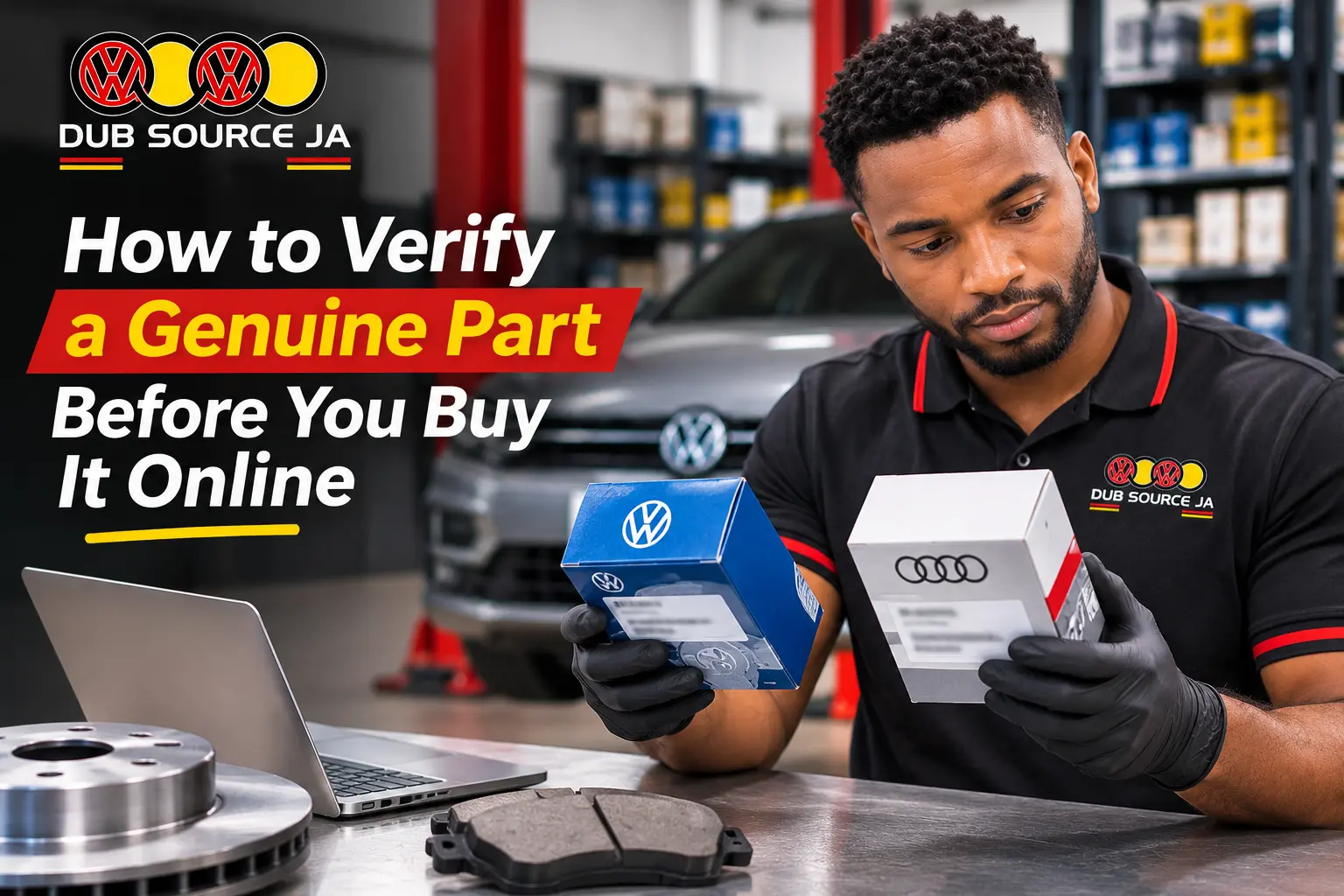
Parts adviser inspecting OEM replacement part packaging and manufacturer details for a VW or Audi in Jamaica.

How Do You Verify a Part Is Genuine Before Paying for It Online?

How do you verify a part is genuine before paying for it online? First, check that the seller is real. Make sure you can reach them. Ask for real photos. Get the brand and full part number. Use the brand’s own code check if it has one. Next, check that the part fits your VW or Audi. Read the order. Check who will get your money. No photo, logo, QR code, or low price can prove it is real. These steps help when you cannot hold the part first. What You Can Verify Before Paying Online It’s Friday afternoon in Kingston. Your Audi needs a sensor. You want the car back by Monday. A seller on WhatsApp sends a crisp photo. The box looks right. The next message says, “Pay now and I’ll send it out.” You can almost picture the repair done. Yet what if the photo is of a different part? What if the account is not who it claims to be? Online, you cannot hold the part or see what is inside a sealed box. Before you pay, check what you can. Know what must wait until the part arrives. That beats a guess based on a photo. Check the Seller Before You Trust the Listing Start away from the advert. Find the shop’s own website. Check its phone, address, and contact page. Search its name with words like “reviews” or “scam.” Read more than one source, not just a row of five-star ratings. Look at the web address with care. A fake page may swap one letter in a familiar name. A logo is easy to copy onto a social page. Jamaica’s Consumer Affairs Commission warns about lookalike websites and misleading online ads. It says to check the web address. It also says to call the shop on a trusted number. If the seller claims to be a known shop, call it via its own site. Do not rely on the phone number in the doubtful message itself. If the details do not match, stop there. Compare the seller’s details with an independently verified business listing or a contact you have used before. A professional-looking website alone does not prove the seller is genuine. Ask to See the Actual Part, Not Just a Perfect Photo A stock image helps you see the product type. It does not show what will reach your door. Ask to see the real box, its labels, and any marks on the part. Ask for the brand and full code. Is it new, used, or rebuilt? If the pack is sealed, ask what can be shown without opening it. Then ask a simple question: “Is this genuine VW or Audi, an OEM supplier-brand part, or a quality aftermarket option?” Those are not the same claim. A good aftermarket part may fit well. But it is not genuine VW or Audi stock. Use the maker’s parts list or ask a specialist to check the code. A fake may copy a real code. A match helps, but does not prove the part is real. What Does Each Online Check Really Prove? Think of buying a concert ticket. A clear picture may show a seat number, but it cannot prove the seller owns a valid ticket. You need to check the source and the terms too. The same is true for car parts. Each check tells you a bit more. What you check What it helps with What it cannot prove Verified business details Whether the seller can be traced and contacted That every part in stock is authentic Actual-item photos Visible brand, label, and stated condition That this is the exact item later shipped Full part number Which product is being offered That a physical item is genuine Maker security code Can support authenticity verification when the manufacturer provides an official check for that product. Fitment, or authenticity of products with no such system VIN and vehicle details Whether the reference suits your car Who manufactured the part in the parcel Invoice and payment record What was agreed, and who was paid That delivery or a refund is guaranteed Use the Maker’s Security Check When One Exists Some brands use seals or codes on certain packs. Bosch KeySecure, for example, lets buyers check codes on certain Bosch packages. Not every real Bosch part has a seal. A QR code may just open a web page. Do not trust an odd link that claims to check the brand. Go to the maker’s official site yourself. Follow the steps for that exact product. If the code is inside the pack, you may need to wait until it arrives. Ask what the brand can check before you buy. For more detail about suspect labels and packaging, see Dub Source’s guide to spotting counterfeit OEM parts. This guide stays focused on the decision before sending payment. A Real Part Can Still Be Wrong for Your VW or Audi Picture two VW Golfs outside the same shop. Same badge. Similar shape. Their engines or build dates may differ. So might their filters or sensors. What good is a genuine part if the plug does not match your car? You could lose another day waiting for the right one. Share your make, model, year, VIN, and engine details through a private, trusted channel. A photo of the old part may help too. Ask the supplier to match the exact reference, not merely say it “fits Golf.” Dub Source’s VIN matching guide for VW and Audi parts explains why model year, build information, and vehicle details matter. Some parts need more checks, such as the old part code. If the car has a warning light, get the fault checked first. A fault code is a clue, not proof that a certain sensor has failed. Check the Quote and Order Terms Before You Pay Before you pay, ask for a written quote. It should name the seller, brand, part code, and condition. Check the total cost and delivery fee too. Check

How Do You Verify a Part Is Genuine Before Paying for It Online? Read More »

Parts Sourcing
Parts adviser inspecting OEM replacement part packaging and manufacturer details for a VW or Audi in Jamaica.

Can a Part Be OEM and Still Be Counterfeit?

Can a part be OEM and still be counterfeit? A real part made by the brand on its label is not counterfeit. But a part sold as OEM can be fake if someone copies a brand, box, or maker’s name. A seller may also call an aftermarket part “OEM” without proof. That can mislead you, but it is not always counterfeiting. For VW and Audi drivers in Jamaica, the safest approach is to check who made the part, where it came from, and whether it fits. Those checks may spare you a second purchase. When Is an OEM Claim Misleading or Counterfeit? Picture a neat parts box on a counter in Kingston. The brand looks familiar. The seller says, “It’s OEM.” You might feel relieved. After all, you just want your car fixed and back on the road. But what does the word prove? On its own, very little. OEM means Original Equipment Manufacturer. At a parts shop, it often means a firm that makes parts for new cars. That firm may also sell new parts under its own name. A real supplier-brand part and a fake of that brand are not the same. Think of a real concert ticket and a copy with the same print. They may look alike, but only one came from the named maker. So the key question is not just, “Does it say OEM?” It is, “Who actually made this item?” OEM, Genuine and Aftermarket Are Not the Same as Real and Fake A genuine VW or Audi part is sold through the car brand’s parts system. A supplier-brand part may come from a firm that makes factory equipment. An aftermarket part is sold outside the car maker’s own parts brand. These words tell you how parts are sold. Counterfeit means a fake that copies another brand’s goods or name. A good aftermarket part is not fake because it has no VW badge. A neat box does not prove the source. Want to understand the labels in more detail? Dub Source’s OEM versus original parts guide explains why the terms get confused. In the wider automotive industry, OEM often refers to the vehicle manufacturer, while Original Equipment Supplier (OES) refers to a company supplying components for vehicle production. In replacement-parts sales, sellers may use OEM to describe supplier-branded parts. However, the term alone does not prove authenticity or factory origin. Four Things That May Look Like the Same Problem What the buyer receives What may be wrong What to check A fake product carrying a copied brand logo or trademark Possible counterfeit Brand and supplier origin A real aftermarket item advertised as “OEM” Misleading claim Actual maker and product line A real branded part sold as new when it is used Wrong condition claim Condition, receipt and sale terms An authentic part that does not fit the car Fitment error VIN, engine details and exact reference Not every misleading OEM claim means a part is counterfeit. A genuine aftermarket product may be incorrectly advertised as factory-original without copying another brand. A counterfeit, however, falsely imitates a branded product. Knowing the difference helps you ask the right questions before buying. Each problem needs a different step. A wrong fit needs a parts check. A false claim needs a talk with the seller. A suspected fake needs a source check. A Fake Can Carry a Familiar Name A fake logo or part number may look real. A seller’s stock photo may not show the item you receive. Audi’s brand protection guidance lists poor packaging, spelling errors and missing part numbers as warning signs. Yet a clean box does not settle the question. Copies may be hard to see by eye. A Misleading OEM Claim Is Not Always a Fake Brand Suppose a seller offers a filter under its true aftermarket brand but calls it “OEM quality.” That may be a claim about its spec, not its factory origin. If the seller calls it “factory original” without a basis, the description needs checking. But that does not automatically mean the product is a fake copy of a protected brand. A Genuine Used Part Is Still Used A real used sensor is not counterfeit simply because it came from a car. But a listing that says “brand new” when the part is used leaves out something important. Ask what state it is in, and what happens if it does not match the description. Clear terms matter as much as the box. Why This Matters When You Need Your Car in Jamaica Imagine your Volkswagen needs a sensor on Friday. Kingston traffic is crawling, the heat is building, and you have plans to drive to another parish over the weekend. A seller sends a sharp photo and says, “Original OEM, ready.” You want it fixed and may pay before asking more. Who wants another delay? Now imagine the workshop opens the parcel and finds a part that cannot be matched to the claimed supplier. Or the connector does not suit your engine. Your plans may change, and you could pay for parts and labour again. A quick check may save the trip. Why Counterfeit Parts Are More Than a Money Risk Some of the parts you rely on most are hidden once fitted. Brake components help you stop. Steering parts help the car respond. Filters and plugs have their own jobs inside the engine. The UK government’s advice on fake vehicle parts warns that counterfeit brakes, spark plugs and filters can be hard to spot and may be unsafe. This does not mean a specific item sold in Jamaica is fake. A poor part may not fail at once. A warning light or noise does not prove a fitted part is fake. If the car feels unsafe, have it checked rather than guessing at the cause. You also want to feel safe with family in the car. That trust comes from sound parts and good checks, not a bold label. How Much Can You Trust a Part Number,

Can a Part Be OEM and Still Be Counterfeit? Read More »

OEM and Authenticity
OEM and genuine VW and Audi replacement parts showing the difference between factory suppliers and matching specifications.

Does OEM Mean the Part Came From the Car Manufacturer, or Just That It Matches Spec?

Does OEM mean the part came from the car manufacturer, or just that it matches spec? Not quite either. OEM stands for Original Equipment Manufacturer. In the parts trade, it often means a firm that made parts for new cars. That firm may be separate from Volkswagen or Audi. A part that only claims to match factory specs is not OEM for that reason alone. And a part from an OEM supplier is not always the exact part fitted at the factory. This guide shows VW and Audi drivers in Jamaica how to read these claims and choose the right part. What Does OEM Mean in the Car Parts Market? Cars carry one badge, but many firms help build them. A car maker may design a vehicle and buy key parts from other firms. Those firms may supply filters, sensors, brakes, or other items for new cars. In the wider automotive industry, OEM often refers to the vehicle manufacturer itself, such as Volkswagen or Audi. Companies supplying components to vehicle manufacturers are also called Original Equipment Suppliers (OES). However, in replacement-parts sales, the term OEM is often used more loosely for parts made by an original equipment supplier. Always ask what the seller means by OEM. Think of a café cake. Its box has the café name, but a baker made it. The baker sells cakes too. Same baker, not always the same recipe. The same idea can apply to car parts. A supplier may make a part for a car plant and sell another line under its own name. They are not always the same. OEM vs Matching Factory Specifications: What’s the Difference? The word OEM points to the maker’s role, not just a claim about size, fit, or quality. It does not always mean Volkswagen or Audi made the item. Nor does it prove a part is the exact same part used in a new car. Now take the phrase “matches original spec.” This is a claim about the part itself. It may mean the maker designed it to meet certain size, strength, or performance needs. That claim does not prove the maker supplied the factory. One claim is about the maker. The other is about the part. Some meet both tests. Ask for the exact part reference. Genuine, OE, OEM, and OE-Equivalent: What Is the Difference? Sellers use these words in different ways. Here is a guide. Term on the listing What it usually tells you What it does not prove Genuine VW or Audi Sold under the car brand’s parts system That it fits every version of that model OE / Original equipment A part or design used when a vehicle was built That a later part has not been changed or updated OEM-branded Sold under a maker linked to original equipment supply That this exact item was fitted to your car at the factory OE-equivalent / OE quality Claimed to match relevant original requirements That the seller or maker supplied the factory Aftermarket Sold outside the car brand’s own parts range That it is low quality or a poor fit These terms are not always separate categories. An original equipment supplier may also sell replacement parts through the independent aftermarket. What matters is the exact product, its specifications, and its intended vehicle application. A good aftermarket part is not fake because it lacks a VW or Audi logo. But “OE quality” needs proof. Can a Supplier Make Both Factory Parts and Different Replacements? Yes. A firm may supply a car maker and sell other parts to repair shops. Some designs may differ. Picture two sensors on a counter in Kingston. They look alike. Both carry the same supplier name. One may suit your Audi. The other may have a different plug or signal range. Why pay for a part just to find that it will not work? The answer is to check the exact code and car fit, not just the brand. A lower-cost part is not always bad. Compare exact products, not just brands. What Does “Matches Factory Specification” Really Mean? A spec lists what a part must do. It may cover size, heat, pressure, or electrical values. Think of a recipe. Two cooks can follow a recipe and make good meals. Yet the meals may not be made in the same kitchen. In the same way, a part may aim to meet a factory spec without coming from the original supplier. Here is where it matters: Oil Filters and Service Parts A filter needs more than the right shape. It also needs the right seal, flow, and filtering design. “For VW” does not prove those details. Engine Oil and Fluids Oil can have the right grade on the front label but still lack a required vehicle-maker approval. Check the exact spec in the car’s service guide. Do not treat “recommended for” as proof of formal approval. Brakes, Steering, and Suspension These parts must meet the right design and fit needs. Size alone does not tell you how a part will perform. For safety parts, choose a traceable source and use a skilled technician. ZF Aftermarket describes its range as OE-quality parts. That does not prove every such part was first fitted. Does Genuine VW or Audi Mean the Brand Made the Part? Not always. Vehicle makers work with parts firms, even when the final item is sold under the car brand. What matters is that a genuine part is supplied through the car maker’s parts system. Volkswagen explains that its Genuine Parts are parts it uses in new vehicles and approves for its models. That is different from a seller saying “OEM-style” or “same as dealer.” Genuine supply makes the source easier to trace. But the car still needs the correct item. A genuine brake part for one VW Golf may not suit another Golf. Want a clear guide to labels and fake parts too? Read Dub Source’s OEM versus original parts guide. That guide covers genuine and counterfeit claims. Why This

Does OEM Mean the Part Came From the Car Manufacturer, or Just That It Matches Spec? Read More »

OEM and Authenticity
Technician checking VW and Audi part packaging and labels to spot possible counterfeit OEM parts.

How Can You Tell a Genuine OEM Part From a Counterfeit Before You Buy It?

How can you tell a genuine OEM part from a counterfeit before you buy it? Start by checking the seller and the part number. Look for signs of altered packaging, and use the maker’s official security check if that product has one. Then confirm that the part fits your VW or Audi. No logo, barcode, or price can prove a part is genuine on its own. You need brake pads before a family trip from Kingston. The box looks right, but no one can explain its source. Would you take the chance? Why Counterfeit Car Parts Can Be Hard to Spot A fake does not have to look fake. The printing may be sharp. The seal may look neat. Even the part number may match one you found online. Think of a copied house key. The shape may match, but that proves little about who made it. Parts labels are much the same. The UK government’s guide to counterfeit vehicle parts warns that fake brakes, filters, and spark plugs can look like the real products. Poor parts may fail and put people at risk. Genuine parts carry the car maker’s brand. An OEM supplier may sell parts under its own name. Aftermarket parts are sold outside the car maker’s brand. A good aftermarket part is not a fake because it lacks a VW or Audi logo. If those terms still feel unclear, read our guide to OEM car parts in Jamaica. The key here is simpler: does this item really come from the brand named on it? There are three problems to keep apart. A counterfeit pretends to be a brand it is not. A poor-quality part may use its real name but still be a bad choice. A wrong-fit part may be real and well made, yet not suit your car. They can all waste time and money, but they need different checks. First find out what is being sold. Then find out if it belongs on your vehicle. 7 Checks to Spot Counterfeit OEM Parts Before Buying Each check below adds confidence, but none should stand alone. 1. Find Out Who Is Selling the Part Start with the seller, not the box. Is there a business name, address, and way to get help? Will the receipt name the item? Ask where the part came from. The seller should be clear about the brand and part type. “Factory original, trust me” is not enough. For an online listing, save the seller’s details and the product page. Reviews do not prove that an item is genuine. 2. Get the Brand and Full Part Number “Fits a Golf” is not a full parts description. Ask for the brand, item name, and exact part number. Check the number against the maker’s catalogue or with a parts specialist. Small letters in a code may mark a different version. Fakes can copy codes, so a match is not proof. Imagine buying a phone charger. The plug may fit, yet the charger may not be made for the device. A car part needs more than a label that looks close. 3. Look Closely at the Packaging and Part Check the spelling, print, seals, and labels. Does one label cover another? Is the box damaged? Do the marks on the part agree with the item on the box? Audi’s brand protection guidance names poor packaging, spelling errors, missing part numbers, and poor product quality as warning signs. But packaging may change between markets or over time. One odd detail is a reason to ask, not a final verdict. Look at the part itself where you can do so without damage. Rough edges, cracks, loose pieces, or poor finish deserve a closer look. Do not break a seal or take a part apart just to test it. 4. Check Brand Security Features the Right Way Some makers add holograms, QR codes, or unique security codes to selected items. Not every genuine part has one. And a normal QR code may simply open a product page. For example, Bosch KeySecure lets buyers check codes on selected Bosch packages. MAHLE explains its security labels for certain engine components, but not its filters or thermostats. Open the official brand website yourself rather than trusting a link sent by an unknown seller. Follow that product’s steps. If the code fails or the result is unclear, contact the brand before fitting the part. A passing check still does not prove the right fit. 5. Question the Price Without Judging by It A cheap item may be on sale. A costly item may still be fake. Price cannot settle the question. Ask if it is new, and whether it is genuine, OEM-branded, or aftermarket. Changing answers are a reason to slow down. 6. Check Fitment Against Your Vehicle This is easy to miss when you are focused on spotting a fake. A part can be genuine and still be wrong for your VW or Audi. Two VW Golfs may look much alike but have different engines or build dates. A filter or sensor for one may not suit the other. A VIN helps narrow down the correct replacement part, but some components may also require checking the vehicle’s build specifications, equipment details, or existing part before fitment is confirmed. Dub Source’s VIN matching guide explains how the chassis number, engine code, and build details can guide the choice. Authenticity asks who made the part. Fitment asks whether it belongs on your car. Check both. A VIN helps narrow down the correct replacement part, but some components may also require checking the vehicle’s build specifications, equipment details, or existing part before fitment is confirmed. 7. Make Sure You Can Trace the Purchase Before you pay, ask what will be written on the receipt and what happens if the part arrives damaged or does not match the order. Keep a copy of the listing and messages if you order online. Records can help with a return, brand check, or workshop visit. Which Warning Signs

How Can You Tell a Genuine OEM Part From a Counterfeit Before You Buy It? Read More »

AUTO PARTS STORE
OEM vs genuine and fake VW and Audi car parts explained for Jamaica

Is OEM the Same as Original, or Can It Still Be Fake?

No, OEM is not always the same as original or genuine. And yes, a part sold as OEM can still be fake. OEM means Original Equipment Manufacturer. It points to a firm that makes parts used in new cars. A genuine part is sold under the car maker’s own parts brand. A fake may copy either label. So how do you know what is safe to buy for your VW or Audi in Jamaica? You need to check three things: who made the part, where it came from, and whether it fits your car. This guide shows you how. What Do Original, OEM, and Aftermarket Parts Mean? These words sound alike at a parts shop. But each means a different thing. Genuine or Original Parts A genuine VW or Audi part is sold under the car brand’s name. It comes through that brand’s parts supply system. Volkswagen says its Genuine Parts are the same parts it fits in new cars. “Original” may mean the factory-fitted part or a genuine new one. Ask which. Even genuine parts need a fit check for your exact car. OEM Parts OEM stands for Original Equipment Manufacturer. It is the name for a firm that makes parts used by car makers as original equipment. Think of a bakery that makes bread for a hotel. It also sells bread under its own name. Same baker, but not always the same recipe. A parts firm may sell its own boxed goods too. The specs may differ. Check the item, not just the maker. Aftermarket Parts An aftermarket part is a replacement sold outside the car maker’s own parts brand. Some come from trusted firms and work well. Others may be poor quality. You may also see “OE quality” on a listing. That is a claim about quality. It is not proof that the part came from the firm that made the factory part. Is OEM the Same as Original, or Can It Still Be Fake? What to Check Here is the key point: OEM tells you about a maker, not a promise that every item with that label is real. A seller can print OEM on a box. A fake part can also copy a real logo, seal, or part number. That is why a nice box should not be your only test. A real part may come in a plain box. A fake may look polished. Real does not always mean right for your car. An Audi A4 part may be genuine but wrong for your A4. Ask two questions before you pay: Is this part authentic? Is it the correct fit? You need a sound answer to both. Genuine vs OEM vs Aftermarket vs Fake Parts Type of part What it means What you should check Genuine VW or Audi Sold under the car maker’s parts brand Source, part code, VIN match OEM-branded Sold under the name of an original equipment maker Exact item, maker, source, fit Aftermarket Made as a replacement under another brand Quality, specs, source, fit Fake or counterfeit Made or sold to pass as a brand it is not Do not fit it; seek proof and advice A high price does not prove a part is real. A low price does not prove it is fake. Traceable supply and the right fit are far better signs. Why Fake Car Parts Matter on Jamaican Roads Picture this. You have a trip from Kingston to Ocho Rios. The car is packed. The air is warm. As you head out, you want to think about the day ahead, not the brake pads fitted last week. Brakes, steering parts, and filters all have a job to do. A poor copy may look fine, but looks do not show how it was tested. The UK government’s guide to fake car parts warns that fake brakes, filters, and plugs can be hard to spot and may fail. Its advice on checking sellers can help Jamaican drivers too. You may pay for labour twice, miss work, or spend days chasing the fault. That is a lot when you need your car each day. How Can You Spot a Fake OEM or Genuine Part? No quick look can prove a part is real. These clues tell you when to check more. 1. Look Closely at the Box Check the print, labels, and seal. Is a label stuck over another? Does the box look opened? Audi’s brand protection advice lists poor packs and odd print as warning signs. Yet box styles vary. A plain pack is not proof of a fake. 2. Check the Part Number Ask for the brand and part number. These help with a fit check. But fakes may copy real codes. A number alone proves little. 3. Ask About the Source Who supplied it? What brand and part type is it? Will you get a clear bill? Be wary of vague claims such as “same as dealer” with no proof. 4. Use the Brand’s Own Check Tool Some brands put security seals on select packs. For example, Bosch KeySecure lets you check a code on packs that use its seal. Not all Bosch items have seals. Use the real Bosch site. Ask the brand if the check seems wrong. 5. Think About the Price, but Do Not Guess A low price may mean a sale or a different part line. Ask why it costs less. Do not guess. Why the VIN Check Matters as Much as the Brand Imagine two VW Golfs parked side by side in Kingston. Same shape. Same badge. But one has a different engine or build date. They may need different filters, sensors, or brake parts. A model name alone is not enough. Your VIN, or chassis number, acts like the car’s ID card. It helps a parts team check the right spec. Dub Source Limited explains this in its VIN matching guide for VW and Audi parts. The team asks for car details so it can check fit before a

Is OEM the Same as Original, or Can It Still Be Fake? Read More »

Blog
Dub Source Limited feature image showing genuine Volkswagen parts in Kingston, Jamaica

Where to Find Genuine VW Parts in Kingston Without Getting the Wrong Thing

Why Getting the Right VW Part Matters in Kingston Finding Volkswagen parts in Kingston might sound simple until you’ve actually tried it and ended up with the wrong thing. Often, it’s not that the store is careless, but that VW parts vary in ways that most general auto parts shops in Jamaica don’t cross-check before selling. One part that fits a 2015 Golf may not fit another Golf of the same year if it’s a different trim, engine, or build platform. Even simple components like air filters, suspension bushings, and sensors have multiple reference numbers. Without knowing the specific details, you risk buying something that doesn’t fit — wasting both time and money. In this post, we’ll break down exactly what you need to know when sourcing VW parts in Kingston. You’ll learn how to avoid costly mistakes, ensure proper fitment, and save yourself the hassle of returns and incorrect replacements. Why Getting VW Parts Right in Jamaica Is Harder Than It Looks Volkswagen manufactures multiple versions of the same model simultaneously. For example, a 2015 VW Golf could be a Mk6 facelift or an early Mk7 depending on the market. Same model name, different platform, different parts. Engine type adds another layer of complexity. A 1.2 TSI engine requires different sensors, spark plugs, and oil filters compared to a 2.0 TDI. Even routine maintenance items such as brake pads and air filters are not universal — they have multiple references across model years and trims. Many general auto parts stores in Kingston stock a single reference and sell it as suitable for a “Golf” or “Polo” without verifying the vehicle’s specifics. Customers often discover the mistake only after attempting installation, which can lead to costly back-and-forth trips and frustration. Mini Scenario: Imagine ordering a new set of suspension bushings for a 2016 Golf, only to find they don’t fit because the store didn’t check the trim and platform. The incorrect part sits unused while your suspension issue persists — a double cost in both time and money. What Information You Need Before Buying VW Parts in Kingston To avoid mistakes, you need the following information before contacting any supplier: The VIN is usually located on the base of the windscreen (driver’s side), the door jamb sticker, or in vehicle registration documents. By providing this, a specialist can cross-reference the factory data, removing all guesswork. Mini Tip: Even if you only know the model and year, a trained technician can narrow down the part list. However, the VIN is the fastest way to guarantee accuracy, especially for sensors, suspension components, and engine parts. How Dub Source Limited Confirms VW Parts in Kingston Dub Source Limited on Mannings Hill Road operates differently from a general parts store. When customers provide their VW details, the team cross-references every part against the vehicle’s specific build data before supplying it. This method ensures that the part fits perfectly, preventing returns, installation errors, and unnecessary expenses. By taking this extra step, Dub Source has earned a reputation among VW owners in Kingston for accuracy and trustworthiness. Island-wide delivery is available for customers outside Kingston. Learn more about how the ordering process works. Common Parts Mistakes to Avoid Even with careful research, mistakes are common in Kingston when ordering VW parts: Mini Scenario: A VW Jetta owner replaced brake pads bought from a general store. They later realized the pads were for a 2.0 TDI, while their car had a 1.4 TSI engine — the wrong fit led to extra trips, returns, and frustration. Tips for Sourcing VW Parts in Kingston Safely By following these steps, you avoid repeated visits, wasted money, and incorrect installations. Why Kingston Roads Make Fitment More Critical Kingston’s roads are a mix of potholes, speed bumps, and stop-and-go traffic. Parts wear differently here compared to Europe, where VW vehicles are tested. Using the right part the first time ensures safety, performance, and longevity, saving both money and time in the long run. Conclusion If you need VW parts in Kingston, the fastest way to the right part is by sending your vehicle details before visiting any store. Dub Source Limited will: Send your VW make, model, year, and chassis number via Instagram @dubsourceja, WhatsApp, or call 876-740-9332. Avoid the cost and hassle of guesswork. Contact the team today for verified, genuine VW parts and reliable service.

Where to Find Genuine VW Parts in Kingston Without Getting the Wrong Thing Read More »

AUTO PARTS STORE
Featured image for Are Bosch, Meyle, and Febi Parts Really Worth the Extra Money? in Kingston Jamaica

Are Bosch, Meyle, and Febi Parts Really Worth the Extra Money?

Have you ever stood in front of a shelf full of car parts and thought,“Are Bosch, Meyle, and Febi parts really worth the extra money?” You’re not alone.It’s a question that pops into many car owners’ minds. It’s normal to wonder.After all, cars are a big investment. You want parts that last and perform well.But, here’s the thing: Are the more expensive parts from Bosch, Meyle, and Febi really better?Or is it just the brand name you’re paying for? Let’s dive into this, and I’ll show you exactly what you’re getting when you pay for these premium brands.And spoiler alert: it’s more than just longevity.It’s about value, performance, safety, and peace of mind. Bosch and other top brands offer products like service parts designed for durability and reliability. Why Do Bosch, Meyle, and Febi Parts Cost More? Let’s face it.When you buy parts from these brands, you’re not just paying for the name.You’re paying for quality.You’re paying for durability. But what makes these parts stand out from cheaper alternatives? Imagine this:You’re choosing between two knives.One’s cheap, one’s expensive.They both cut.But the expensive one will last longer, stay sharper, and perform better. That’s what you’re getting with Bosch, Meyle, and Febi parts.Top-tier materials.Parts that undergo rigorous testing to ensure they perform in tough conditions.For example, Bosch brake pads.They’re designed to last longer and offer better stopping power than their cheaper counterparts.That means fewer replacements, saving you money over time. Bosch’s approach to engine oil is another example of how premium materials ensure better engine performance. Perfect Fit with OEM Specifications Have you ever bought a part, only to realize it doesn’t fit quite right?Maybe it was a little off.Maybe you had to force it into place.It happens.But not with Bosch, Meyle, and Febi. These brands offer OEM (Original Equipment Manufacturer) parts that fit your car perfectly.You’re not just getting a replacement.You’re getting the exact part that your car was built with. This ensures better performance.Less wear.Greater longevity.When you buy from these brands, you don’t have to worry about a poor fit.You’re getting the real deal. For example, specific car parts are designed to match your vehicle exactly, offering a reliable and long-lasting fit. Are These Parts Built to Last? Let’s talk about longevity.Imagine this:You’ve had your car for years.You’ve replaced a few parts here and there.But now it’s time for brake pads. You choose Bosch.Why?Because they’re built to last. And that’s where Bosch, Meyle, and Febi shine.They’re not just designed to work.They’re crafted to endure.These parts are made from high-quality materials.And they’re tested under extreme conditions to ensure they stand the test of time. Sure, you could opt for a cheaper part.But think about it.How long will it last?Will it wear out sooner?What happens if it fails unexpectedly?The difference is clear. Service maintenance parts like those from Febi provide superior durability compared to budget alternatives. What Sets These Parts Apart: Advanced Testing and Engineering Bosch, Meyle, and Febi don’t just make parts.They engineer them.They test them extensively. These parts are put through rigorous simulations, designed to mimic years of wear and tear.And they’re tested under real-world driving conditions.Whether you’re navigating potholes, driving in heavy rain, or sitting in stop-and-go traffic,these parts are designed to perform.They’re engineered for tough driving conditions. Imagine Bosch brake pads.They’re tested in simulations that replicate long-term usage.This ensures they continue to perform well over time. So, when you’re buying these parts,you’re getting the peace of mind that comes with knowing they can handle whatever the road throws at them. Find more details about high-performance parts in our engine service parts section. Is the Extra Money Worth It? Okay, now to the big question:Is it worth the extra cost? For many car owners, the answer is yes.But there are also times when paying more isn’t necessary. Durability: Fewer Replacements, Less Hassle Let’s break it down.When you buy premium parts, you’re investing in the long-term.You might pay a little more now,but over time, you’ll save money. Here’s why:Premium parts last longer.That means fewer replacements.Fewer visits to the mechanic.And less time worrying about your car. Take Bosch brake pads.Yes, they cost more than generic brands.But they’ll last longer, meaning fewer brake changes in the future.That’s fewer repairs, less hassle, and more savings. For longer-lasting solutions, look into service parts. Performance and Safety: Don’t Cut Corners When it comes to safety,you can’t afford to cut corners.Brakes. Suspension. Steering.These are the critical parts that keep your car running smoothly. That’s where Bosch, Meyle, and Febi shine.These parts are designed for top-tier performance, especially in the critical areas of braking and handling. Imagine this:You’re driving through heavy traffic, and you need to stop quickly.You need your brakes to work perfectly.Bosch brake pads are designed for that exact moment.With superior stopping power, you can trust them when it counts. And Meyle suspension parts?If your suspension is strong,your ride is smoother.Your handling improves.And your car lasts longer. Explore specific car parts for options that match your car’s performance needs. When Are Cheaper Parts a Good Option? Now, here’s the truth:There are times when cheaper parts can be just as good. 1. Non-Critical Parts If you’re replacing parts like light bulbs, mirrors, or interior trims,you don’t need to spend extra on premium brands.These parts don’t undergo the same stress as critical components like brakes or suspension.So, a more affordable part will work just fine. 2. Older Cars If you’re driving an older car that’s not worth much,it may not make sense to splurge on premium parts.For example, replacing an air filter in an older car that doesn’t get much use?A generic part will do the job. But if you’re keeping your car for the long haul,investing in quality parts might be worth it.It could save you more in the long run. 3. Low-Mileage Driving If you’re not driving much,you might not need parts that are designed to handle extreme driving conditions.For example, if you’re only using your car for short trips and it’s well-maintained,you can get by with more affordable options for many parts. For

Are Bosch, Meyle, and Febi Parts Really Worth the Extra Money? Read More »

AUTO PARTS STORE
Shopping Cart