loader image

Dub Source Limited

Call Us

1 876-740-9332

Our Location

70a Mannings Hill Road

Genuine Car Parts

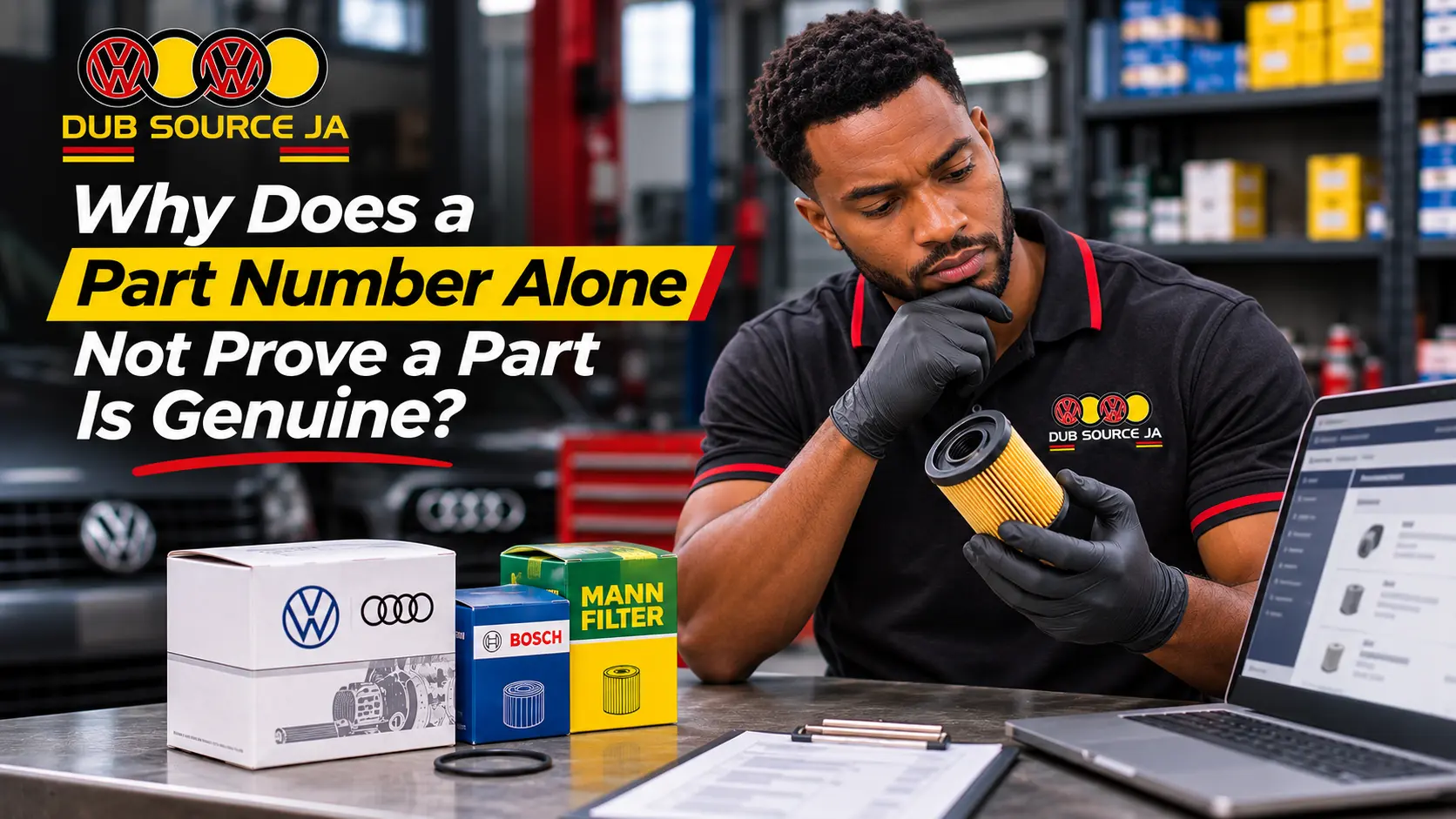
VW and Audi parts adviser checking a replacement part number against packaging and catalogue details in Kingston, Jamaica.

Why Does a Part Number Alone Not Prove a Part Is Genuine?

Why does a part number alone not prove a part is genuine? Because it names a type of part, not the person or factory that made the item in the box. A fake can copy a real number. A seller can also print the right code on the wrong item. And a code found in a parts list does not prove the part will fit your exact VW or Audi. To buy with more peace of mind, check the seller, the product’s source, any official brand security check, and your car details together. The number is a good start, not the last word. Why a Matching Part Number Is Not Proof of Authenticity It is late afternoon in Kingston. The road is hot, traffic is moving slowly, and your Golf needs a filter before the next workday. A seller sends a clear photo. The number on the box matches the one you found online. That feels like good news. But what have you proved? Only that the printed number matches a real code. You have not yet proved that the brand made the part in that box. Think of a concert ticket. A copied ticket can show the right event, date, and seat. The print looks right, but the ticket may not be valid. A part number is much the same: it helps you identify a claim, not confirm its source. What Does a Car Part Number Actually Do? A part number helps a parts team find a product design or version. It may point to a filter, sensor, or brake part. Parts lists use these codes to help shops find a match. That matters for VW and Audi cars. Two cars may share a model name but use different engines. Their parts may look alike but need other codes. Part Number, Serial Number, and Batch Code: Three Different Jobs A part number often applies to many units of one product. A serial number, when used, may identify one unit. A batch or lot code may help the maker trace a group made at one time. Not every item carries all three. Nor does any printed mark make a product immune to copying. A seller may show a valid code on a pack without proving what is inside it. How Can a Fake Carry a Real Part Number? The code may be on a public parts list. A person who copies a brand can also copy its product code, logo, and box design. A quick web search then brings up a real part, even if the item for sale is not real. That is why matching search results can feel so convincing. The result may describe a genuine item. It says nothing about the origin of the part sitting on a stranger’s shelf. The UK government’s guide to fake car parts explains that fake parts and packs can be hard to spot. It urges buyers to check the seller, not just the item. This is UK advice, but the core lesson applies to Jamaican drivers too. A number that does not match is a reason to ask more questions. A number that does match is not a reason to stop asking. What a Part Number Can and Cannot Tell You Check What it helps you learn What it does not prove Part number on the box The product the seller claims to supply That the stated maker built the item Match in a parts list That the code exists for a listed use That the item is real Aftermarket cross-reference A maker’s suggested part for another code That both items are the same as factory parts Serial or batch marking Extra product or production details, if the maker uses them That the mark has not been copied Brand security check Whether the manufacturer can authenticate the supported security code That every product detail is correct or the part fits your car VIN and car build check Whether a code suits that car Who made the item sent to you What the part is, who made it, and what it fits are three separate questions. A sound purchase checks all three. Why a Cross-Reference Does Not Mean “Genuine VW or Audi” You may see an aftermarket filter listed against a VW or Audi reference number. This is called a cross-reference. It helps identify a possible replacement, but the exact specifications and vehicle application still need checking. It does not mean VW made the filter, or that the parts maker sold that item to the car plant. It may be a valid aftermarket option sold under its own brand. Think of a shop that stocks two phone chargers for the same phone. Both may list that model. That does not mean both came from the phone maker. A parts maker may change a design and give it a new code. So if a code has changed, ask the supplier to check the maker’s current parts list. Do not assume that every similar number can replace the old one. Does a QR Code or Hologram Prove More? Sometimes. A few makers use special security marks and codes for certain products. These can give you more evidence than a normal part number. For example, Bosch KeySecure lets buyers check a security code on selected Bosch packs. Not all genuine Bosch parts use that seal. ZF Aftermarket also explains how its own brand checks work for supported packaging. A normal barcode may only tell a scanner which product is listed. A QR code might open a sales page. Neither is proof unless the maker says it is a true check for that item. Open the maker’s site yourself. Follow its current steps. If a code fails or the result is unclear, ask the maker before fitting the part. And remember: a genuine result still does not check your VIN. Why a Valid Part Number May Still Be Wrong for Your VW or Audi Imagine two Audi A4s parked near the same workshop. From the

Why Does a Part Number Alone Not Prove a Part Is Genuine? Read More »

OEM and Authenticity
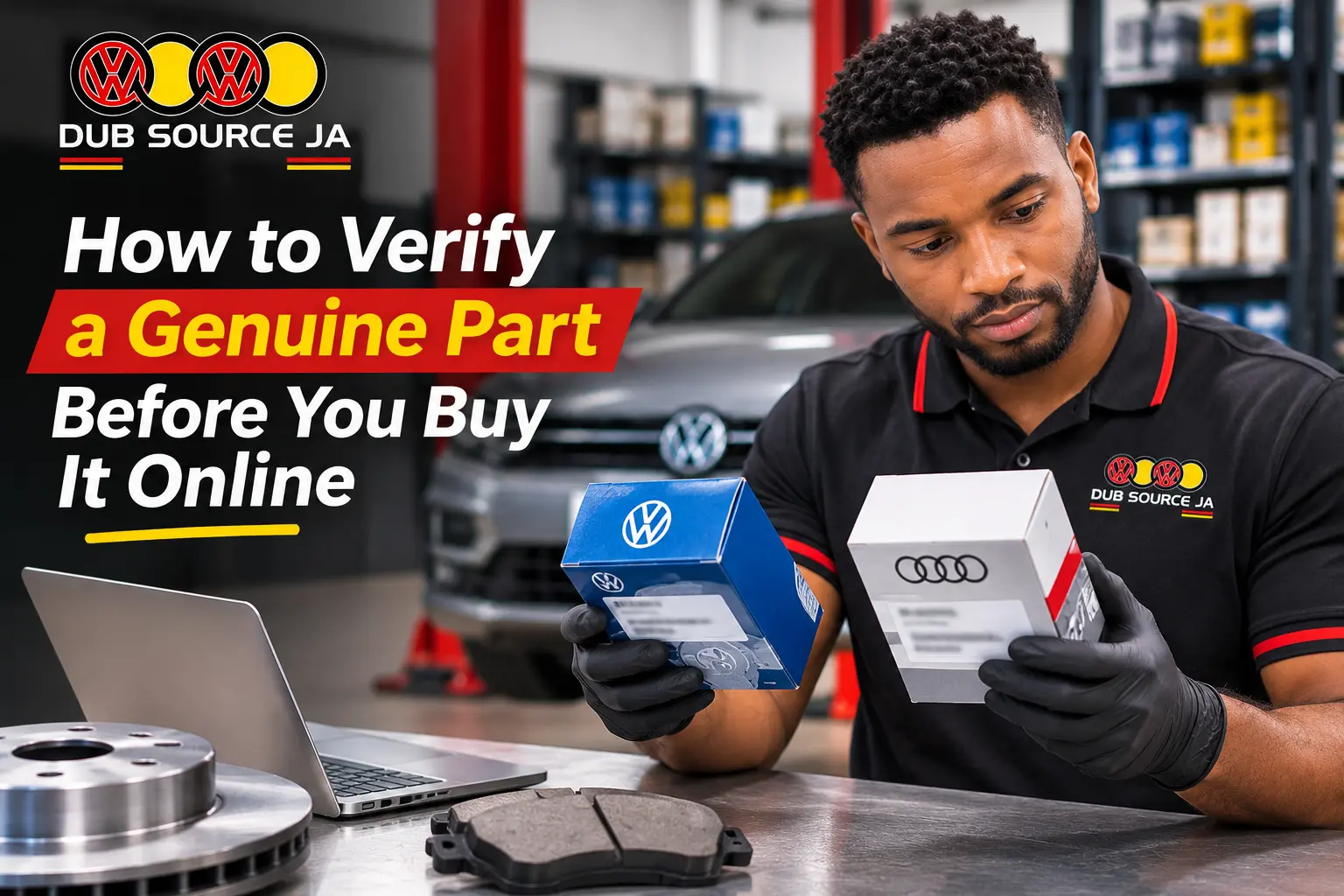
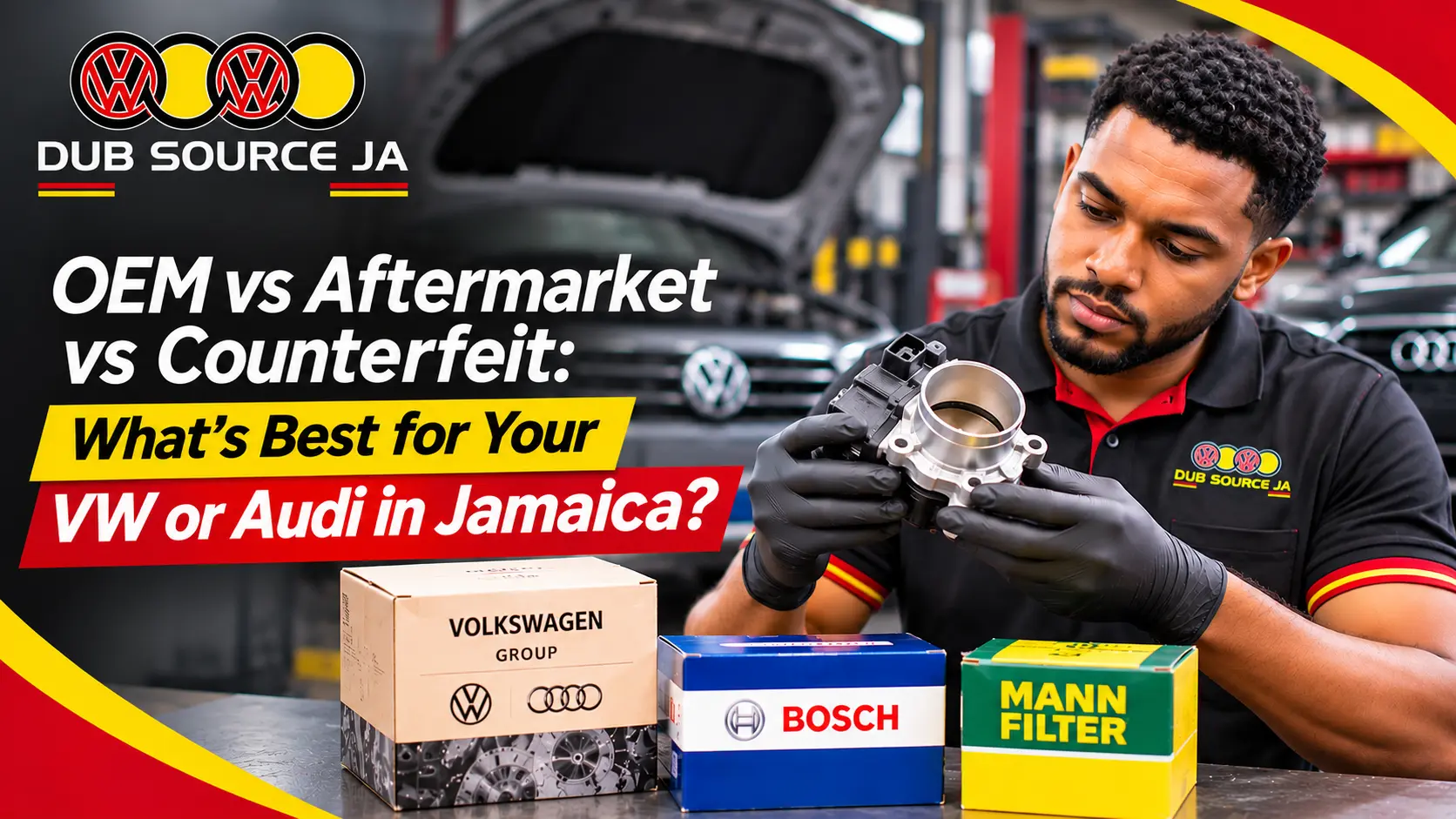
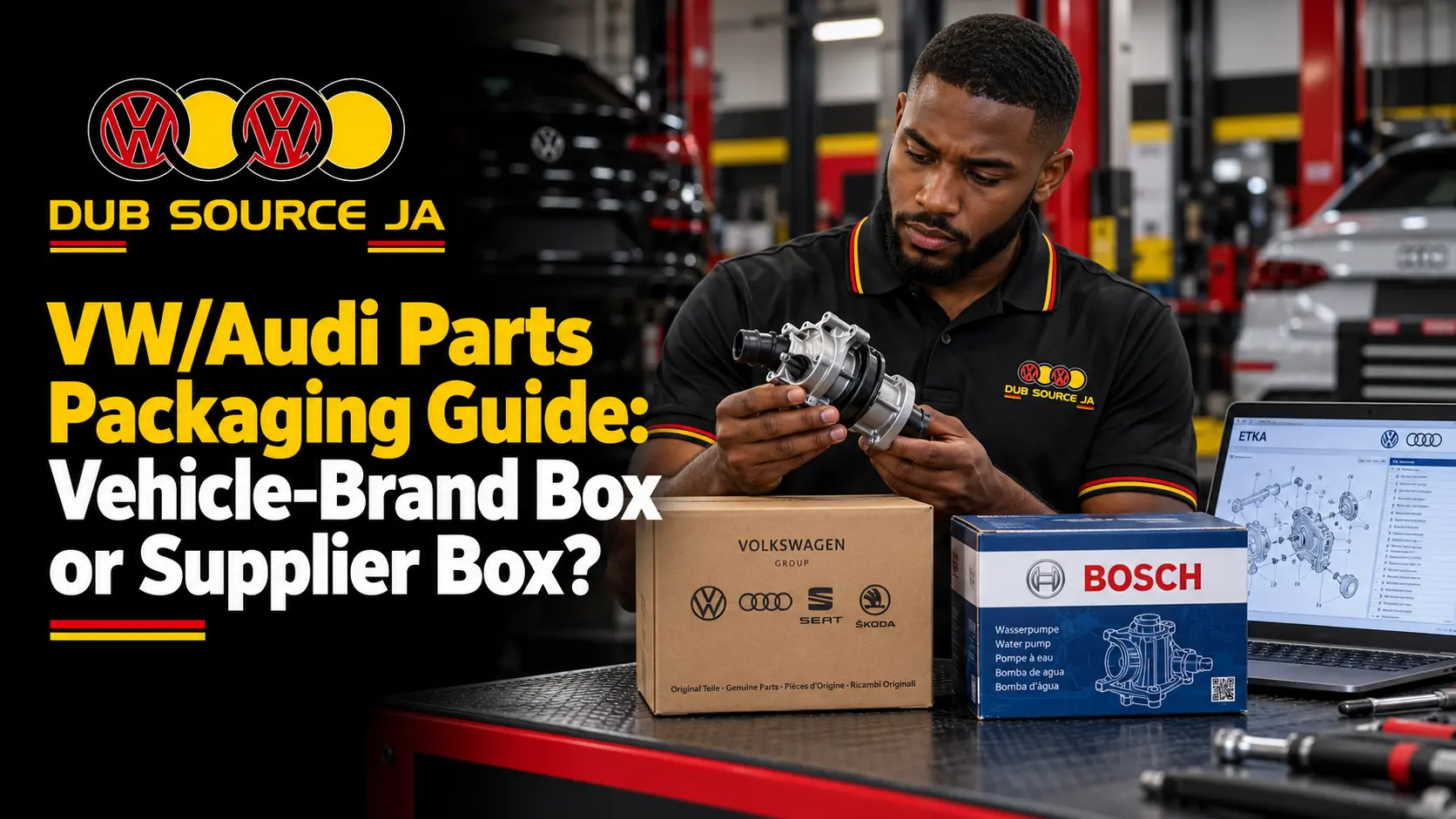
VW and Audi parts adviser comparing genuine vehicle-brand, OEM supplier-brand and aftermarket replacement parts in Kingston, Jamaica.

What Is the Real Difference Between OEM, Aftermarket, and Counterfeit Parts?

What is the real difference between OEM, aftermarket, and counterfeit parts? OEM refers to a maker of original equipment, often a firm that supplies parts for new cars. Aftermarket parts are replacements sold outside a car brand’s own parts range. They can be good, poor, or somewhere in between. Counterfeit parts are fakes that pretend to be products from another brand. Aftermarket does not mean fake, and an OEM label does not prove that a part is genuine or right for your car. For VW and Audi drivers in Jamaica, the smart choice starts with the source, part number, and fit. Three Parts Labels That Mean Different Things It’s a hot afternoon in Kingston. Your VW Golf needs a filter before the weekend, and you are standing at a parts counter. One box says “OEM”. Another has a brand you know less well. The last one looks just like a VW box you saw online. Which one should you pick? These words may sound like a ranking from best to worst. They are not. OEM is about a maker’s role. Aftermarket is a way parts reach buyers. Counterfeit means a product is pretending to be something it is not. That distinction makes the labels clearer. What Does OEM Really Mean for VW and Audi Parts? OEM stands for Original Equipment Manufacturer. In the wider car industry, the term can refer to a vehicle manufacturer such as Volkswagen. Firms that supply components for new cars are also called Original Equipment Suppliers (OES). In parts shops, sellers often use OEM for supplier-branded replacements. But the label alone does not prove that the exact part was fitted at the factory. Think of a restaurant that sells bread under its own name. A baker may make that bread for the restaurant. The baker may also sell bread under a separate label. The recipes may differ. A parts maker can work in much the same way. It may make an item for a new VW or Audi, then sell other spares under its own brand. The exact part still matters. Does OEM mean genuine VW or Audi? Not always. A genuine VW or Audi part is sold through the car brand’s own parts system. Some parts come from outside firms. The car brand still backs its own genuine range. Volkswagen explains its Genuine Parts as parts it also uses in new vehicles. A part sold by the maker may fit too, but do not assume it is the same. Are Aftermarket Parts Bad, or Just Different? Aftermarket is not another word for fake. It means a spare sold outside the car maker’s own brand. Makers vary. A good filter from another brand may suit your Polo if its design and fit are right. A poor one may have the wrong seal or fail to meet the required standard. The label alone tells you little about how well it works. Think of tyres. You would not buy a tyre only because it has a famous name or a low price. You would check its size, intended use, and other key details. Do the same for car parts. What about “OE quality” and “OEM equivalent”? Those words often mean the seller or maker claims the part meets certain original requirements. It does not prove the item came from the factory’s original supplier, or that VW or Audi approved it. Ask which standard it meets. A product sheet means more than a bold phrase. What Makes a Part Counterfeit? A counterfeit part tries to pass as a product from another brand. It may copy a logo, box, label, or part number. That is not the same as a real part sold under its own name. Fakes can target VW, Audi, or aftermarket brands. That is why counterfeit is not a third quality grade beside OEM and aftermarket. A fake can show up in either group. The UK government’s guidance on fake vehicle parts warns that fake brakes, filters, and spark plugs can look convincing. Some may put drivers at risk. A legitimate aftermarket part may be a suitable choice when its source, specifications, and fit are properly checked. A neat logo does not settle the issue. Nor does a high price. Check its source before fitting. OEM vs Aftermarket vs Counterfeit: A Simple Comparison Type What it tells you What to check Genuine VW or Audi Sold under the car maker’s parts brand Trusted source and exact fit OEM supplier-branded Sold under a maker’s own brand; that maker may supply original equipment Exact product code, specification, and fit Legitimate aftermarket Replacement sold outside the car maker’s brand Brand, quality evidence, and car application Counterfeit Fake pretending to be another brand’s product Do not fit; seek brand or seller verification These are not four separate quality grades. An original equipment supplier may also sell parts under its own brand in the aftermarket. Counterfeit is different because it involves a false brand identity. A fake can imitate either a genuine vehicle-brand part or an aftermarket brand. What Happens When You Buy by Label Alone? A filter before Monday morning Your Golf needs a service. You find two oil filters: one in a VW box, and one from a spare-parts maker. Either may work if its reference and requirements match. A neat box cannot fix a poor seal. Compare the exact items, not just their names. If you live outside Kingston, a wrong filter may mean a return trip or a new delivery fee. You may also need more time off work. The right fit helps keep a simple service from turning into a longer job. Suspension work after rough roads Your Audi makes a knocking sound after a stretch of broken road. It is tempting to order the first “OEM quality” suspension link you see. But what caused the sound? It may need an inspection, not a guess. A wrong part wastes labour. For steering, brakes, or suspension, use a skilled technician and a traceable product. A sensor that

What Is the Real Difference Between OEM, Aftermarket, and Counterfeit Parts? Read More »

OEM and Authenticity
Parts adviser inspecting OEM replacement part packaging and manufacturer details for a VW or Audi in Jamaica.

How Do You Verify a Part Is Genuine Before Paying for It Online?

How do you verify a part is genuine before paying for it online? First, check that the seller is real. Make sure you can reach them. Ask for real photos. Get the brand and full part number. Use the brand’s own code check if it has one. Next, check that the part fits your VW or Audi. Read the order. Check who will get your money. No photo, logo, QR code, or low price can prove it is real. These steps help when you cannot hold the part first. What You Can Verify Before Paying Online It’s Friday afternoon in Kingston. Your Audi needs a sensor. You want the car back by Monday. A seller on WhatsApp sends a crisp photo. The box looks right. The next message says, “Pay now and I’ll send it out.” You can almost picture the repair done. Yet what if the photo is of a different part? What if the account is not who it claims to be? Online, you cannot hold the part or see what is inside a sealed box. Before you pay, check what you can. Know what must wait until the part arrives. That beats a guess based on a photo. Check the Seller Before You Trust the Listing Start away from the advert. Find the shop’s own website. Check its phone, address, and contact page. Search its name with words like “reviews” or “scam.” Read more than one source, not just a row of five-star ratings. Look at the web address with care. A fake page may swap one letter in a familiar name. A logo is easy to copy onto a social page. Jamaica’s Consumer Affairs Commission warns about lookalike websites and misleading online ads. It says to check the web address. It also says to call the shop on a trusted number. If the seller claims to be a known shop, call it via its own site. Do not rely on the phone number in the doubtful message itself. If the details do not match, stop there. Compare the seller’s details with an independently verified business listing or a contact you have used before. A professional-looking website alone does not prove the seller is genuine. Ask to See the Actual Part, Not Just a Perfect Photo A stock image helps you see the product type. It does not show what will reach your door. Ask to see the real box, its labels, and any marks on the part. Ask for the brand and full code. Is it new, used, or rebuilt? If the pack is sealed, ask what can be shown without opening it. Then ask a simple question: “Is this genuine VW or Audi, an OEM supplier-brand part, or a quality aftermarket option?” Those are not the same claim. A good aftermarket part may fit well. But it is not genuine VW or Audi stock. Use the maker’s parts list or ask a specialist to check the code. A fake may copy a real code. A match helps, but does not prove the part is real. What Does Each Online Check Really Prove? Think of buying a concert ticket. A clear picture may show a seat number, but it cannot prove the seller owns a valid ticket. You need to check the source and the terms too. The same is true for car parts. Each check tells you a bit more. What you check What it helps with What it cannot prove Verified business details Whether the seller can be traced and contacted That every part in stock is authentic Actual-item photos Visible brand, label, and stated condition That this is the exact item later shipped Full part number Which product is being offered That a physical item is genuine Maker security code Can support authenticity verification when the manufacturer provides an official check for that product. Fitment, or authenticity of products with no such system VIN and vehicle details Whether the reference suits your car Who manufactured the part in the parcel Invoice and payment record What was agreed, and who was paid That delivery or a refund is guaranteed Use the Maker’s Security Check When One Exists Some brands use seals or codes on certain packs. Bosch KeySecure, for example, lets buyers check codes on certain Bosch packages. Not every real Bosch part has a seal. A QR code may just open a web page. Do not trust an odd link that claims to check the brand. Go to the maker’s official site yourself. Follow the steps for that exact product. If the code is inside the pack, you may need to wait until it arrives. Ask what the brand can check before you buy. For more detail about suspect labels and packaging, see Dub Source’s guide to spotting counterfeit OEM parts. This guide stays focused on the decision before sending payment. A Real Part Can Still Be Wrong for Your VW or Audi Picture two VW Golfs outside the same shop. Same badge. Similar shape. Their engines or build dates may differ. So might their filters or sensors. What good is a genuine part if the plug does not match your car? You could lose another day waiting for the right one. Share your make, model, year, VIN, and engine details through a private, trusted channel. A photo of the old part may help too. Ask the supplier to match the exact reference, not merely say it “fits Golf.” Dub Source’s VIN matching guide for VW and Audi parts explains why model year, build information, and vehicle details matter. Some parts need more checks, such as the old part code. If the car has a warning light, get the fault checked first. A fault code is a clue, not proof that a certain sensor has failed. Check the Quote and Order Terms Before You Pay Before you pay, ask for a written quote. It should name the seller, brand, part code, and condition. Check the total cost and delivery fee too. Check

How Do You Verify a Part Is Genuine Before Paying for It Online? Read More »

Parts Sourcing
Parts adviser inspecting OEM replacement part packaging and manufacturer details for a VW or Audi in Jamaica.

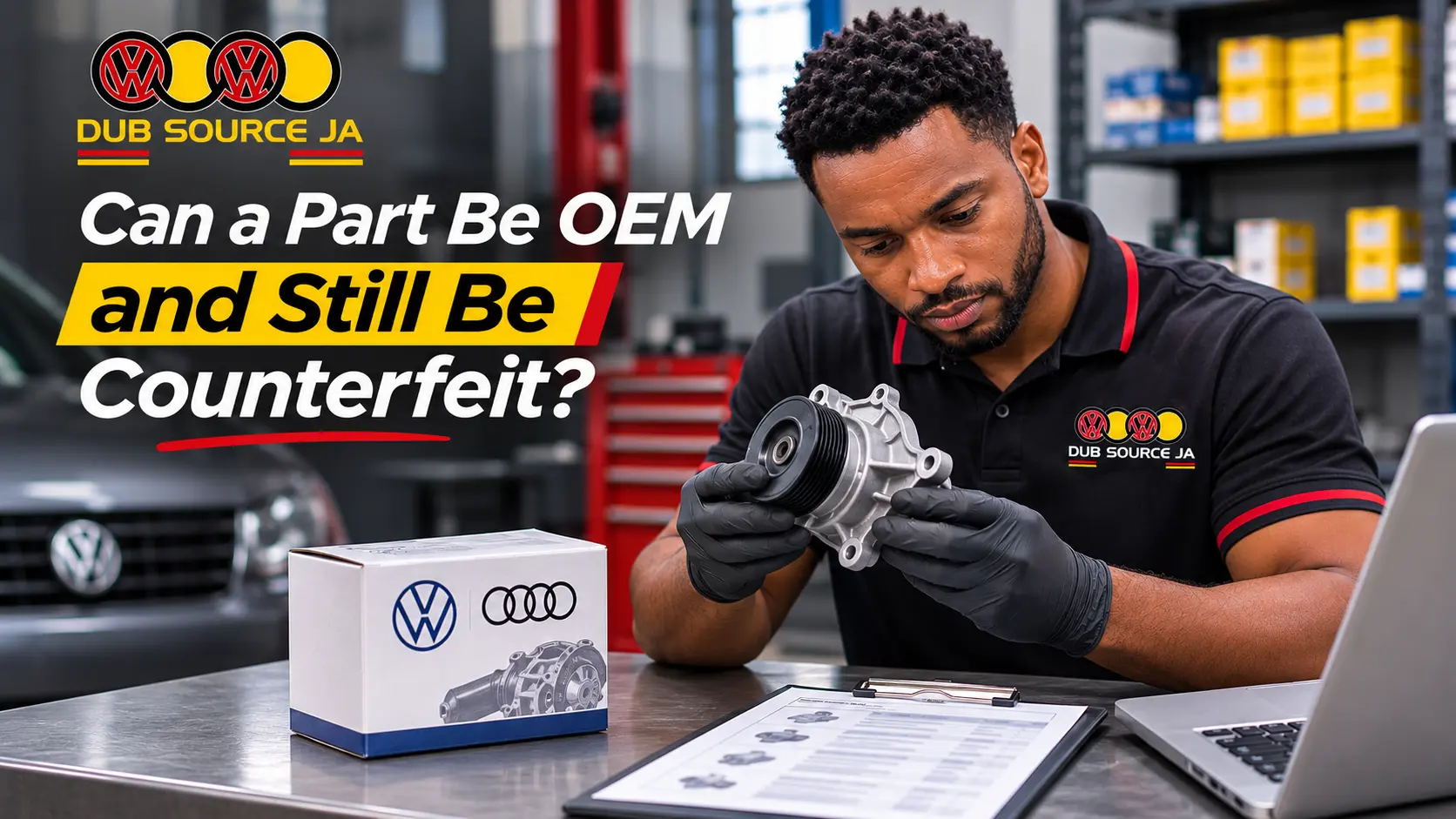
Can a Part Be OEM and Still Be Counterfeit?

Can a part be OEM and still be counterfeit? A real part made by the brand on its label is not counterfeit. But a part sold as OEM can be fake if someone copies a brand, box, or maker’s name. A seller may also call an aftermarket part “OEM” without proof. That can mislead you, but it is not always counterfeiting. For VW and Audi drivers in Jamaica, the safest approach is to check who made the part, where it came from, and whether it fits. Those checks may spare you a second purchase. When Is an OEM Claim Misleading or Counterfeit? Picture a neat parts box on a counter in Kingston. The brand looks familiar. The seller says, “It’s OEM.” You might feel relieved. After all, you just want your car fixed and back on the road. But what does the word prove? On its own, very little. OEM means Original Equipment Manufacturer. At a parts shop, it often means a firm that makes parts for new cars. That firm may also sell new parts under its own name. A real supplier-brand part and a fake of that brand are not the same. Think of a real concert ticket and a copy with the same print. They may look alike, but only one came from the named maker. So the key question is not just, “Does it say OEM?” It is, “Who actually made this item?” OEM, Genuine and Aftermarket Are Not the Same as Real and Fake A genuine VW or Audi part is sold through the car brand’s parts system. A supplier-brand part may come from a firm that makes factory equipment. An aftermarket part is sold outside the car maker’s own parts brand. These words tell you how parts are sold. Counterfeit means a fake that copies another brand’s goods or name. A good aftermarket part is not fake because it has no VW badge. A neat box does not prove the source. Want to understand the labels in more detail? Dub Source’s OEM versus original parts guide explains why the terms get confused. In the wider automotive industry, OEM often refers to the vehicle manufacturer, while Original Equipment Supplier (OES) refers to a company supplying components for vehicle production. In replacement-parts sales, sellers may use OEM to describe supplier-branded parts. However, the term alone does not prove authenticity or factory origin. Four Things That May Look Like the Same Problem What the buyer receives What may be wrong What to check A fake product carrying a copied brand logo or trademark Possible counterfeit Brand and supplier origin A real aftermarket item advertised as “OEM” Misleading claim Actual maker and product line A real branded part sold as new when it is used Wrong condition claim Condition, receipt and sale terms An authentic part that does not fit the car Fitment error VIN, engine details and exact reference Not every misleading OEM claim means a part is counterfeit. A genuine aftermarket product may be incorrectly advertised as factory-original without copying another brand. A counterfeit, however, falsely imitates a branded product. Knowing the difference helps you ask the right questions before buying. Each problem needs a different step. A wrong fit needs a parts check. A false claim needs a talk with the seller. A suspected fake needs a source check. A Fake Can Carry a Familiar Name A fake logo or part number may look real. A seller’s stock photo may not show the item you receive. Audi’s brand protection guidance lists poor packaging, spelling errors and missing part numbers as warning signs. Yet a clean box does not settle the question. Copies may be hard to see by eye. A Misleading OEM Claim Is Not Always a Fake Brand Suppose a seller offers a filter under its true aftermarket brand but calls it “OEM quality.” That may be a claim about its spec, not its factory origin. If the seller calls it “factory original” without a basis, the description needs checking. But that does not automatically mean the product is a fake copy of a protected brand. A Genuine Used Part Is Still Used A real used sensor is not counterfeit simply because it came from a car. But a listing that says “brand new” when the part is used leaves out something important. Ask what state it is in, and what happens if it does not match the description. Clear terms matter as much as the box. Why This Matters When You Need Your Car in Jamaica Imagine your Volkswagen needs a sensor on Friday. Kingston traffic is crawling, the heat is building, and you have plans to drive to another parish over the weekend. A seller sends a sharp photo and says, “Original OEM, ready.” You want it fixed and may pay before asking more. Who wants another delay? Now imagine the workshop opens the parcel and finds a part that cannot be matched to the claimed supplier. Or the connector does not suit your engine. Your plans may change, and you could pay for parts and labour again. A quick check may save the trip. Why Counterfeit Parts Are More Than a Money Risk Some of the parts you rely on most are hidden once fitted. Brake components help you stop. Steering parts help the car respond. Filters and plugs have their own jobs inside the engine. The UK government’s advice on fake vehicle parts warns that counterfeit brakes, spark plugs and filters can be hard to spot and may be unsafe. This does not mean a specific item sold in Jamaica is fake. A poor part may not fail at once. A warning light or noise does not prove a fitted part is fake. If the car feels unsafe, have it checked rather than guessing at the cause. You also want to feel safe with family in the car. That trust comes from sound parts and good checks, not a bold label. How Much Can You Trust a Part Number,

Can a Part Be OEM and Still Be Counterfeit? Read More »

OEM and Authenticity
Parts adviser explaining OEM, genuine and aftermarket VW and Audi car parts in Kingston, Jamaica.

What Does OEM Really Mean for VW and Audi Parts in Kingston?

OEM stands for Original Equipment Manufacturer. In the car trade, OEM can mean the car brand. At a parts shop, it often means a firm that makes parts for new cars. So why do Kingston drivers sometimes get it wrong? Sellers may use it for genuine parts, supplier parts, or goods that just claim to meet factory rules. The OEM label does not prove a part is real. It may not match the factory part or fit your VW or Audi. Here is how to tell what you are buying. Why OEM Causes Confusion at Kingston Parts Shops In the wider automotive industry, Volkswagen or Audi may be called the OEM, while companies supplying components are often called Original Equipment Suppliers (OES). At a parts shop, the word OEM may also be used for supplier-branded replacement parts. That is why it is worth asking which meaning the seller intends. Picture a busy parts counter on a hot Kingston afternoon. Your VW Golf needs a new sensor. One seller says, “Original.” Another says, “OEM, same thing.” A third says, “OEM quality, better price.” Which one is right? You may have work the next morning and little time to shop again. The words sound reassuring, but they do not all make the same promise. The mix-up starts with how cars are built. Volkswagen and Audi sell the finished vehicles. Other firms can make some of the parts used to build them. In the car trade, the brand itself may be called an OEM. At the parts shop, it may mean one of those parts makers. That difference matters far more than the letters on the box. One Car Brand Does Not Mean One Parts Factory Think of a restaurant that sells cake with its own name on the menu. The chef may bake it on-site, or a trusted bakery may supply it. The name on the menu does not tell you which kitchen made it. A vehicle is more complex, but the idea helps. Car makers set design and quality needs. They may buy sensors, filters, and brake parts from outside firms. For example, Bosch describes itself as an original equipment and aftermarket supplier. That shows how a maker can work in both markets. It does not mean every Bosch item was fitted to every VW or Audi at the factory. The exact part, model, and year still matter. A maker’s good name helps, but it is not a fit check. Why Do Kingston Drivers Mix Up Genuine, OEM, and Aftermarket? Drivers need not know each term by heart. But sellers may use the labels as if they mean the same thing. Genuine Sounds Like “The Best Fit” A genuine VW or Audi part comes through the brand’s parts network. Volkswagen explains its Genuine Parts as the parts used in new vehicles and approved by its product experts. Genuine branding identifies the type of part being offered, but the seller and source still matter. A familiar logo alone cannot confirm authenticity or correct fitment. OEM Sounds Like “Made by VW or Audi” Sometimes the vehicle maker is called the OEM. But in parts sales, “OEM” often means the firm that supplied an original component. A parts maker may sell spares under its own name. Check the design and spec of the exact part. Does it suit your car? “OEM Quality” Sounds Like Proof This is where buyers need care. “OEM quality” or “OE-equivalent” may mean the seller claims the part meets factory needs. That does not prove the maker supplied the car plant. The European Automobile Manufacturers’ Association explains how aftermarket labels can blur these differences. That guide looks at Europe. But its warning about vague labels can help here too. Genuine, OEM, and Aftermarket: What Does Each Label Tell You? Label What it usually means What it does not prove Genuine VW or Audi Sold through the vehicle brand’s parts system Correct fit for every model or year OEM supplier-brand From a firm involved in original equipment supply This exact item was fitted to your car at the factory OE or original equipment A part or design used when a new car was built Every later version is identical OE-equivalent or OEM quality A claim about meeting relevant original requirements Factory origin or formal car-brand approval Aftermarket A replacement sold outside the car brand’s parts range That the part is fake or poor quality These labels are not always separate categories. An original equipment supplier may also sell replacement parts through the independent aftermarket. Always compare the exact product, its specifications, and its intended vehicle application. A good aftermarket part may be a sound choice. A genuine part may still be the wrong fit. Choose based on the job, the source, and the car Why the Wrong Meaning Can Become a Costly Repair Imagine your Audi A4 makes a rough sound over a broken patch of road. A seller offers a suspension part marked “OEM quality.” The price seems fair, and you want the noise gone. You pay. At the workshop, the technician finds that the part is made for a different setup. Now you must arrange a return or buy again. The car may stay off the road while you sort it out. This is one possible outcome, not a claim about every repair. Yet a wrong part can cost more than the price on the receipt. You may lose time and pay for more work. You may have no car when you need it. Kingston traffic can test your nerves. A second repair adds to the strain. That is why clear part details matter more than a convincing sales phrase. A Real Part Can Still Be the Wrong Part Two VW Polos may look almost the same. Yet engine codes, build dates, and equipment can change the part they need. That applies to many Audi models too. Your VIN is like an ID card for your car. It helps the parts team find the right part. They may

What Does OEM Really Mean for VW and Audi Parts in Kingston? Read More »

OEM and Authenticity
Technician checking VW and Audi part packaging and labels to spot possible counterfeit OEM parts.

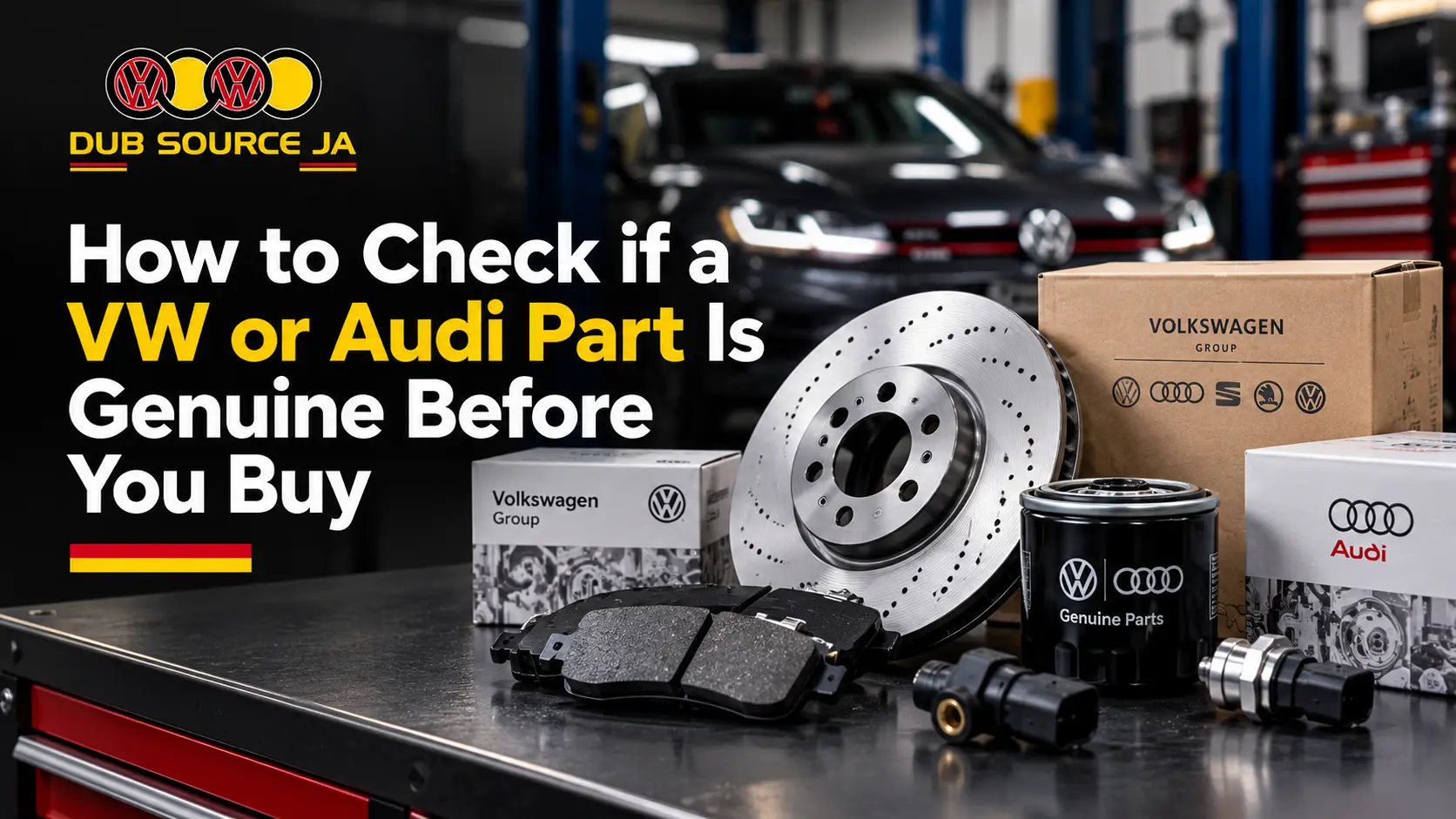
How Can You Tell a Genuine OEM Part From a Counterfeit Before You Buy It?

How can you tell a genuine OEM part from a counterfeit before you buy it? Start by checking the seller and the part number. Look for signs of altered packaging, and use the maker’s official security check if that product has one. Then confirm that the part fits your VW or Audi. No logo, barcode, or price can prove a part is genuine on its own. You need brake pads before a family trip from Kingston. The box looks right, but no one can explain its source. Would you take the chance? Why Counterfeit Car Parts Can Be Hard to Spot A fake does not have to look fake. The printing may be sharp. The seal may look neat. Even the part number may match one you found online. Think of a copied house key. The shape may match, but that proves little about who made it. Parts labels are much the same. The UK government’s guide to counterfeit vehicle parts warns that fake brakes, filters, and spark plugs can look like the real products. Poor parts may fail and put people at risk. Genuine parts carry the car maker’s brand. An OEM supplier may sell parts under its own name. Aftermarket parts are sold outside the car maker’s brand. A good aftermarket part is not a fake because it lacks a VW or Audi logo. If those terms still feel unclear, read our guide to OEM car parts in Jamaica. The key here is simpler: does this item really come from the brand named on it? There are three problems to keep apart. A counterfeit pretends to be a brand it is not. A poor-quality part may use its real name but still be a bad choice. A wrong-fit part may be real and well made, yet not suit your car. They can all waste time and money, but they need different checks. First find out what is being sold. Then find out if it belongs on your vehicle. 7 Checks to Spot Counterfeit OEM Parts Before Buying Each check below adds confidence, but none should stand alone. 1. Find Out Who Is Selling the Part Start with the seller, not the box. Is there a business name, address, and way to get help? Will the receipt name the item? Ask where the part came from. The seller should be clear about the brand and part type. “Factory original, trust me” is not enough. For an online listing, save the seller’s details and the product page. Reviews do not prove that an item is genuine. 2. Get the Brand and Full Part Number “Fits a Golf” is not a full parts description. Ask for the brand, item name, and exact part number. Check the number against the maker’s catalogue or with a parts specialist. Small letters in a code may mark a different version. Fakes can copy codes, so a match is not proof. Imagine buying a phone charger. The plug may fit, yet the charger may not be made for the device. A car part needs more than a label that looks close. 3. Look Closely at the Packaging and Part Check the spelling, print, seals, and labels. Does one label cover another? Is the box damaged? Do the marks on the part agree with the item on the box? Audi’s brand protection guidance names poor packaging, spelling errors, missing part numbers, and poor product quality as warning signs. But packaging may change between markets or over time. One odd detail is a reason to ask, not a final verdict. Look at the part itself where you can do so without damage. Rough edges, cracks, loose pieces, or poor finish deserve a closer look. Do not break a seal or take a part apart just to test it. 4. Check Brand Security Features the Right Way Some makers add holograms, QR codes, or unique security codes to selected items. Not every genuine part has one. And a normal QR code may simply open a product page. For example, Bosch KeySecure lets buyers check codes on selected Bosch packages. MAHLE explains its security labels for certain engine components, but not its filters or thermostats. Open the official brand website yourself rather than trusting a link sent by an unknown seller. Follow that product’s steps. If the code fails or the result is unclear, contact the brand before fitting the part. A passing check still does not prove the right fit. 5. Question the Price Without Judging by It A cheap item may be on sale. A costly item may still be fake. Price cannot settle the question. Ask if it is new, and whether it is genuine, OEM-branded, or aftermarket. Changing answers are a reason to slow down. 6. Check Fitment Against Your Vehicle This is easy to miss when you are focused on spotting a fake. A part can be genuine and still be wrong for your VW or Audi. Two VW Golfs may look much alike but have different engines or build dates. A filter or sensor for one may not suit the other. A VIN helps narrow down the correct replacement part, but some components may also require checking the vehicle’s build specifications, equipment details, or existing part before fitment is confirmed. Dub Source’s VIN matching guide explains how the chassis number, engine code, and build details can guide the choice. Authenticity asks who made the part. Fitment asks whether it belongs on your car. Check both. A VIN helps narrow down the correct replacement part, but some components may also require checking the vehicle’s build specifications, equipment details, or existing part before fitment is confirmed. 7. Make Sure You Can Trace the Purchase Before you pay, ask what will be written on the receipt and what happens if the part arrives damaged or does not match the order. Keep a copy of the listing and messages if you order online. Records can help with a return, brand check, or workshop visit. Which Warning Signs

How Can You Tell a Genuine OEM Part From a Counterfeit Before You Buy It? Read More »

AUTO PARTS STORE
OEM vs genuine and fake VW and Audi car parts explained for Jamaica

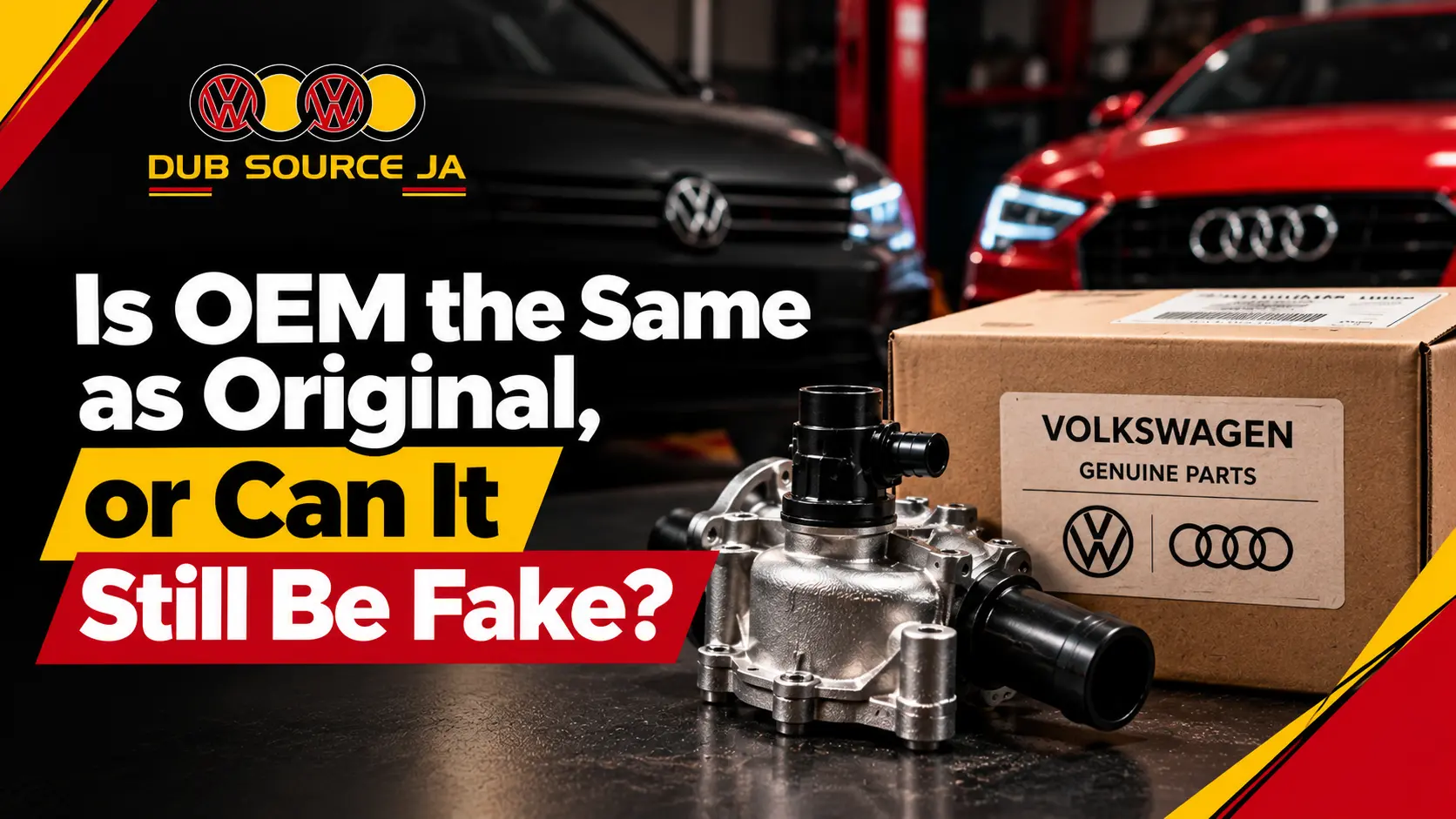
Is OEM the Same as Original, or Can It Still Be Fake?

No, OEM is not always the same as original or genuine. And yes, a part sold as OEM can still be fake. OEM means Original Equipment Manufacturer. It points to a firm that makes parts used in new cars. A genuine part is sold under the car maker’s own parts brand. A fake may copy either label. So how do you know what is safe to buy for your VW or Audi in Jamaica? You need to check three things: who made the part, where it came from, and whether it fits your car. This guide shows you how. What Do Original, OEM, and Aftermarket Parts Mean? These words sound alike at a parts shop. But each means a different thing. Genuine or Original Parts A genuine VW or Audi part is sold under the car brand’s name. It comes through that brand’s parts supply system. Volkswagen says its Genuine Parts are the same parts it fits in new cars. “Original” may mean the factory-fitted part or a genuine new one. Ask which. Even genuine parts need a fit check for your exact car. OEM Parts OEM stands for Original Equipment Manufacturer. It is the name for a firm that makes parts used by car makers as original equipment. Think of a bakery that makes bread for a hotel. It also sells bread under its own name. Same baker, but not always the same recipe. A parts firm may sell its own boxed goods too. The specs may differ. Check the item, not just the maker. Aftermarket Parts An aftermarket part is a replacement sold outside the car maker’s own parts brand. Some come from trusted firms and work well. Others may be poor quality. You may also see “OE quality” on a listing. That is a claim about quality. It is not proof that the part came from the firm that made the factory part. Is OEM the Same as Original, or Can It Still Be Fake? What to Check Here is the key point: OEM tells you about a maker, not a promise that every item with that label is real. A seller can print OEM on a box. A fake part can also copy a real logo, seal, or part number. That is why a nice box should not be your only test. A real part may come in a plain box. A fake may look polished. Real does not always mean right for your car. An Audi A4 part may be genuine but wrong for your A4. Ask two questions before you pay: Is this part authentic? Is it the correct fit? You need a sound answer to both. Genuine vs OEM vs Aftermarket vs Fake Parts Type of part What it means What you should check Genuine VW or Audi Sold under the car maker’s parts brand Source, part code, VIN match OEM-branded Sold under the name of an original equipment maker Exact item, maker, source, fit Aftermarket Made as a replacement under another brand Quality, specs, source, fit Fake or counterfeit Made or sold to pass as a brand it is not Do not fit it; seek proof and advice A high price does not prove a part is real. A low price does not prove it is fake. Traceable supply and the right fit are far better signs. Why Fake Car Parts Matter on Jamaican Roads Picture this. You have a trip from Kingston to Ocho Rios. The car is packed. The air is warm. As you head out, you want to think about the day ahead, not the brake pads fitted last week. Brakes, steering parts, and filters all have a job to do. A poor copy may look fine, but looks do not show how it was tested. The UK government’s guide to fake car parts warns that fake brakes, filters, and plugs can be hard to spot and may fail. Its advice on checking sellers can help Jamaican drivers too. You may pay for labour twice, miss work, or spend days chasing the fault. That is a lot when you need your car each day. How Can You Spot a Fake OEM or Genuine Part? No quick look can prove a part is real. These clues tell you when to check more. 1. Look Closely at the Box Check the print, labels, and seal. Is a label stuck over another? Does the box look opened? Audi’s brand protection advice lists poor packs and odd print as warning signs. Yet box styles vary. A plain pack is not proof of a fake. 2. Check the Part Number Ask for the brand and part number. These help with a fit check. But fakes may copy real codes. A number alone proves little. 3. Ask About the Source Who supplied it? What brand and part type is it? Will you get a clear bill? Be wary of vague claims such as “same as dealer” with no proof. 4. Use the Brand’s Own Check Tool Some brands put security seals on select packs. For example, Bosch KeySecure lets you check a code on packs that use its seal. Not all Bosch items have seals. Use the real Bosch site. Ask the brand if the check seems wrong. 5. Think About the Price, but Do Not Guess A low price may mean a sale or a different part line. Ask why it costs less. Do not guess. Why the VIN Check Matters as Much as the Brand Imagine two VW Golfs parked side by side in Kingston. Same shape. Same badge. But one has a different engine or build date. They may need different filters, sensors, or brake parts. A model name alone is not enough. Your VIN, or chassis number, acts like the car’s ID card. It helps a parts team check the right spec. Dub Source Limited explains this in its VIN matching guide for VW and Audi parts. The team asks for car details so it can check fit before a

Is OEM the Same as Original, or Can It Still Be Fake? Read More »

Blog
Shopping Cart